Marcellus Investment Managers has received final approval from SEBI to launch a mutual fund business, marking a significant milestone for the firm since its founding in 2018. According to reports from NDTV Profit, the firm, founded by Saurabh Mukherjea, has previously offered portfolio management services (PMS) and alternative investment funds (AIF). The company will now enter India's fast-growing mutual fund market through Marcellus Mutual Fund, led by managing director and chief executive Pramod Gubbi, with Mukherjea serving as chief investment officer. As per the company's press release on September 30, the approval will allow the company to extend its research-led, long-term investment approach beyond its existing PMS and AIF offerings, making it accessible to a broader base of Indian investors through a regulated and accessible investment structure.
Saurabh Mukherjea, founder and chief investment officer of Marcellus, has acknowledged that quality fund managers lost their jobs during the four-year period when the style was out of favour, stating that he might have faced similar consequences had he reported to a boss. As reported by NDTV Profit, he pointed to the Nifty200 Quality 30 index, run by the National Stock Exchange (NSE), as a simple proxy for the style, which underperformed the Nifty for four consecutive years from 2022 to 2025 - the first time in its history. Mukherjea cited value investing as precedent, noting that value was the market favourite until 2010-11, then went through what he called a horrific decade ending 2020, before returning strongly in the post-COVID period. He expects quality to return when the economy hits a rough patch, which is broadly where India is now, stating that "as quality comes back, those numbers will reverse."
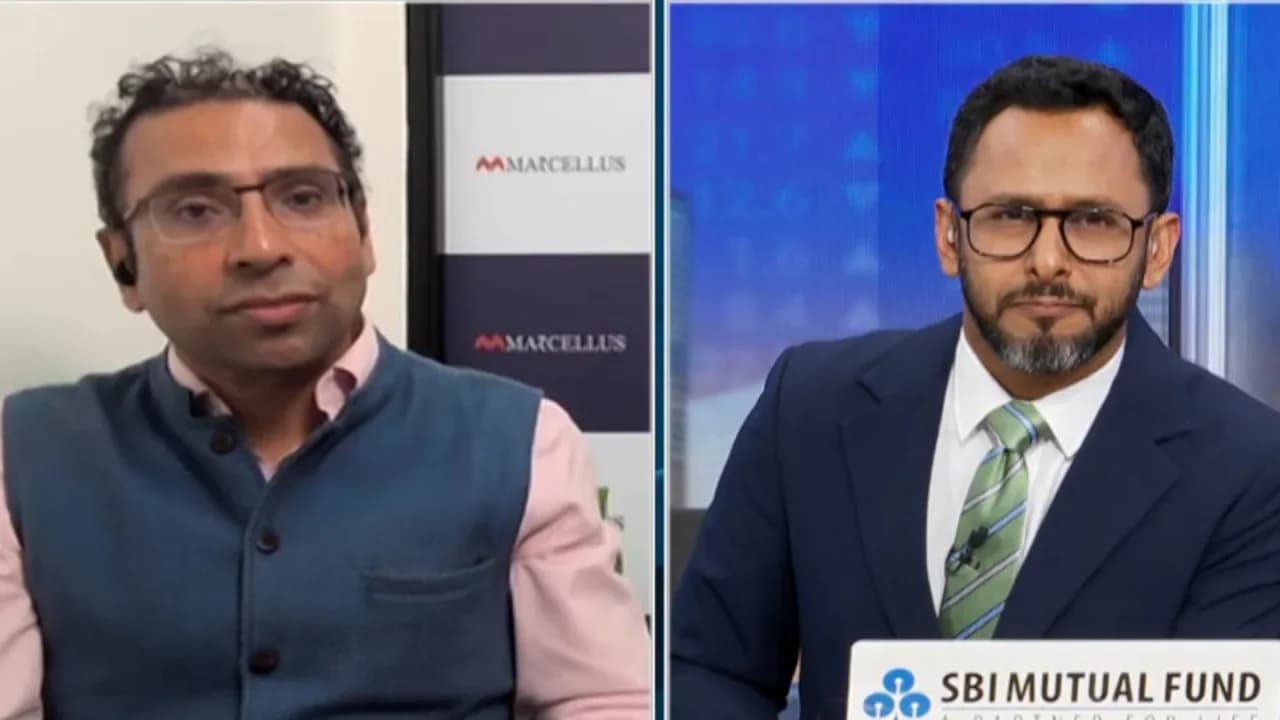
Marcellus has implemented three key changes that have helped PMS performance recover strongly over the last nine to ten months, as outlined by Mukherjea. The first was to stay concentrated while adding diversification. In its first five years, performance was "blistering" but portfolios leaned heavily on consumer and financial stocks. The firm now looks for well-run franchises across auto ancillaries, autos, pharma, healthcare and internet companies, with PMS portfolios far more diversified than four years ago. The second was implementing a rule on taking profits - if a share price compounds much faster than profits over two to three years, Marcellus trims the position. For example, a stock whose price compounds at 27% over five years while profits grow 18% sees its price-to-earnings (PE) multiple rise, calling for remedial action. The firm cuts position size and redeploys money into another high-quality franchise without exiting completely. The third was adapting to changed India, with a wave of initial public offerings (IPOs) over the last five to six years bringing more high-quality compounders to the market, as the government pulls back from public services and private companies step in across hospitals, healthcare, diagnostics and medical insurance.
When asked about competing in a crowded mutual fund market, Mukherjea highlighted that the industry has reached an inflection point with mass acceptance of products that didn't exist a decade ago. As reported by NDTV Profit, he identified the gap as being in choice, stating that there's a plain vanilla element to what most mutual fund houses offer. The firm plans to detail its innovative product offerings in the coming months to address this market need. According to Moneycontrol, the timing reflects a broader shift in India, where more households are investing through mutual funds and systematic investment plans (SIPs), even though mutual fund assets as a share of GDP remains lower than in several developed markets. The move comes as Indian households increasingly participate in financial markets through mutual funds and systematic investment plans, pointing to substantial long-term opportunity for greater participation in market-linked savings and investments.
Gubbi indicated that several innovative products from global markets have yet to reach Indian investors, and Marcellus hopes to bring some of these products to Indian investors. As reported by NDTV Profit, he described the financialisation of India's savings as being only in its 'first innings', using a baseball analogy, suggesting that the multi-decade runway leaves room for many more asset management companies to enter the market. According to Moneycontrol, the company's focus now is on building a fund house that puts investors first, with disciplined processes, clear communication and a strong focus on execution. The firm will take the time to build and launch products that are true to their investment philosophy, taking disciplined steps to ensure quality rather than rushing to market. The company has not yet announced the specific schemes it plans to launch under the new mutual fund business.
Commenting on the development, Pramod Gubbi, Managing Director & CEO of Marcellus Mutual Fund, expressed gratitude to SEBI for its confidence and emphasized the company's focus on building a fund house with an emphasis on processes, communication and execution. As reported by Indiablooms, he stated that the mutual fund platform will allow Marcellus to participate in India's rapidly expanding mutual fund ecosystem and address a much larger pool of household savings through a regulated and accessible investment structure. Saurabh Mukherjea, Chief Investment Officer, highlighted that receiving SEBI's final approval is a proud moment for everyone at Marcellus, noting that the mutual fund structure allows them to pursue their purpose at a much larger scale through a transparent, regulated and accessible format. The firm was established in 2018 by a group of investment professionals, with Mukherjea serving as founder and Chief Investment Officer, and this approval marks the next phase in the firm's evolution as it seeks to bring its research-led approach to a wider set of investors while retaining the discipline and long-term orientation that have defined the firm since its inception.