Active momentum funds have demonstrated resilience during market turbulence, delivering superior returns compared to broader market benchmarks. According to reports from Mint, in the three months leading up to 23 July 2026, active momentum schemes delivered an average return of 6.4%, comfortably beating the Nifty 500 total return index at 1.2% and the Nifty 50 TRI at negative 0.7%. Over a six-month basis, these funds generated an average return of nearly 10.8%, compared to 1.8% for the Nifty 500 TRI and a negative 4.1% for the Nifty 50 TRI. However, performance across individual schemes showed significant divergence, ranging from 3.7% to 15.2%.

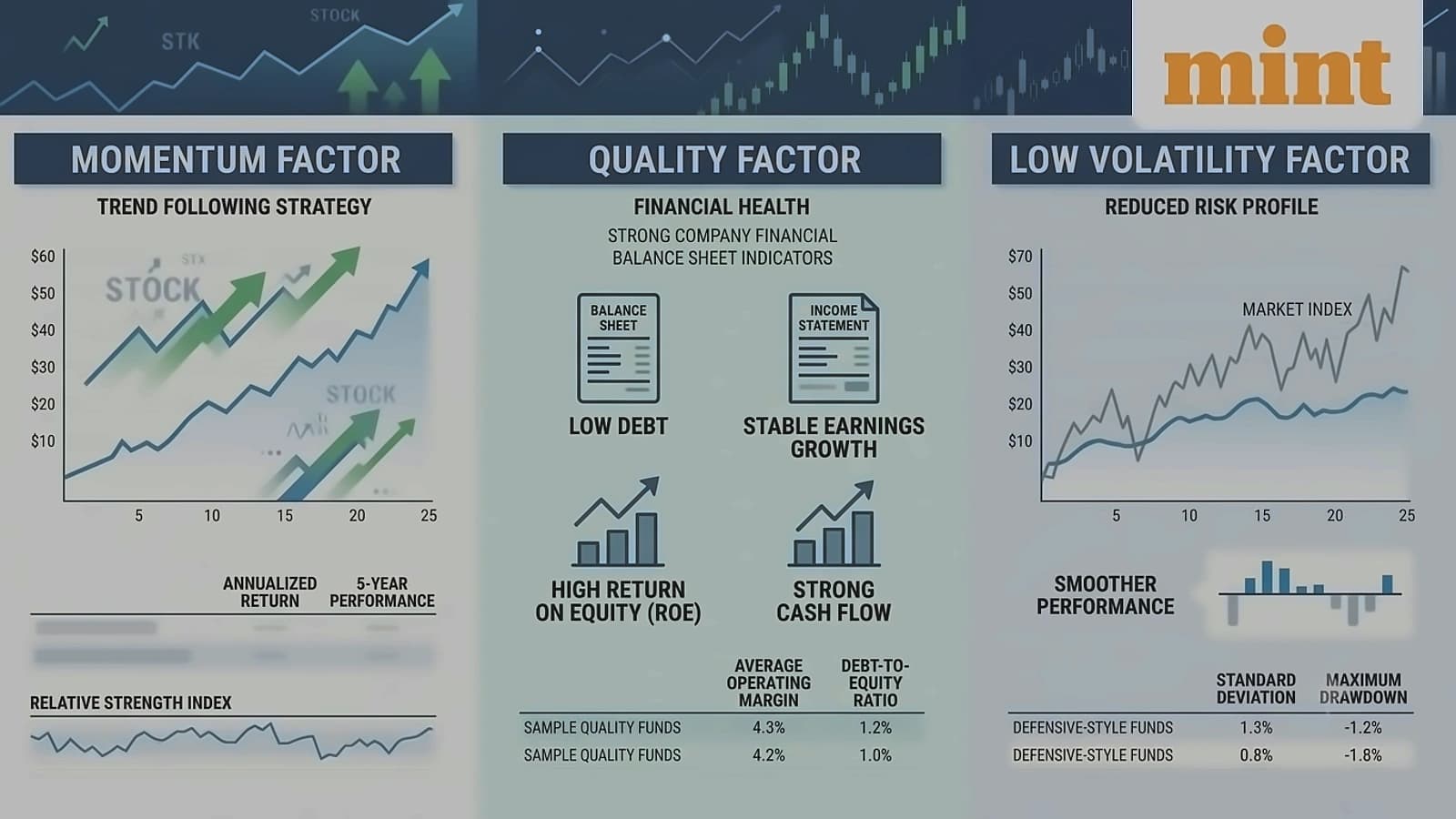
Momentum strategies capitalise on market trends by purchasing ascending stocks while exiting underperforming names. As reported by Mint, passive momentum funds execute this systematically by tracking dedicated benchmarks like the Nifty500 Momentum 50 or Nifty200 Momentum 30, which rank equities based on six-month and one-year price performance and rebalance bi-annually. In contrast, active momentum funds deploy proprietary quantitative frameworks that rely on distinct market signals. Fund managers such as ICICI Prudential AMC and Kotak AMC operate active momentum strategies, with some funds evaluating earnings trajectory across the preceding three quarters while blending quantitative data with qualitative reviews of corporate developments.
Active momentum funds employ several mechanisms to mitigate downside risk during market reversals. According to Mint, these include tactical hedging, increasing cash allocations to regulatory ceilings, or utilising faster rebalancing schedules. Financial advisors emphasise that investors must fully understand the inherent risks before committing capital, warning that active momentum funds remain susceptible to sharp drawdowns during market sell-offs unless the underlying framework incorporates stringent risk controls. Because active momentum strategies are relatively new to the market, experts recommend allowing these funds to establish longer track records to evaluate their effectiveness in capturing market upside while protecting against downside exposure.