Quality index funds represent a distinct approach to factor-based investing that focuses on financially strong companies rather than market capitalization. The Nifty200 Quality 30 Total Return Index has delivered a five-year CAGR of 12.99% with a beta of 0.80, meaning it moves less than the broader market. According to recent analysis, the index uses three key metrics over five years: return on equity, debt-to-equity ratio, and earnings per share change. Companies with strong ROE, low debt, and steady earnings receive higher scores, resulting in a portfolio that holds 30 companies based on quality scores rather than market cap. The fund's since-inception return of 17.44% demonstrates consistent long-term performance, though it carries a standard deviation of 13.19%, which is lower than the broader market.
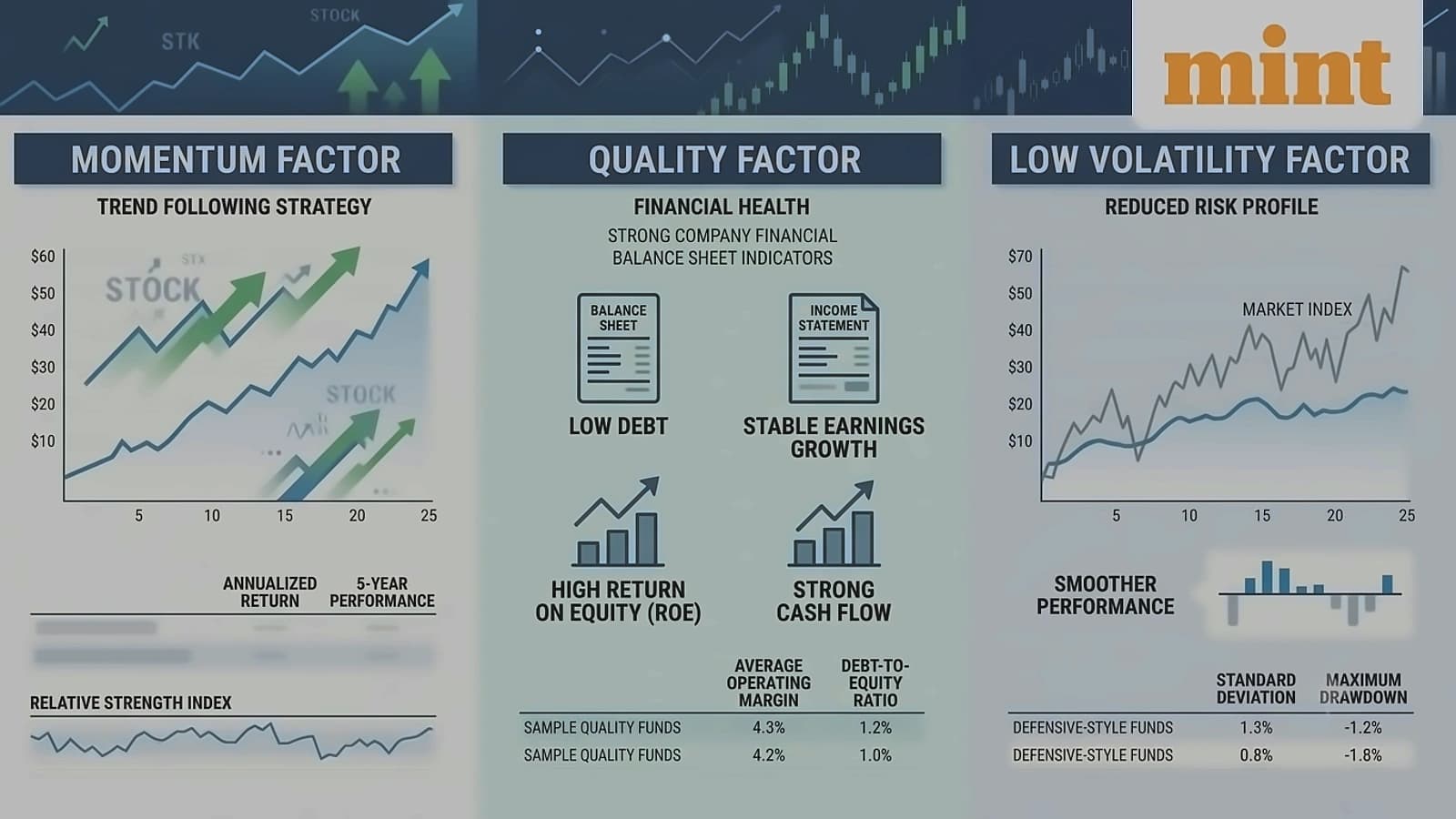
According to reports from Mint, active momentum strategies have dominated the one-year performance rankings among factor-based mutual funds. Motilal Oswal Active Momentum Fund leads with a 20.30% return, followed by Union Active Momentum Fund at 14.51% and Samco Active Momentum Fund at 14.20%. The top five performers also include Quant Momentum Fund at 5.98% and Mirae Asset Nifty Smallcap 250 Momentum Quality 100 ETF at 4.75%. Active momentum strategies invest in stocks that have demonstrated relatively strong price performance, betting that the trend may continue.
As reported by Mint, Samco Active Momentum Fund leads the three-year list with a 14.21% CAGR, followed by Kotak Nifty Alpha 50 ETF at 13.09% and Edelweiss Nifty Midcap150 Momentum 50 Index Fund at 12.46%. The remaining leaders include Tata Nifty Midcap 150 Momentum 50 Index Fund at 11.91% and Motilal Oswal BSE Quality ETF at 11.12%. The performance indicates that momentum-oriented strategies have maintained their strength across medium-term periods.
According to Mint data, ICICI Prudential Nifty 100 Low Volatility 30 ETF leads the five-year rankings at 7.33% CAGR, followed by its fund-of-funds counterpart at 7.17%. ICICI Prudential Nifty Alpha Low-Volatility 30 ETF ranks third at 7.03%, while Edelweiss Nifty 100 Quality 30 Index Fund follows at 6.99%. The quality factor approach offers a different risk-return profile, with FMCG comprising 27.43% and IT at 21.61% of the portfolio allocation, compared to the traditional market-cap weighted approach. Financial services, which typically represent around 35% in Nifty 50 funds, account for only 3.41% in quality index funds.
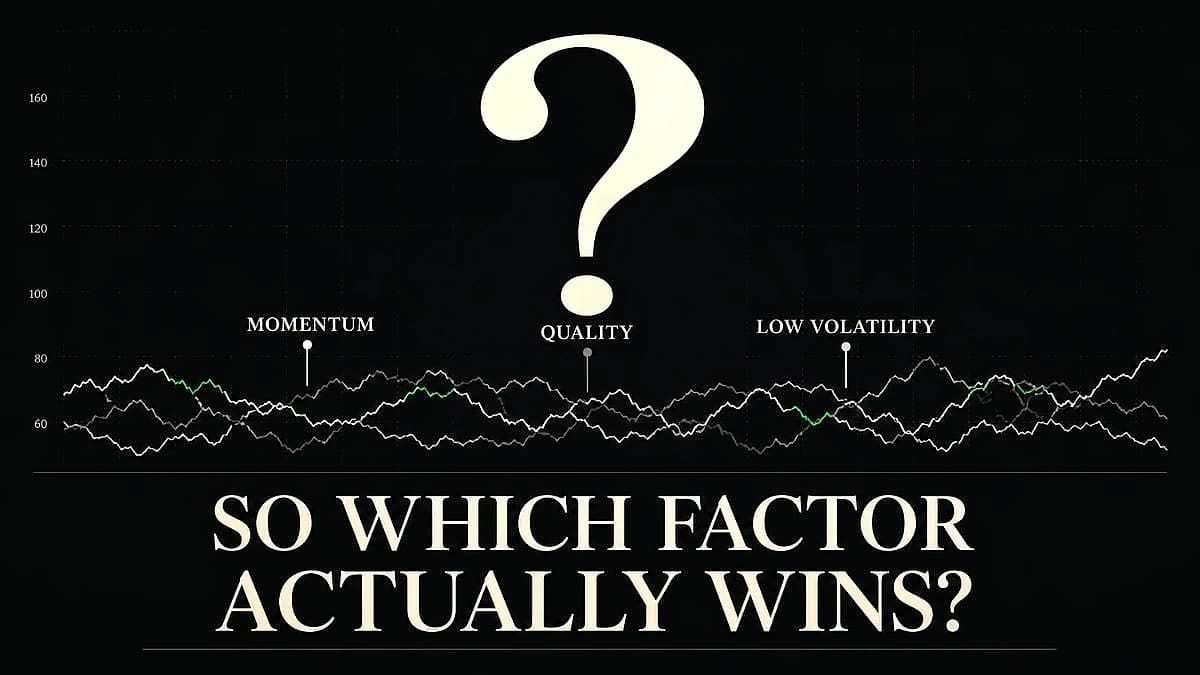
As reported by Mint, no factor scheme appears in all three performance lists, highlighting the cyclical nature of different investment strategies. Samco Active Momentum Fund features among the one-year and three-year leaders, but none of the five-year leaders appears in the other two lists. This pattern underscores the importance of comparing performance across multiple periods and understanding the underlying factors driving each strategy's performance. The analysis covers actively managed funds, passive index funds, and exchange-traded funds (ETFs) using momentum, quality, low volatility, and alpha-based strategies.