RBI Governor Sanjay Malhotra urged banks to accelerate AI adoption while strengthening oversight of models, data and technology vendors at the FIBAC banking conference on August 11. Speaking at the annual banking conference organized by the Federation of Indian Chambers of Commerce and Industry (Ficci) and the Indian Banks' Association (IBA), Malhotra emphasized that AI could widen access to credit and improve productivity but would require stronger oversight. He called on banks to maintain a complete inventory of AI models and implement board-approved governance frameworks, warning that banks should be able to explain important AI-driven decisions and subject their systems to red-team exercises. The message aligns with the RBI's broader effort to encourage financial-sector AI while building safeguards, as the central bank published the Framework for Responsible and Ethical Enablement of Artificial Intelligence (FREE-AI) report in August 2025. According to Hardik Shah, Managing Director and Partner at Boston Consulting Group (BCG), speaking at FIBAC 2026, the rapid adoption of AI would require the banking industry to fundamentally rethink processes rather than merely automate individual tasks, while maintaining strong controls and human accountability.
The World Bank's World Development Report 2026: The Promise of Artificial Intelligence released on August 4 provides clear guidance for developing countries like India regarding AI adoption, with a stark warning about the urgency of action. According to the report, "The window to get this right is narrow," said Gaurav Nayyar, director of the report. The report estimates that 4.5% of jobs in low- and middle-income countries could be automated by generative AI, while AI could improve 16.2% of jobs in developing countries, close to the 18.7% share in high-income countries. The report emphasizes that AI presents a once-in-a-lifetime opportunity to solve problems that have resisted solutions for generations, but warns that AI could widen gaps between countries, increase inequality within them, concentrate market power, weaken trust in public institutions, and create new risks for safety, rights, and social cohesion. For the 6.8 billion people -- 83 percent of humanity who live in low-income and developing countries, AI tools will need to be adapted to meet their needs, with solutions delivered through voice calls on basic mobile phones for those who cannot read or afford smartphones.

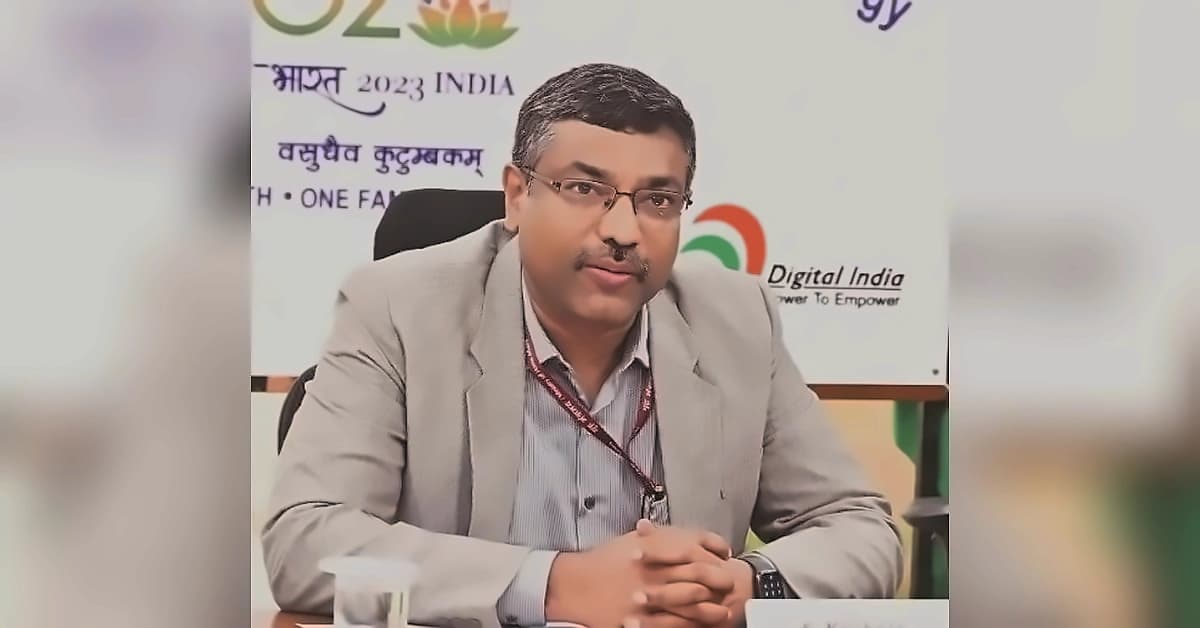
Hardik Shah, Managing Director and Partner at Boston Consulting Group (BCG), highlighted that "Cyber risk is a massive potential hurdle" with the use of AI, noting that the cost of creating cyberattacks has fallen 17-fold and the speed of attacks has increased significantly. Shah emphasized that "This is one area where banks, the regulator, the government together has to come together and completely overhaul the cyber security posture of the industry." He stressed that cybersecurity cannot be treated as an issue that individual banks can address in isolation, calling for higher investments, stronger capabilities and shared utilities at the industry level. Shah advocated creating an AI sandbox similar to the infrastructure developed around India's digital public infrastructure, including the Unified Lending Interface (ULI) and Account Aggregator framework. He suggested that a third-party and fourth-party vendor registry, along with protocols and accreditation processes, could allow banks to experiment with AI in controlled environments while accelerating innovation.
India already has much of the digital infrastructure required to support AI adoption, as highlighted by RBI Governor Sanjay Malhotra at FIBAC. He pointed to Aadhaar, UPI, DigiLocker, the Open Network for Digital Commerce (ONDC), the Account Aggregator system and the Unified Lending Interface (ULI) as existing foundations. ULI is an RBI-led digital public infrastructure project designed to allow information from multiple data providers to flow more easily to lenders, reducing the cost and complexity of gathering information for credit decisions. The pressure to use AI more effectively comes despite a sharp increase in banks' technology spending, with a report released at FIBAC by Boston Consulting Group estimating that Indian banks' IT costs rose 6.1 times between fiscal 2015 and fiscal 2026, representing compound annual growth of about 18%. However, the industry's cost-to-income ratio increased slightly from 47.3% in fiscal 2015 to 48.6% in fiscal 2026, with operating expenses growing at an annualized 11.2% over the period, marginally faster than operating income at 10.9%.
According to the World Bank's enterprise survey, about one in five small firms in developing economies had recently used an AI chatbot, which was close to the rate in the United States where about one in four small firms had used one. However, the adoption gap widens significantly for more advanced AI applications. Only about 10% of firms in developing countries used AI agents or workflow automation, compared with 24% in the United States. This represents a capability gap where some firms can redesign work around AI while others can use chatbots only for basic tasks. The report shares examples of AI applications in governance, such as increasing diabetes screening volumes in Bangladesh or reducing costs for Indian farmers through advanced weather forecasts. However, the report warns that AI could cut off economic mobility by eliminating many of the middle-class jobs that enable it, even though risks to employment in developing countries are currently low. The World Bank advocates that developing countries do not need large models or big data centers to reap its benefits, emphasizing the need for adaptation of lower-cost AI tools to local conditions.
The report identifies practical business uses of AI including voice-based tools for retailers to prepare stock lists or compare supplier prices, repair shops for translating instructions and preparing cost estimates, and small manufacturers for improving production schedules and quality checks. RBI Governor Sanjay Malhotra emphasized that AI could change how banks assess borrowers, particularly people and businesses for whom conventional credit histories are limited or nonexistent, using alternative data such as cash flows, Goods and Services Tax filings, utility payments and activity on digital platforms to assess new-to-credit customers, gig workers and other underserved borrowers. He also highlighted that AI could help lenders extend more credit to micro, small and medium-sized enterprises, improve fraud detection and offer services through Indian-language interfaces. According to Hardik Shah, Managing Director and Partner at Boston Consulting Group (BCG), AI could help democratise access to credit for small businesses and agriculture by lowering the high operating costs associated with servicing smaller loans. While nearly 80 per cent of India's adult population now has access to credit, entry-level products can carry interest rates of 20-25 per cent, partly because operating costs are two to three times the credit cost. Shah said banks must reshape entire processes around AI to unlock productivity gains, rather than simply automating individual steps.