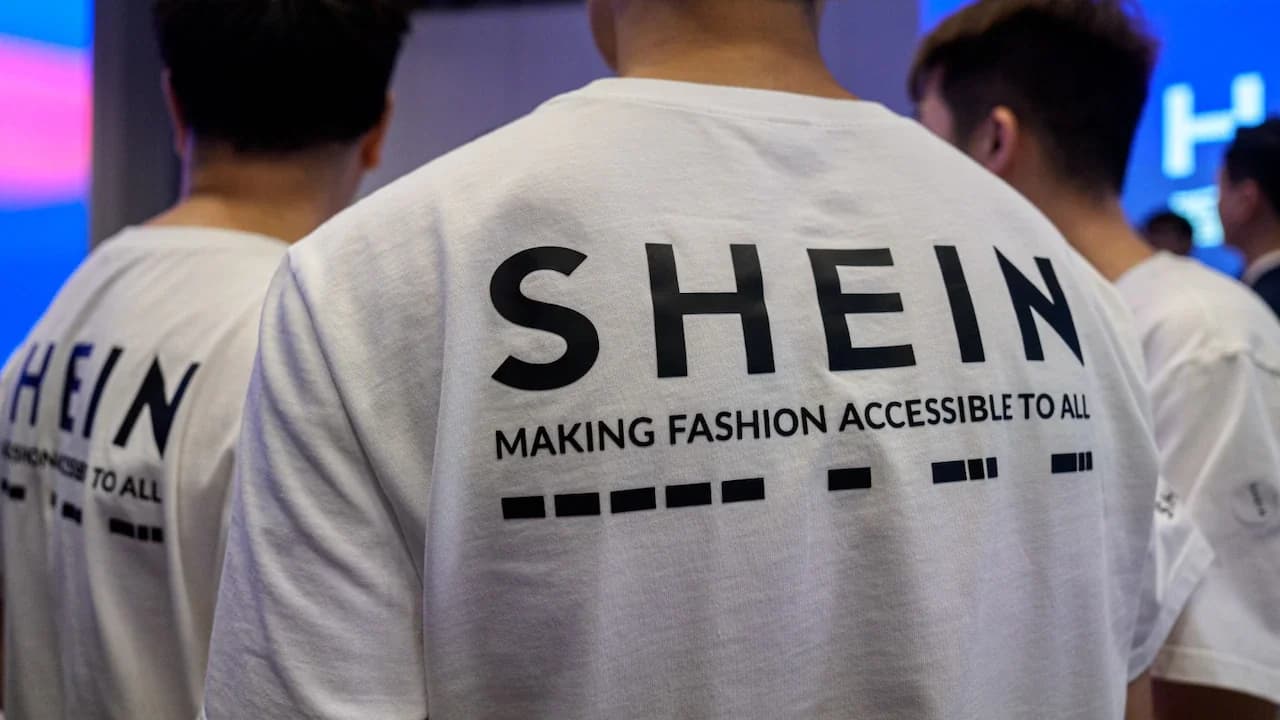
Online fast-fashion retailer Shein is set to price its Hong Kong IPO near HK$48.56 per share, raising approximately $1.7 billion at a $26.5 billion valuation, according to reports from Reuters. The pricing comes close to the midpoint of the company's marketed range of HK$47.60 to HK$49.50 per share, with the overall order book already fully covered, indicating strong initial investor demand despite the company's valuation reset. The listing represents a significant discount to Shein's previous private-market valuations, representing approximately one-quarter of its nearly $100 billion peak valuation in 2022 and significantly below the $66 billion valuation recorded during a 2023 fundraising round. The company is scheduled to announce the final IPO price on August 31, with trading expected to begin on September 1.
The Hong Kong debut marks a major strategic shift for Shein after years of failed attempts to establish itself as a global company through listings in New York and London. As reported by Reuters, the company moved its headquarters to Singapore in late 2021 and spent years emphasizing its international profile, but regulatory approval from Chinese authorities proved a major obstacle to Western listings. The company's efforts to demonstrate its contribution to China and reinforce domestic business ties helped convince authorities that the company remained fundamentally Chinese. Shein has opened a research and development centre in Nanjing, where the company was founded in 2012, and announced $1.5 billion of investment plans by the company. The prospectus identifies China as the foundation of its global logistics and fulfilment network, with almost 80% of its employees based in mainland China.
The IPO comes as Shein confronts a more challenging operating environment, dealing with slower revenue growth, weaker earnings and shrinking margins, alongside higher trade costs, tighter regulation and intensifying competition. As reported by Reuters, the company expects first-half revenue growth to broadly track the 1.1% growth it reported in the first quarter, while its operating margin is expected to decline slightly. The company's first-quarter 2026 results showed a loss of $99 million, a significant decline from a $395 million profit in the same period the previous year. The company has also agreed to pay as much as $3.5 billion in cash to certain investors who purchased special shares during earlier private funding rounds, adding to the financial considerations surrounding the IPO.
Cornerstone investors have committed to buying approximately $383 million worth of shares, with existing shareholders Boyu Capital, Tiger Global, and General Atlantic leading the participation. According to Reuters, Boyu's commitment is the biggest at $150 million, while Tiger Global is $53 million, General Atlantic is $50 million. Additional investors include Tencent, Greenwoods, Taikang Life, and UBS Asset Management. The company plans to use roughly 80% of the IPO proceeds to strengthen its technology infrastructure and expand its brand and international presence. The listing comes after Shein spent the past four years pursuing potential listings in New York and London, but faced regulatory scrutiny and increasing business pressures in the United States and Europe, two of its most important markets.

According to Reuters, regulatory hurdles and geopolitical risk will continue to be a challenge for Shein. The company faces challenges from new European import charges, pricing pressure, and weaker demand in the Middle East linked to the Iran war, which are contributing to shrinking margins and headwinds from higher trade costs and intensifying competition across global e-commerce. Additionally, Shein's $80 million acquisition of US clothing brand Everlane in May is facing a national security review by the Committee on Foreign Investment in the United States (CFIUS). Hong Kong IPOs have raised approximately $41 billion so far this year, a record for the period and more than double the $17 billion raised a year earlier. The growing regulatory and geopolitical pressure on Shein in Western markets has contributed to Beijing increasingly viewing the company as a strategically important Chinese business that could benefit from government support.