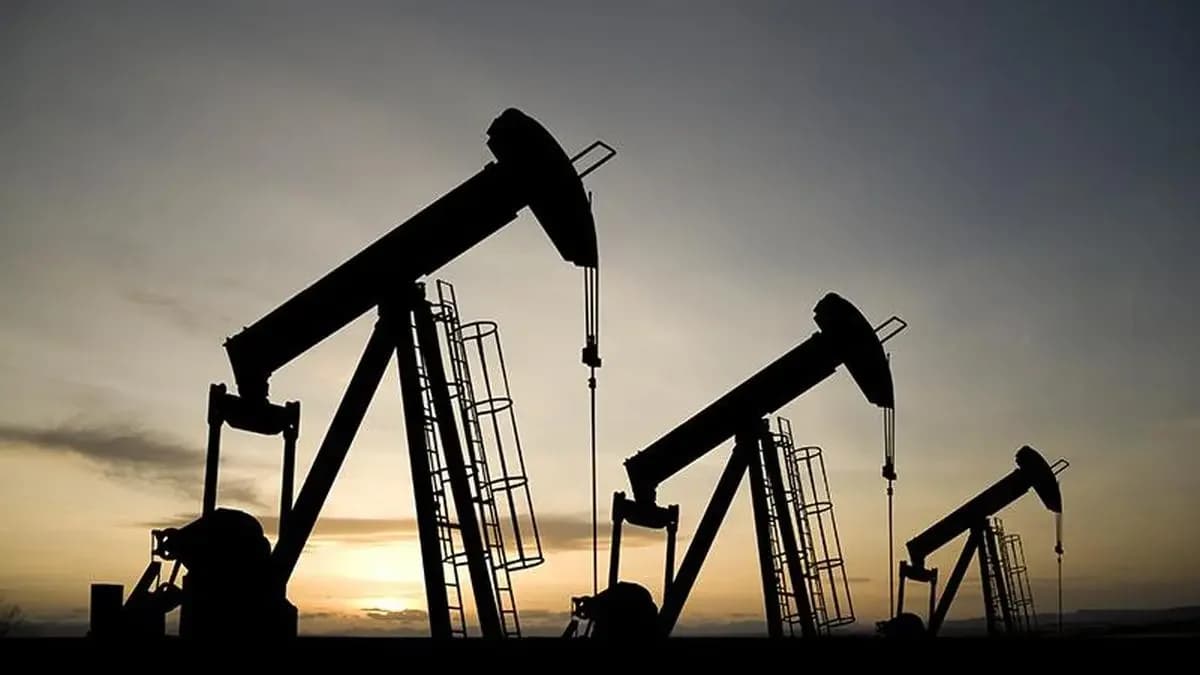
Crude oil prices have escalated dramatically, with India's crude basket climbing to $128.7 a barrel on September 14, nearly 30% higher than the $99.35 recorded on September 2. The latest surge has come after crude prices had moderated in the preceding months, with Brent crude futures trading at $105.89 a barrel and WTI at $102.29 a barrel as of Tuesday morning. According to The Financial Express, Prashant Vasisht, Senior Vice President and Co-Group Head, Corporate Ratings, ICRA, attributed the increase to renewed hostilities around the Strait of Hormuz and the closure of Saudi Arabia's East-West Pipeline, which carried around 4-5% of global liquids demand. The Indian crude basket averaged $109.76 a barrel in September, compared with $90.19 in August, with the basket reaching $115.98 a barrel on September 9 before rising another 11% over the next five days. Brent crude oil benchmark had previously surged 8% higher last week due to supply disruptions, rising above the $100 threshold for the first time since July.

India's oil marketing companies are facing renewed pressure on fuel margins as crude prices approach $130 a barrel. Marketing margins, after adjusting for Special Additional Excise Duty (SAED), stood at negative ₹7.7 a litre for petrol and negative ₹2.6 a litre for diesel as of September 14, according to ICRA's Prashant Vasisht. Without the SAED adjustment, the margins were negative ₹9.2 a litre on petrol and ₹27.6 a litre on diesel. OMC under-recoveries were already around ₹61,900 crore at the end of the June quarter, with Vasisht warning that under-recoveries on domestic LPG and auto fuels could be substantial if pump prices are not revised and this scenario continues. The pressure on fuel companies could increase if international crude and freight costs remain elevated while domestic pump prices are not revised accordingly.
India's heavy dependence on crude imports makes the current price volatility particularly concerning for the economy. Government data showed that crude import dependence was approximately 88.6% during FY26 up to January 2026, with more recent PPAC-linked data placing dependence at about 88.3% during April to July 2026. Latest import data show that this is already more than a theoretical concern, with India's crude import bill increasing to $63.4 billion during April to July 2026 from $40.5 billion in the corresponding period last year. That was a 56.5% increase even though import volumes rose by only 0.5%, according to PPAC data. India's current account deficit (CAD) has risen to $11.2 billion during April-July this fiscal year against $6.6 billion during the same period in FY26. As per Brickwork Ratings, estimates suggest that every $10 a barrel adds about $13-14 billion to the yearly import bill and can lift retail inflation by 30 to 50 basis points. A $10 per barrel increase in crude prices could widen the current account deficit by 0.35-0.5 percentage point of GDP, add 20-25 basis points to inflation and reduce GDP growth by 15-20 basis points, according to analysts tracking the sector.
For Indian refiners, the increase in crude prices is being accompanied by higher transportation costs. The Aframax tanker rate for carrying crude from Russia's Black Sea port of Novorossiysk to West India increased for the seventh consecutive week in the week ended September 6, rising 2.7% from the previous week. Freight costs to India have climbed to $23.20 a barrel, compared with $25.70 a barrel for the corresponding route to North China. Sumit Ritolia, lead analyst for refining supply and modelling at Kpler, explained that the closure of the Saudi East-West Pipeline had reduced routing flexibility for Indian refiners at a time when several major oil transit routes were already under pressure. India is likely to rely further on a wider mix of crude sources, including Russia, the US, West Africa and Latin America, to reduce its exposure to individual supply corridors. Russian crude remains particularly important, with barrels transported through the Black Sea and Baltic gaining greater significance from a supply-security perspective as multiple chokepoints face disruption.
The government's finances could face additional pressure from the crude price increase, particularly through fertiliser subsidies. The budget had provided ₹1.77 lakh crore for fertiliser subsidy, with earlier estimates indicating the bill could rise to around ₹3 lakh crore due to elevated prices of crude oil and its derivatives, LNG and imported fertilisers during March-April. However, the estimate has been revised to ₹2.2-2.3 lakh crore, but renewed volatility in crude prices could result in another upward revision, adding to fiscal pressure from higher input costs. Chief Economic Adviser V Anantha Nageswaran had warned that crude at $130 a barrel for two-three quarters could reduce FY27 growth to 6.4%, push inflation to 5.5% and widen the current account deficit to around 3.2% of GDP. If crude remained at $110-115 a barrel for six months, India's import bill could increase by $56-64 billion, with growth falling below 6% and inflation remaining above 5%.
While the financial impact is becoming more visible, the immediate risk of physical fuel shortages is comparatively limited. India has around 74 days of total fuel reserves, according to analysts tracking the sector, providing a buffer against an immediate disruption in physical availability. The concern is therefore increasingly centred on the cost of securing crude rather than an immediate shortage of fuel. Global oil prices remained firm on Tuesday as attacks on Saudi Arabian energy infrastructure kept the East-West Pipeline offline, with supply concerns also increasing after Iran-backed Houthi forces in Yemen launched fresh attacks on Saudi Arabia on Monday, while Gulf Arab states postponed planned discussions with Iran. For India, the key issue now is how long crude and associated shipping costs remain elevated, as a prolonged increase would have implications not only for refiners and fuel marketing margins, but also for the country's import bill, inflation, current account and fiscal position.