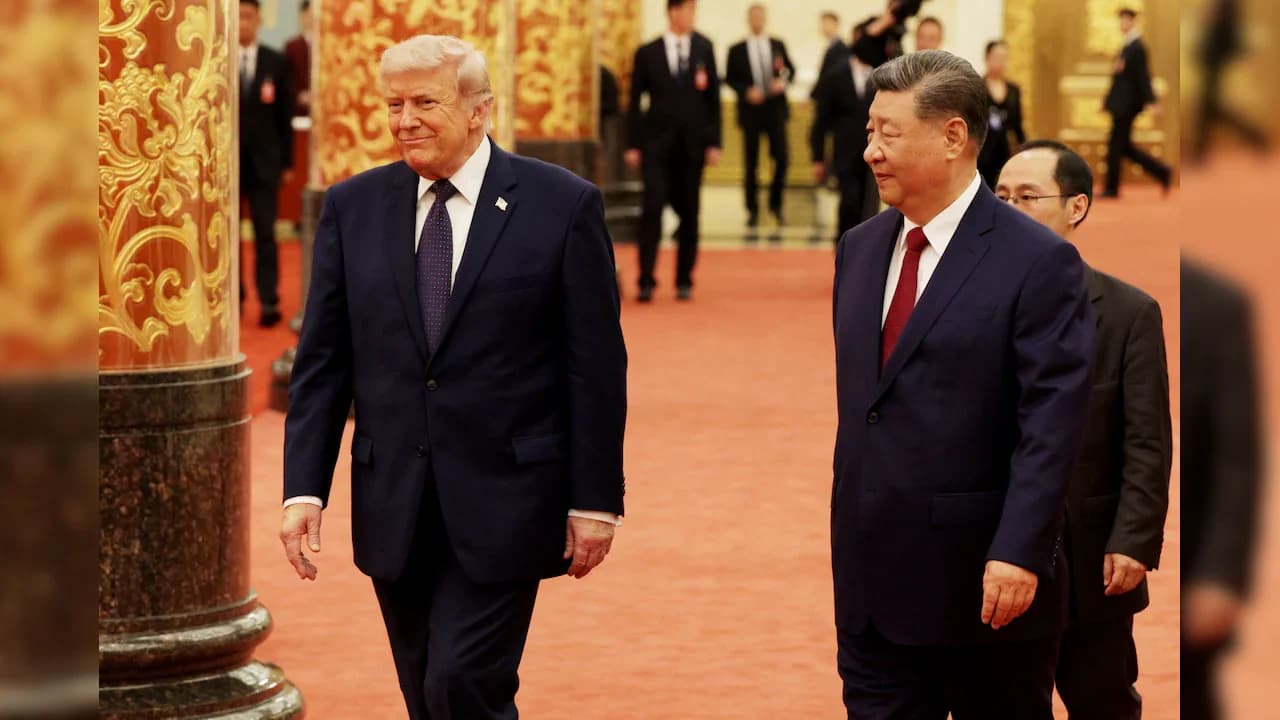
US and Chinese officials have established a landmark 'US-China AI dialogue' during their preliminary summit preparations in New York. According to AFP, US Treasury Secretary Scott Bessent announced that the two sides discussed setting up a notification mechanism for potential AI incidents that could rise to national security level. Bessent described the engagement as 'very successful' on both trade and AI issues, with both nations agreeing to meet again in the future. The discussions, which lasted around eight hours at JPMorgan Chase's headquarters, also included top US trade official Jamieson Greer and Chinese Vice Premier He Lifeng. Bessent and He also conducted one-on-one discussions during the day, as reported by AFP. US Treasury Secretary Scott Bessent emphasized that it is 'imperative that we are able to work together' and stressed that the talks are a prelude to the planned White House meeting.
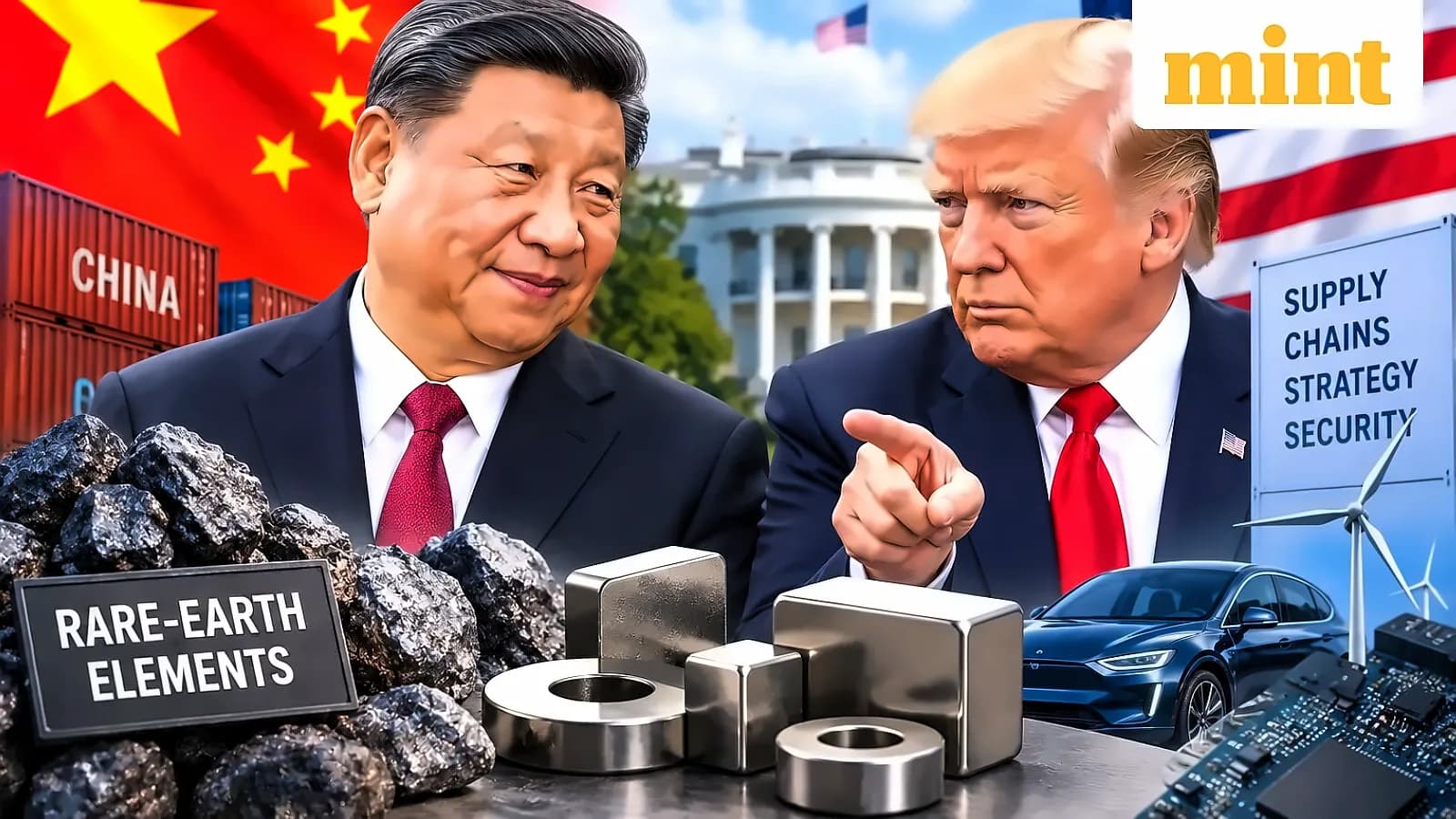
The ongoing talks are expected to address Chinese supplies of rare-earth magnets and critical minerals, which have reportedly dropped ahead of this diplomatic engagement. As reported by Live Mint, stock market experts are advising investors to position themselves in rare-earth magnet-related stocks ahead of this diplomatic engagement. Seema Srivastava, Senior Research Analyst at SMC Global Securities, highlighted that major diversified mining and metal giants like Vedanta, Hindustan Zinc, and National Aluminium Company (NALCO) react strongly to global critical mineral supply anxieties. Specialised industrial mineral players such as Gujarat Mineral Development Corporation (GMDC) and Ashapura Minechem frequently experience speculative buying during such periods. The discussions also include guardrails for AI development and ways to reduce shared risks in advanced AI systems, as reported by AFP. India and the US have already signed a Strategic Critical Minerals Cooperation Framework covering mining, processing, recycling, financing and resilient supply chains, with India separately developing rare-earth corridors in Odisha, Kerala, Andhra Pradesh and Tamil Nadu.
A significant focus of the discussions will be the current US-China trade truce, which is due to expire on November 10. According to AFP, both sides are looking to ease tensions on trade, technology and other strategic concerns through the possible extension of trade truce and identification of 'non-sensitive' goods that can be considered separately from trade measures. Ahead of the summit, negotiators are reportedly working on selective, mutual tariff rollbacks covering roughly $30 billion in goods on both sides. This includes lower duties on American energy and agricultural products, and reduced tariffs on Chinese products required as industrial inputs by US manufacturers. Washington and Beijing are discussing cooperation on artificial intelligence, trade in non-sensitive goods and a possible extension of the agreement that helped ease tensions between the world's two largest economies, as reported by The New York Times. Both sides have accused the other of failing to honour commitments under the trade arrangement, with disputes increasingly spilling into technology, supply chains and business regulation.
The summit serves as a critical geoeconomic battleground for technology, specifically Artificial Intelligence (AI). President Trump has emphasized the geopolitical stakes, stating that leadership in AI determines global dominance. The global economy will watch for whether the leaders can formalize government-to-government dialogues on AI risk and model safety standards. Concrete definitions on tech controls-such as whether the US allows the export of advanced semiconductor hardware-will reshape global tech supply chains, altering investment flows across Silicon Valley, Taiwan, and Shenzhen. As reported by AFP, US Treasury Secretary Scott Bessent stressed Sunday that it is 'imperative that we are able to work together' and that both sides are seeking to ensure the continued flow of rare earth magnets and critical minerals that are vital for US manufacturers. The US-India TRUST initiative now encompasses semiconductors, AI, quantum technology, critical minerals, biotechnology, energy and space, with the initiative also envisaging an AI infrastructure roadmap intended to accelerate US-origin AI investment and infrastructure in India.
The preliminary talks set the stage for President Trump and President Xi Jinping's planned White House meeting on September 23, marking the summit between the world's two biggest economies. According to AFP, former US deputy secretary of state Kurt Campbell cautioned that expectations for the summit are low, stating 'One of the only things we can hope for in the short term is a truce, and that this will likely continue through the remainder of this year'. Campbell also predicted that Trump will announce the intention to meet with Xi Jinping two more times, including meetings at the Asia-Pacific Economic Cooperation (APEC) forum in Shenzhen, China in November and the G20 summit in December at Trump's Doral resort in Miami. The Chinese delegation was led by Chinese Vice Premier He Lifeng and included Chinese official Li Chenggang, who was elevated to a top-level international trade representative post shortly before the meetings, as reported by AFP.