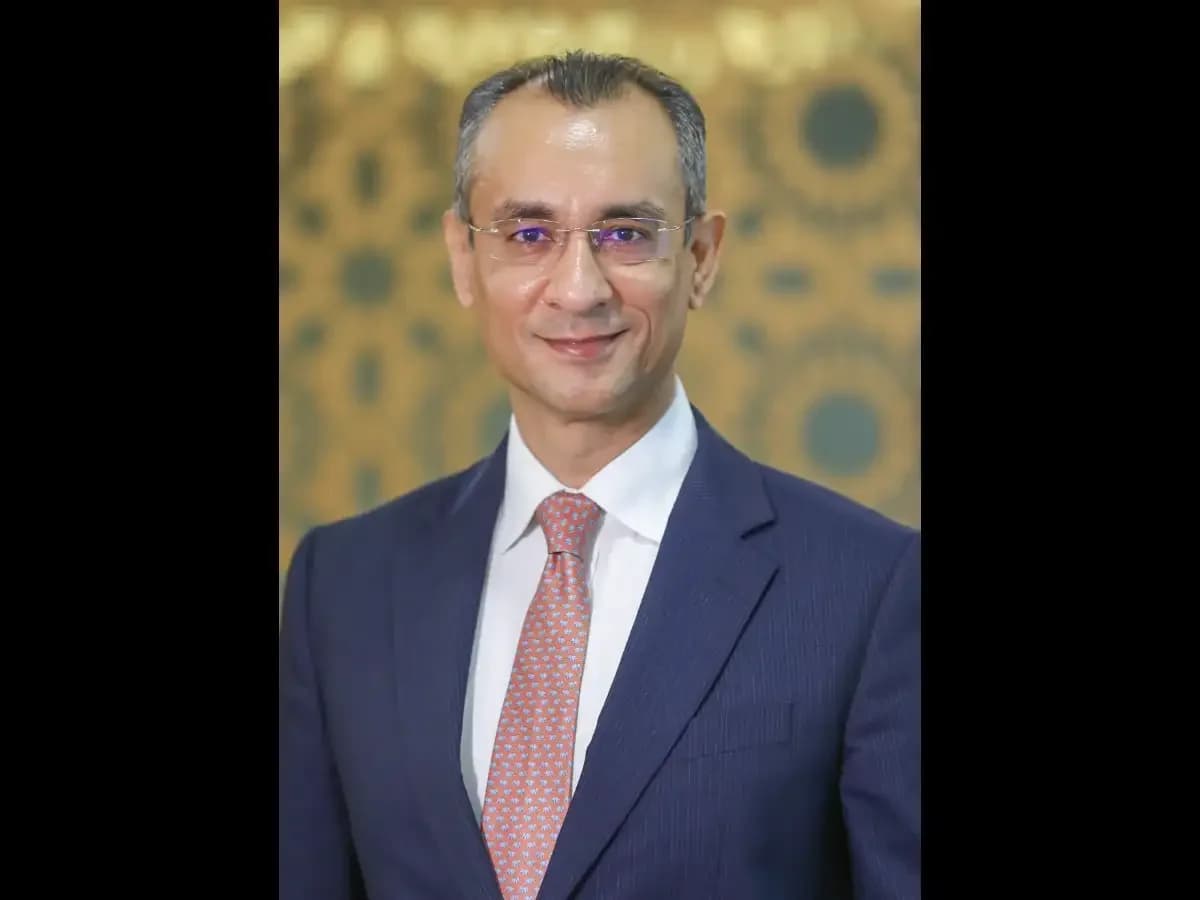
According to ETMarkets Smart Talk, Praveen Jagwani, CEO of UTI International, advocates for a fundamental shift in investment approach for the coming 6-12 months. He argues that the focus should be less on chasing returns and more on preserving capital, as global risks are increasingly stacked against speculators. Jagwani emphasizes the need to eliminate leverage and build a core portfolio across quality equities, high-grade debt, precious metals and real estate to ensure maximum diversification. As reported by The Economic Times, he believes that the coming 12 months would be evaluated not so much on total returns made but total capital saved. He notes that absolute resilience is a moving target, always aspired for but rarely fully captured, representing the perfectly diversified portfolio across uncorrelated asset classes to shield wealth from various market factors.
The potential Federal Reserve rate hike poses significant challenges for Indian markets, according to Jagwani's analysis. He notes that a US 10-year yield hovering around an attractive 5% creates a formidable headwind for all major currencies, including the Indian Rupee. As reported by The Economic Times, the current inflationary cycle is fundamentally driven by supply-side shocks, chiefly oil prices and tariffs, rather than excessive demand. Jagwani explains that the RBI will face intense pressure to follow suit simply to maintain capital equilibrium as central banks in Japan, the Eurozone, and the UK already pushing rates higher. He warns that even if the greenback undergoes long-term structural debasement, its immediate path will trigger sharp volatility across emerging market asset classes. Global yields and foreign flows will certainly influence the near-term path of Indian bond yields, particularly at the longer end of the curve, though India's bond market remains insulated due to domestic participants.
Despite elevated valuations in parts of the market, Jagwani maintains that resilience does not necessarily require a broad reduction in equity exposure. According to The Economic Times, he recommends owning businesses with durable earnings visibility, sound balance sheets, pricing power and credible capital allocation. He emphasizes that India's structural growth opportunity remains compelling, but markets do not move in a straight line, and valuation dispersion is significant, especially across parts of the mid- and small-cap universe. Jagwani advises investors to diversify across market capitalisations and styles, rebalance periodically, and ensure that their equity allocation remains aligned with their time horizon and risk capacity. He notes that India continues to command a valuation premium relative to many markets, reflecting its growth profile, but elevated oil prices, global yields and tighter financial conditions remain important variables. From a bottom-up perspective, there are more opportunities across the market given the challenging period that the market and economy have been through over the past two years, as noted by Business Standard interview with Vetri Subramaniam, MD & CEO of UTI Asset Management Company.
Jagwani expresses confidence in India's debt market over the long term, citing relatively robust nominal growth, a deepening domestic savings pool, improving policy credibility and a progressively broader investor base. As reported by The Economic Times, he notes that India remains insulated to a degree to the global malaise while global fundamentals for many debt markets are increasingly impaired. He highlights that India's bond market is not driven by external flows, with primary participants being domestic banks, insurers, provident funds and mutual funds who provide a substantial and stable demand base. Jagwani expects the long-term investment case to be strengthened further by continued fiscal consolidation, contained inflation, prudent government borrowing and the steady broadening of global investor access. Recent trading dynamics also point to relatively contained movements in the 10-year G-Sec despite pressure from higher global yields, demonstrating India's resilience in the current environment. Higher US yields can influence allocations by global investors, but global bond investors are aware of the fiscal and other pressures contributing to this rise, as noted by Business Standard. Emerging Market bonds have handsomely outperformed US & Developed Market bonds over 1, 3 and 5 years, providing some comfort for Indian debt markets.
According to The Economic Times, Jagwani identifies investor complacency around concentration and liquidity as the biggest underestimated risk globally. He warns that strong recent returns can encourage investors to crowd into the same popular themes, high-beta segments or smaller companies, often without fully recognizing how quickly liquidity can disappear when sentiment turns. For Indian assets, he highlights the risk of contagion from global macro shocks, particularly higher-for-longer global yields, sustained oil-price strength, a weaker rupee or a sudden reversal in foreign flows. He emphasizes that disciplined asset allocation and valuation awareness are likely to matter more than trying to chase the latest outperforming pocket of the market. As he notes, liquidity is like a cab on a rainy evening, disappearing when you need it most, making diversification across asset classes, market-cap segments and sources of return essential for portfolio resilience. The main goal should be to use SIPs as means of building long term wealth, while ensuring that the investment portfolio itself is appropriately diversified and aligned with the investor's horizon and risk tolerance, as emphasized by Business Standard.