Veteran investor Prashant Jain believes the current bout of volatility triggered by global conflicts is unlikely to leave lasting scars on Indian markets. According to reports from ET Now, Jain, who has over three decades of market cycles behind him, argues that uncertainty weighing on stocks today may give way to opportunity sooner than many investors expect. Drawing on historical parallels, he emphasized that wars have been there for thousands of years and eventually end. His latest investor note titled 'This Too Shall Pass' reinforces this optimistic stance amid current market noise.
Jain highlighted that India's exposure to the ongoing conflict is indirect, primarily through energy prices and potential supply-chain disruptions rather than direct geopolitical involvement. As reported by ET Now, he noted that since India is not a party to this war, our impact is mainly through the oil prices, the gas prices, and any disruptions in the supply thereof. He emphasized that India is far better placed to handle the oil price shock this time around than in the past, with the country's oil import burden now accounting for around 3 per cent of GDP - a significantly lower level than in previous crises.
Jain pointed out that India's oil import burden, measured as a share of GDP, has come down significantly over the years. According to ET Now, he stated that oil imports now account for around 3 per cent of GDP. While acknowledging that a sustained rise in crude prices could widen India's current account deficit, he described the likely impact as manageable. Even if oil averages at $110 or so, your current account can go from 1 per cent to 2 per cent, he said, adding that this is quite manageable. His latest analysis shows that even if crude averages $110 for an extended period, the current account deficit moving from around 1% to perhaps 2% of GDP - uncomfortable but far from catastrophic.
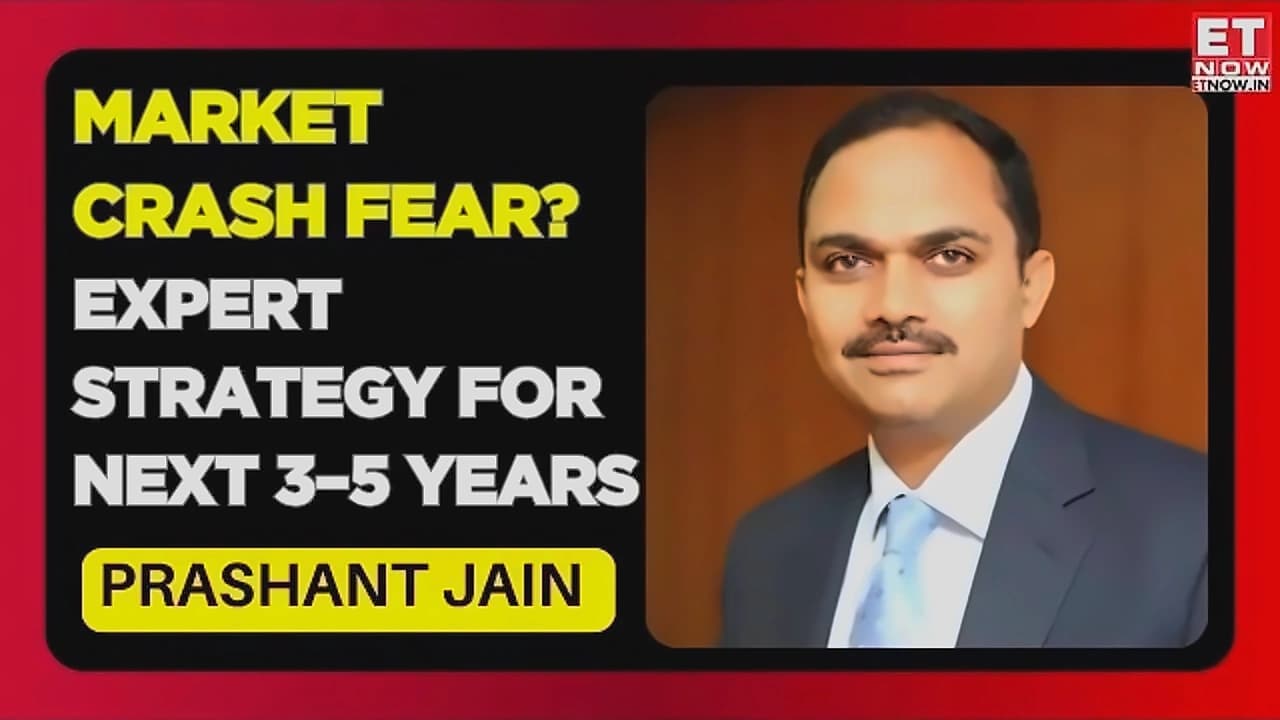
While most market commentary fixates on FII selling as the primary risk, Jain points to a counterweight that he believes is being overlooked. The primary market - IPOs and fresh issuances - has dried up sharply after retail investors lost money on roughly two out of every three issuances over the past 18 months. With primary markets unlikely to absorb domestic capital for some time, he argues that SIP flows and retail money will be redirected into secondary markets, providing meaningful structural support. Whenever FII selling moderates or stabilises, that domestically supplied bid should become increasingly visible, creating a more resilient market structure.
Jain's portfolio positioning has maintained a deliberate largecap tilt for the past 18 months, and this conviction has only deepened. At 17.5x one-year forward earnings, he believes Nifty now offers room for multiple expansion once stability returns - something he says has not been arguable for several years. His preferred sectors span a wide but coherent range, with particular focus on large banks and sectors that demonstrate resilience during volatile periods. His message emphasizes disciplined optimism: India can absorb the oil shock, domestic flows will cushion FII exits, and Nifty at 17.5x forward earnings is no longer expensive - a playbook built for investors who can look past the next few quarters of noise.