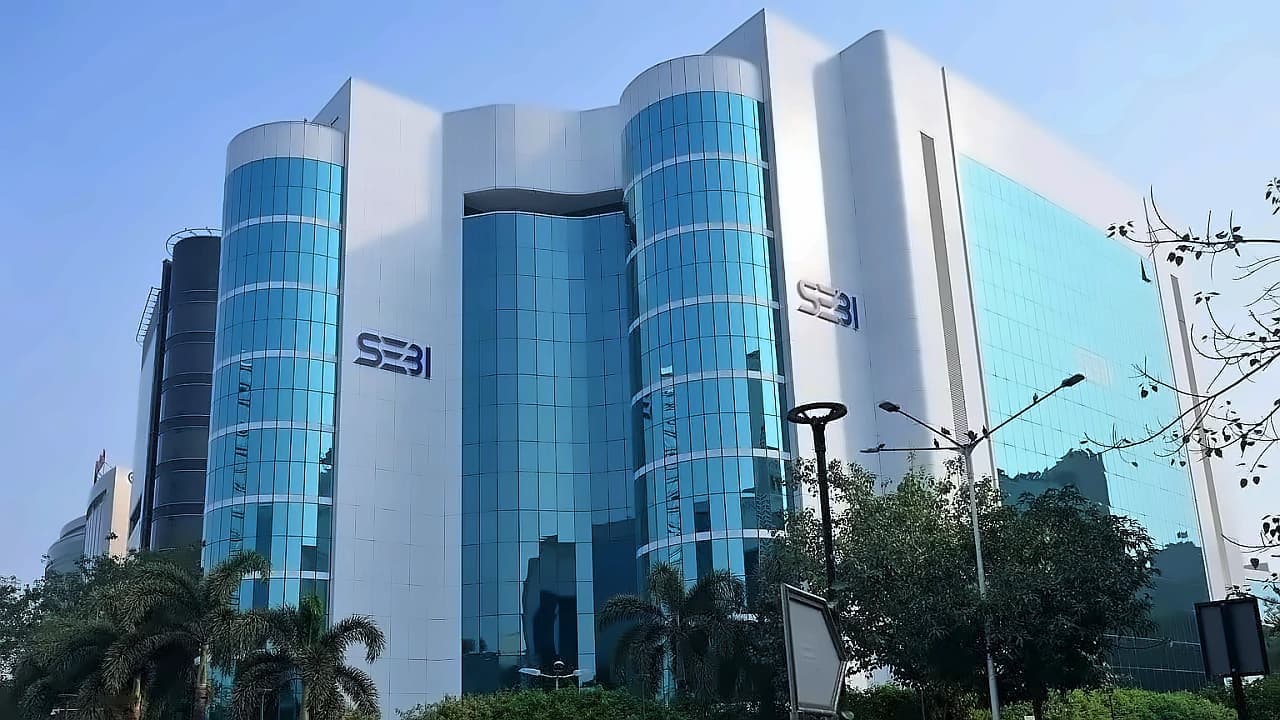
The Securities and Exchange Board of India's Secondary Market Advisory Committee (SMAC) has endorsed retaining the existing Volume Weighted Average Price (VWAP) methodology for determining settlement prices of index and stock derivatives on expiry days, rejecting an immediate shift to a blended formula incorporating closing auction session (CAS) prices, according to three sources told Moneycontrol. The committee has favoured retaining the existing 30-minute VWAP methodology for at least a year before the regulator considers a transition to a new methodology. This recommendation follows feedback from market participants after CAS was introduced for stocks in the futures and options (F&O) segment on August 3, 2026, which replaced the earlier closing-price process with an auction-based system, prompting concerns over price volatility and the impact of auction-derived prices on derivatives settlement. CNBC TV18 reports that the panel has also proposed extending derivatives trading until 3:45 pm, while the treatment of market orders during the auction remains under review. The development comes after SEBI received over 20,000 comments on its consultation paper on the closing auction session (CAS), introduced for stocks with derivatives contracts from August 3.
Market participants are showing strong preference for maintaining the current Volume Weighted Average Price (VWAP) methodology for derivatives settlement, as reported by NDTV Profit, The Financial Express, and The Hindu BusinessLine. The feedback received through SEBI's consultation process indicates that market participants are comfortable with the existing settlement mechanism for derivatives on expiry days. This preference for the current methodology suggests that the market may not be seeking significant changes to the existing CAS framework, which could influence SEBI's final decision on the proposed modifications. The consultation process closed on October 3, providing SEBI with comprehensive feedback from market participants, with the consultation paper receiving around 20,000 comments by the deadline. Many market participants have urged SEBI to retain VWAP-based settlement pricing on expiry days—Tuesday for Nifty options and Thursday for Sensex options—and introduce blended pricing on non-expiry days for a year before transitioning fully to the blended framework, according to SMC Capitals Ltd chairman D.K. Aggarwal. Notably, the CAS mechanism had resulted in a sharp decline in the trading volumes in futures and options (F&O).
Under Option 2 of SEBI's September 12 consultation paper, the settlement price will be calculated using the VWAP of trades executed between 3 pm and 3:30 pm during the continuous trading session (CTS), as reported by Moneycontrol. The panel has favoured retaining this arrangement for at least a year before the regulator considers a transition to a new methodology. The recommendation follows feedback from market participants after CAS was introduced for stocks in the futures and options (F&O) segment on August 3, 2026. SEBI's consultation paper had offered two alternatives: a blended VWAP incorporating trades during the final 30 minutes of continuous trading and the 10-minute auction, or retaining the CTS-only VWAP as an interim arrangement. Unlike a simple average, VWAP takes into account both the price and volume of trades, making it more sophisticated than traditional methods. For instance, if 100 shares are traded at ₹10 each and 50 shares at ₹12 each, the VWAP is ₹10.67, compared with a simple average price of ₹11.
SEBI introduced the CAS for stocks with futures and options (F&O) contracts on August 3, 2026, with the auction-based mechanism designed to improve the closing price discovery process by matching buy and sell orders to arrive at a single equilibrium price. However, the market was initially unprepared for the new mechanism, which shifted trading activity toward the auction window, causing the average daily turnover in the F&O segment to fall to ₹193.34 lakh crore in August 2026, down from ₹277.84 lakh crore in June and ₹214.30 lakh crore in July. As reported by The Hindu BusinessLine, trading activity rebounded after SEBI indicated it would reconsider the methodology, with average daily turnover rising to ₹226.06 lakh crore in September and further to ₹275.77 lakh crore in October 2026. Volumes on the CAS on NSE, at around ₹1,000-1,200 crore, are roughly a fifth of those recorded during the final 15 minutes of the earlier continuous trading session, said Shai Coelho of Vtrender, which could skew options prices on settlement days. Over the past two months, markets have seen increased volatility in the last hour of trading due to the CAS and lower liquidity, with derivatives trading volumes, particularly on expiry days, also declining. Earlier, it was difficult to write options and hold positions until the close because index prices could fluctuate by around 1 per cent due to CAS.

Shares of exchanges and stock broking firms surged in trade after reports emerged that a Securities and Exchange Board of India (Sebi) committee has backed the settlement based on the volume-weighted average price (VWAP) method for derivative contracts. On the bourses, shares of BSE Ltd, Groww and Angel One gained over 3 per cent each to trade at ₹3,445, ₹200 and ₹315, respectively, around 2:30 PM. Motilal Oswal Financial Services advanced 2.5 per cent to ₹1,065.65, while Anand Rathi Wealth rose 1.2 per cent to ₹2,138. Shares of the newly listed National Stock Exchange of India (NSE) also traded higher, gaining 0.3 per cent to ₹1,768. Chandan Taparia, head derivatives & technical, wealth management, Motilal Oswal Financial Services, said that the Sebi panel's recommendation came after receiving extensive feedback from market participants, and this is a positive development for the derivatives market and the capital market as a whole. "The decision has been welcomed by market participants, and we have also seen positive moves in capital market stocks," he said. Traders and market participants will welcome the decision, with trading volumes likely to pick up again.
The Securities and Exchange Board of India (SEBI) plans to issue guidelines on changes to the closing auction session (CAS) within a week, as announced by Chairman Tuhin Kanta Pandey at the second Capital Market Confluence 2026. According to reports from ET Now, Pandey made this announcement while speaking at the second Capital Market Confluence 2026, organised by the Bombay Stock Exchange Brokers' Forum in Mumbai. "Following review of the Closing Auction Session, a consultation paper was put out to address concerns in respect of settlement price of derivatives on expiry-day. We are currently examining the comments and hope to issue guidelines in about a week's time," Pandey stated on October 10. SEBI is also likely to proceed with a proposal to restrict the cancellation of limit orders priced beyond ±1% of the reference price, the three officials mentioned above said. During the auction, some participants were found placing limit orders at prices 3% above or below the reference price, then cancelling the orders, which can contribute to sharp price swings on weekly and monthly options expiry days. As per sources, "A cancellation of order closer to the price band leads to prices being influenced heavily. The move is expected to curb such price swings that have kept several participants away from the closing auction."
SEBI is implementing a graded compliance framework for brokers based on their size, client exposure and dependence on technology, allowing compliance requirements to reflect the scale and nature of each broker's operations. According to ET Now, the regulator is also reviewing regulations governing depositories and their participants, with the aim of simplifying rules and strengthening fraud prevention. For brokers, this graded approach would ensure that compliance requirements are proportionate to the complexity of their operations. Additionally, SEBI is exploring ways to simplify digital onboarding for people residing outside India, including non-resident Indians (NRIs), without requiring physical presence, with the consultation receiving more than 400 comments.
SEBI is focusing on deepening India's cash markets and improving price discovery over the next decade, as outlined by Pandey. In his address titled "From Regulation to Global Leadership: Positioning India's Capital Markets as a Standard-Setter for the Next Decade," the chairman outlined four broad priorities for the market regulator: proportionate regulation, deeper cash markets, easier access to Indian markets and greater technological resilience. As reported by ET Now, Pandey emphasized that "Wider participation, stronger securities borrowing and lending and efficient hedging and arbitrage can improve liquidity and market efficiency." The CAS review is part of SEBI's broader efforts to enhance market efficiency and improve the functioning of cash markets, with the regulator seeking to delink pricing from being derived solely by CAS to address the current liquidity challenges.