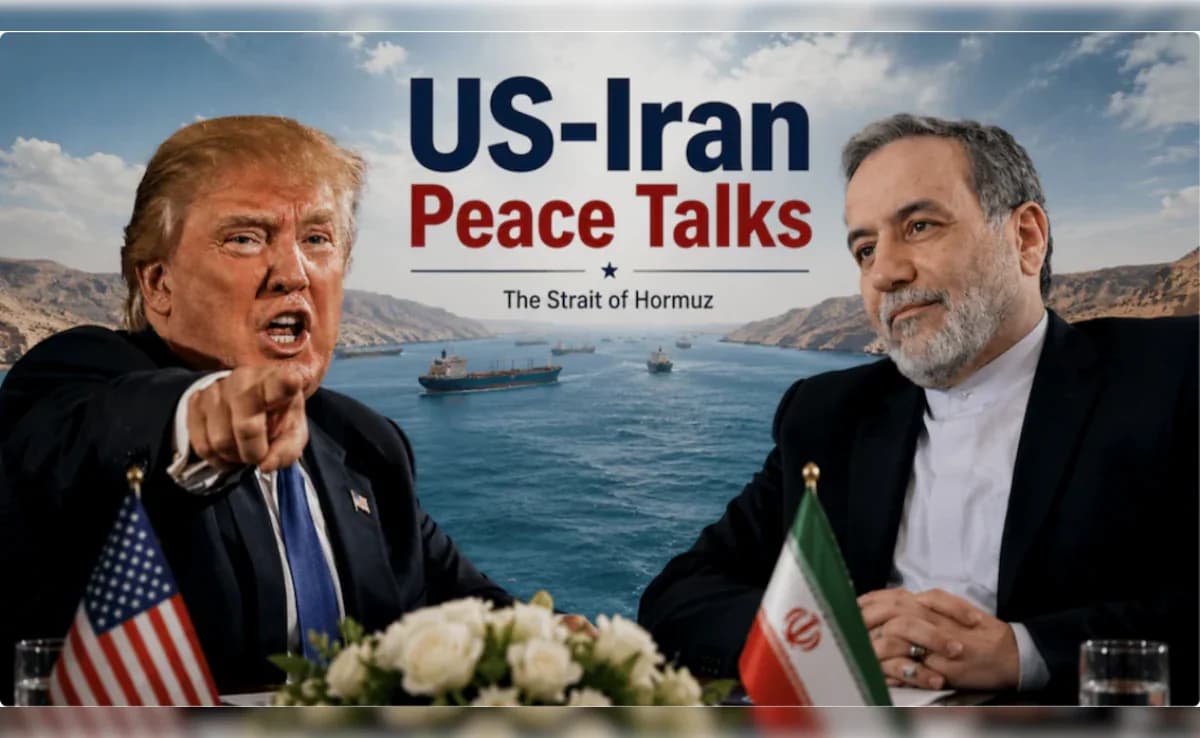
Iran's Parliament Speaker and top negotiator Mohammad Bagher Ghalibaf has taken a direct swipe at the United States, accusing Washington of pursuing what he called 'theatre diplomacy' and demanding that it honour its commitments amid escalating tensions between the two countries. In a post on X, Ghalibaf wrote: 'Massive attack coming... wait, never mind, they want to negotiate. That's theater diplomacy on loop. Using bullying + broken promises + fake news as leverage is a failed strategy. Acknowledge the facts and fulfill your commitments. We don't need more theater.' The remarks were widely seen as a direct response to US President Donald Trump, who has repeatedly claimed that Washington and Tehran are engaged in negotiations while alternating this with threats of military action against Iran.
President Trump has escalated his warnings to Iran, telling Fox News that the country would be 'hit very hard' unless the Strait of Hormuz reopens 'very soon.' Speaking during a visit to California, Trump warned: 'The strait is going to be open very soon, or they'll get hit very hard, and then the strait's going to be open.' He described the current negotiations as 'very good discussions' and said Tehran appeared eager to bring the conflict to a close. 'We're having very good discussions,' Trump said. 'The only thing that matters is action. And they want to make a deal. We'll see what happens.' Trump struck an unhurried tone, saying 'I have plenty of time.' The latest developments come as US Treasury Secretary Scott Bessent confirmed Washington is engaged in discussions with Iran over reopening the Strait of Hormuz, providing fresh optimism for a potential breakthrough. According to Business Standard, Trump maintained that Iran respected the United States after recent developments and reiterated his long-standing position that Tehran must never acquire nuclear weapons.
Trump made it clear that military pressure remains an option if diplomacy fails, maintaining his longstanding position that Iran must not acquire a nuclear weapon. 'We are knocking them... I would rather make a deal because I do not want to kill people,' Trump said, as reported by ANI. He further added that they were set for the biggest attack since World War 2, adding: 'They called me and said please don't do it, let us talk. Then they said we never said that... They respect us... Iran cannot have a nuclear weapon.' According to Reuters, discussions between the two nations are centred on a broader agreement involving the strategically vital Strait of Hormuz and to put an end to months of hostilities. However, major differences remain between the negotiating sides, including disagreements over inspections of shipping and whether Iran should be allowed to levy transit fees on vessels using the Strait. As per Business Standard, Trump claimed that a much larger military operation had been planned but was halted after Iran sought talks, stating: 'We were set for the biggest attack, since World War II, and they called me and they said, ''''Please don't do it. Let's talk.'''' Then they said we never said that.'
According to Reuters, Iran is seeking transit fees of around 5-7% of cargo value, while Oman has proposed a lower figure and the United States is pushing for no such charges. One proposal under discussions would give Iran a significant role in managing maritime traffic entering the Persian Gulf through the Strait of Hormuz under an agreement involving Oman. The Strait of Hormuz, which normally carries about a fifth of global oil and liquefied natural gas shipments, remains blockaded as Iran has halted most traffic while Washington maintains a blockade of Iran-related shipping and ports. Despite Trump's emphasis on diplomacy, US military forces remain deployed in the region and Washington continues to maintain pressure on Iran as negotiations proceed.
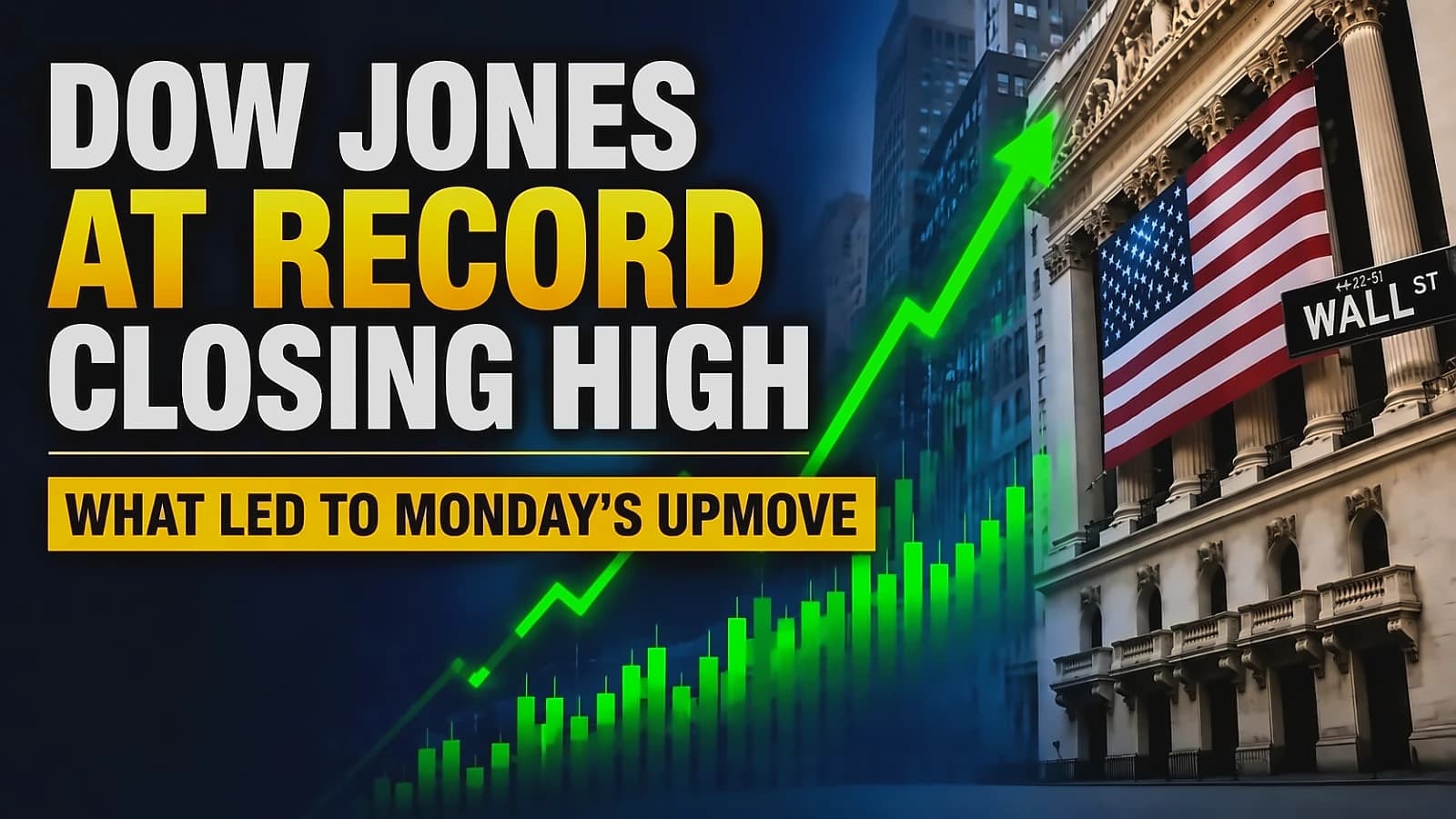
US benchmark indices delivered exceptional performance on Tuesday, with the Dow Jones surging 758.29 points to a record closing high of 53,936.70, representing a 1.43% gain in real-time trading. The S&P 500 gained 43.51 points to 7,644.01, up 0.57%, while the Nasdaq Composite advanced 259.56 points to 26,173.46, rising 1.00% after reaching as much as 1.4% earlier in the session. Strong earnings from Caterpillar and Palantir, along with easing oil prices on hopes of a US-Iran Strait of Hormuz deal, lifted Wall Street in real-time trading. Chip and AI stocks led the upmove yet again, with Amazon adding another 4.5% to last Friday's 15% surge, which took the stock's market capitalisation past the $3 trillion mark. A gauge of the magnificent seven stocks had its best day since March this year, with shares of peers Alphabet and Microsoft gaining 5% each, while Nvidia also saw a 3% jump overnight. The rally was primarily driven by hopes of a US-Iran deal to resolve the ongoing conflict and reopen the Strait of Hormuz, even as Iran continues to deny any talks are taking place.
Oil prices experienced a dramatic decline as both Brent and WTI crude fell close to 5% each, with WTI falling below $80 a barrel and Brent falling below $85, having touched $100 a barrel a couple of weeks earlier. However, oil prices recovered after two sessions of losses on Wednesday, with Brent crude futures rising about 1% to around $80 a barrel, while US West Texas Intermediate crude gained roughly 0.3% to trade near $76 per barrel. The S&P 500 has remained flat since May 14, fluctuating around 7,500 while the market has experienced significant churning, with analysts predicting the index should reach 8,250 by year-end. Nick Twidale, chief market analyst at AT Global Markets, noted that 'If we get something concrete on a peace deal, or more importantly the reopening of the strait of Hormuz, then we could see some strong relief rallies across the market.' The oil price decline was a key factor in the broader market rally, as Nick Venditti, managing director at Toroso Investments, explained that 'The market is pricing in a potential resolution to the Iran conflict, which would remove a significant supply disruption risk.'
Despite Trump's emphasis on diplomacy, Iran has issued a stern warning stating that it would retaliate against regional energy infrastructure if it becomes a target of renewed attacks. 'The Iranian warning was unequivocal. If America targeted Iran's infrastructure, they would retaliate by striking Gulf energy facilities and other regional targets,' Reuters reported citing a Gulf source. This warning comes as negotiations continue with major differences remaining over transit fees and inspection protocols. The Strait of Hormuz, which normally carries about a fifth of global oil and liquefied natural gas shipments, remains blockaded as Iran has halted most traffic while Washington maintains a blockade of Iran-related shipping and ports.