Escalating tensions in West Asia continue to keep global markets on edge, with investors reacting sharply to every headline around ceasefires, negotiations, and military developments. According to The Economic Times, Andrew Freris, CEO of Ecognosis Advisory, warned that the situation is unlikely to see a quick resolution and warned that markets may have to live with prolonged uncertainty for months, if not years. Freris noted that "when the war started, look, I am not going to pat myself in the back because what I said at the time was an intelligent child would have been able to say it, that war is going to last for a very, very, very long time. I am not talking about months. I am talking about years." He explained that the constant stream of contradictory developments has made it nearly impossible for markets to form a stable view, with one moment reports of negotiations and possible agreements, while the next moment fresh military escalation dominates headlines. The "flip-flop" environment is leading to sharp swings in oil prices and equities, as investors struggle to price in the long-term implications of the conflict. Freris believes that even if temporary ceasefires or agreements emerge, they may not hold for long, noting that the conflict has already expanded into a wider regional issue, drawing in multiple countries and raising geopolitical risks beyond the immediate participants.
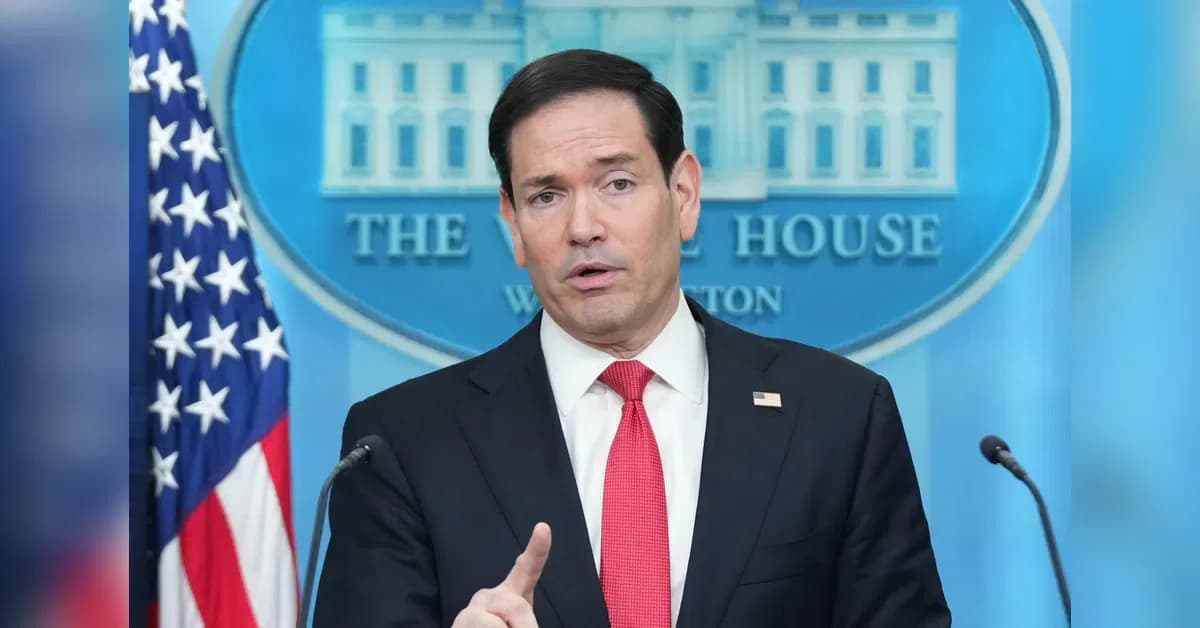
President Trump has escalated his demands for a meaningful US-Iran agreement, stating on Monday that the deal will either be a great and meaningful deal or there will be no deal at all. According to Business Standard, Iran and the United States have played down hopes for an imminent breakthrough in efforts to end their three-old war on Monday. Secretary of State Marco Rubio confirmed on Monday that the US has made significant progress in negotiations with Iran to reopen the Strait of Hormuz, though President Trump is maintaining a cautious approach and will not accept a bad deal. Rubio told reporters before leaving for Agra that "work is still in progress. We thought we might have some news last night, maybe today." "So we have what I think is a pretty solid thing on the table in terms of get the Strait open, enter into a very real, significant time-limited negotiation on the nuclear matters and hopefully we can pull it off," Rubio stated. The Secretary emphasized that "Every country that we've walked through understands it's not just very reasonable, but it's the right thing for the world to get done. As the President said, he's not in a hurry; he's not going to make a bad deal." Rubio said the US is going to give diplomacy "every chance to succeed" before exploring "alternatives."
The agreement would reopen the Strait of Hormuz without Iranian tolls, removing economic pressure and creating space for serious nuclear negotiations. According to Business Standard, a senior administration official said the Iranians had generally agreed to turn over their 60-percent enriched uranium - the stockpile that could be converted to a dozen or so bombs in relatively short order. The US official conceded the exact mechanism by which Iran would dispose of their highly enriched uranium remains unresolved, as does whether Iran will ship out all additional uranium in its possession according to the International Atomic Energy Agency. Trump acknowledged on social media that "nobody has seen it, or knows what it is. It isn't even fully negotiated yet," while maintaining that "Our deal is the exact opposite" of the 2015 JCPOA that Obama made, which he criticized for giving Iran "massive amounts of CASH, and a clear and open path to a Nuclear Weapon." Rubio indicated there is a possibility of "good news" coming in the next few hours, saying "We'd prefer to have a good agreement," while noting that "We'd prefer to have a good agreement, but we're not going to make a bad deal."
The agreement leaves critical nuclear issues unresolved, with Iran refusing to discuss limits on missile size and range that the US had insisted upon. According to Business Standard, Iran has so far refused to even discuss limits on the size and range of their missiles, which the United States had said it would insist upon - a critical issue to the Israelis who are within reach of many of Iran's ballistic missiles. The US official said the Iranians had agreed, verbally, to some kind of suspension of enrichment of new nuclear fuel, but Trump himself told reporters nine days ago that Tehran's leaders had backed away from a commitment to suspend that activity for 20 years. Two remaining mysteries are how the United States will ultimately deal with Iranian demands to unfreeze billions of dollars of frozen Iranian funds and lift years of sanctions placed on Iran to prevent it from selling oil or buying goods and technology. The US official said those issues - among the most contentious for the cash-strapped Iranian government - had not even been addressed yet, though he held open the possibility that those could be part of a trade.
Despite the geopolitical uncertainty, several Asian markets have delivered stronger returns than the US market over the last year and a half. According to The Economic Times, Freris highlighted markets such as Singapore, Thailand, Taiwan, Malaysia, and South Korea as outperformers in US dollar terms. "As far as equities are concerned, we already have very good examples coming back from the year 25. In other words, do not trust the S&P. Singapore, Thailand, Taiwan, Korea have all outperformed the S&P consistently in the last year-and-a-half in US dollar terms," he said. Freris noted that India's market performance has been relatively subdued during this period, though he clarified that India's weakness cannot be attributed solely to the ongoing conflict. "The S&P is up, I do not know, 5%, 6%, 7% year to date. Of course, in US dollar terms, that is hardly a big performance and at a market that it is universally acknowledged to be massively overpriced, particularly because it is driven by seven or eight individual shares," he explained. Freris suggested that investors should not assume that the S&P 500 remains the only attractive destination for global capital, with a number of Asian markets offering better opportunities without carrying the same valuation concerns as US equities.
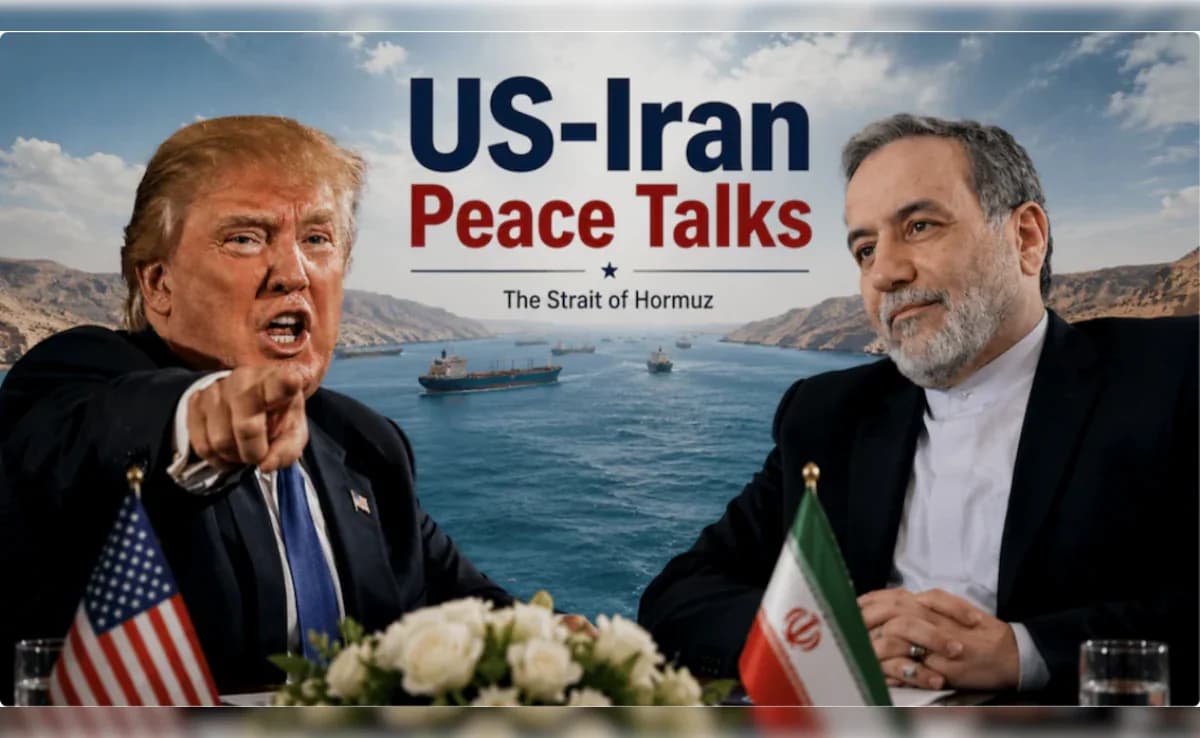
Longtime negotiators expressed doubts about the agreement's effectiveness, with Aaron David Miller of the Carnegie Endowment for International Peace calling it "what happens when a poorly conceived war of choice turns into a highly flawed 'peace' of necessity." Miller noted "Original, unrealizable war aims abandoned, and now little leverage to secure what really matters — restraining Iran's nuclear capacity and permanently opened straits." Secretary of State Marco Rubio acknowledged that "You can't do a nuclear thing in 72 hours on the back of a napkin," while emphasizing that "The straits have to be immediately reopened, and then we will enter, under agreed-to parameters, into very serious talks about enrichment, about the highly enriched uranium and about their pledge to never have nuclear weapons." Trump faces significant pushback from political allies who want to restart military operations, with Mike Pompeo dismissing critics as 'losers' who know nothing about the negotiations. The agreement represents a significant shift from Trump's earlier demands for 'UNCONDITIONAL SURRENDER,' though it leaves many critical issues unresolved for future negotiations.