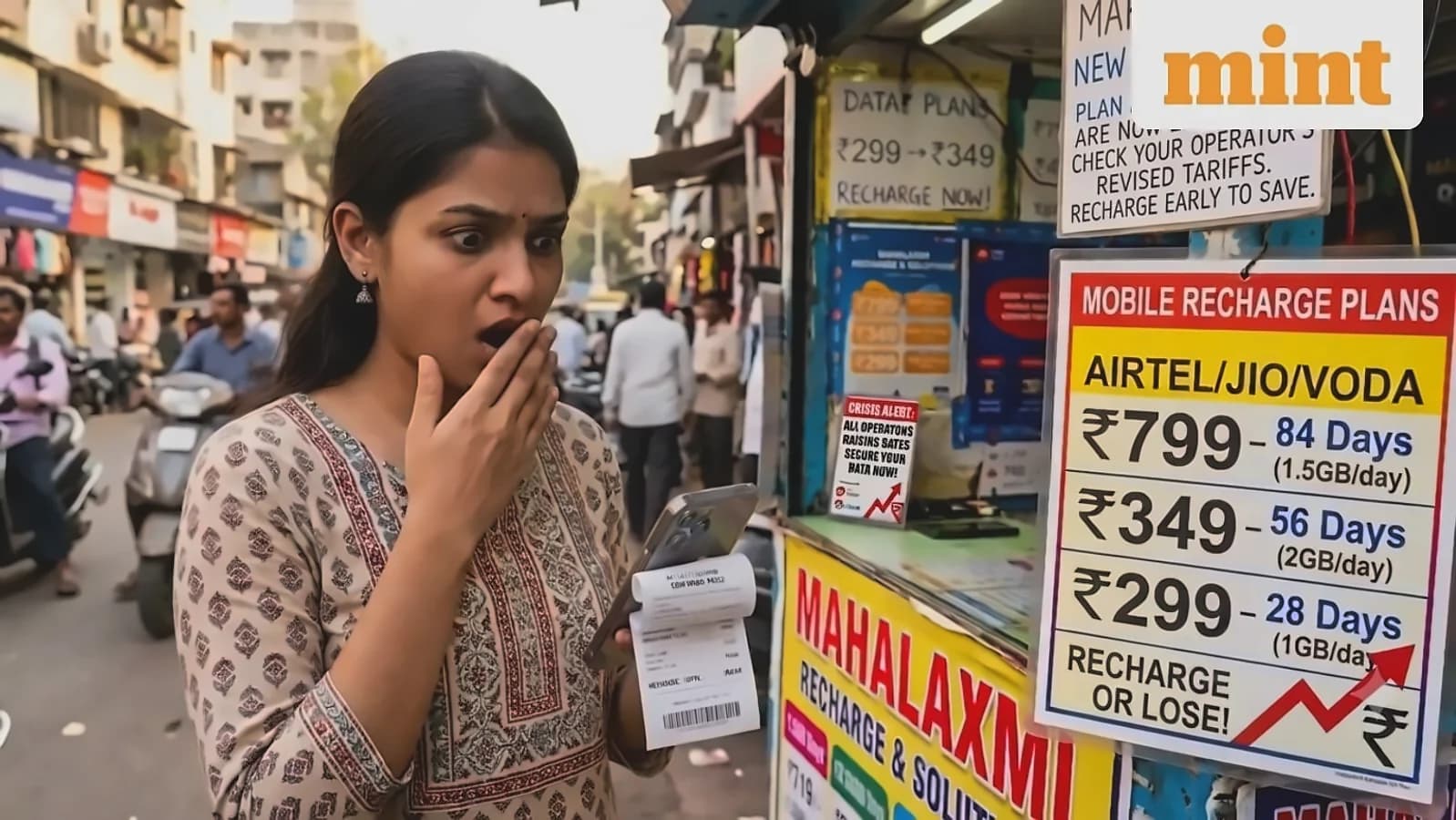
The Indian telecom sector is witnessing subtle changes that signal potential tariff increases ahead. According to reports from Business Standard, Bharti Airtel removed select entry-level prepaid data plans across 28–60 day validity last week, while Reliance Jio reintroduced the Jio Prime membership at a one-time fee of ₹300, offering protection against price hikes till September 2027. Motilal Oswal Financial Services believes this price protection signals that a tariff hike is likely in the next six months, with a ₹50 increase on entry-level smartphone plans expected within that timeframe. However, analysts note that the membership structure could indicate an impending headline tariff hike, as the subscription fee of ₹300 per year works out to ₹25 per month, effectively raising the tariff of the ₹299 plan to ₹324, implying an 8% tariff hike. As per Avendus Spark, once the Prime membership fee is collected, a tariff hike needs to come as soon as possible to make the fee worthwhile for Jio Prime customers.

In ARPU terms, Bharti Airtel remains the industry leader at ₹264, followed by Reliance Jio at approximately ₹215.6, and Vodafone Idea at ₹177. As reported by Business Standard, Pravesh Gour of Swastika Investmart believes the industry's growth model is shifting from cheap data and aggressive subscriber acquisition towards premiumisation, higher average revenue per user (ARPU) and better cash generation. The sector appears to be approaching an important inflection point where earnings growth could increasingly come from monetising existing customers through tariff hikes rather than simply adding new subscribers.
According to JM Financial, if 10% of Bharti Airtel's subscribers upgrade to new plans at approximately ₹50 higher tariff, it could drive an uptick of 2% in wireless ARPU and 1% in India EBITDA. As reported by Business Standard, JM Financial maintains a 'Buy' call on Airtel with a target price of ₹2400, while MOFSL also reiterated bullish views on both Airtel and Reliance Industries by maintaining 'Buy' ratings. Gour identified Bharti Airtel as his top pick, citing its strong ARPU profile, healthy competitive position, improving profitability and relatively strong balance sheet.
The changes in entry-level tariff plans will intensify pressure on Vodafone Idea to make strategic moves, according to IIFL Capital analysts. They suggest VI could either follow suit with a 5% FY27 potential cash EBITDA upgrade, use the window until headline tariff hikes to gain subscriber market share, or adopt a circle-by-circle strategy. However, the developments could also point to a change in tariff hike construct specifically when Reliance Jio is IPO-bound. As noted by Avendus, over the last 6 years, tariff hikes in the Indian wireless industry were announced only after broad industry consensus on both timing and quantum, but Jio chose its own construct resulting in just 5-7% growth instead of following Bharti's footsteps to take a 16% hike in entry-level plans, suggesting there is no industry consensus this time.