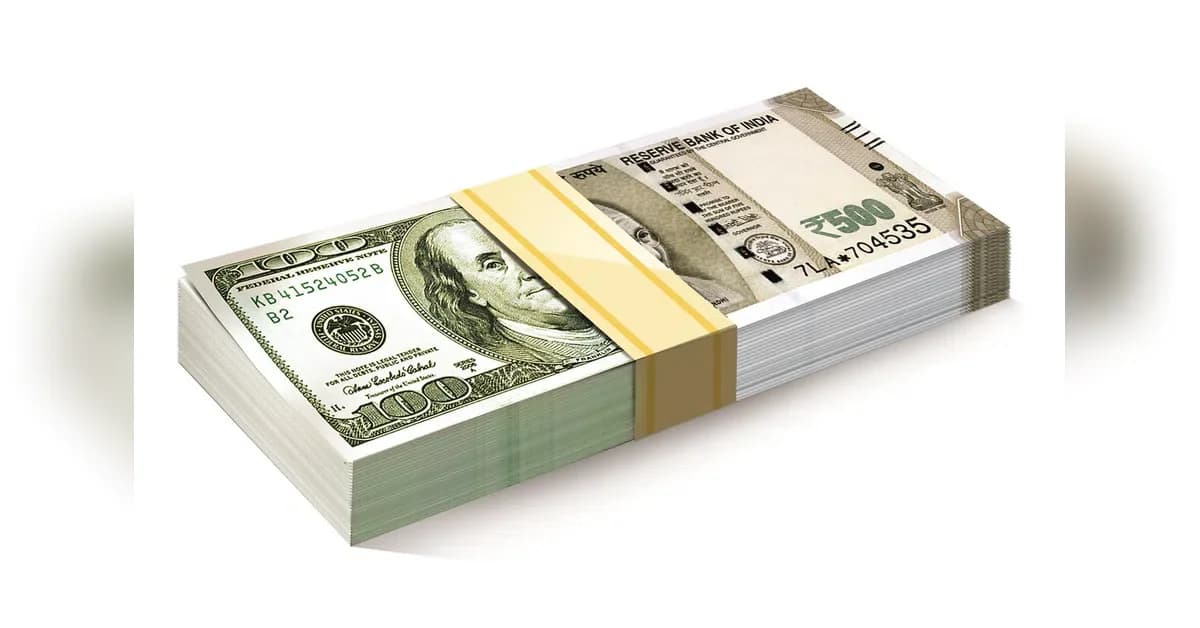
The Indian Rupee has reached an all-time low of ₹96.96 against the USD, representing a 7.8% decline in 2026 alone. According to multiple reports, this marks the third major rupee crisis since 2013, following similar patterns seen in 2018 and 2022. The current depreciation is driven by rising crude oil prices reaching $110 per barrel, mixed global cues, and foreign portfolio investors pulling over $22 billion out of Indian equities since February 2026. The Reserve Bank of India has intervened by selling dollars to slow the fall, but its reserves have declined roughly $37 billion from peak levels, limiting its ability to defend the currency for an extended period.

The Global Sellers are Indian companies that act like local businesses but sell their products or services to other countries, getting paid in USD. When the rupee falls, these companies win in two major ways. TCS reported 3.7% INR growth vs 0.6% USD growth in one quarter, with the currency gain representing pure margin expansion. Infosys attributed 60 basis points of recent margin improvement directly to the rupee. The IT sector benefits significantly, as Nifty IT rose ~26% while the broader Nifty 50 went nowhere during the 2018 crisis. Global Healing Labs (pharma sector) and Tech Export Stars (IT sector) earn revenue in USD and see their costs largely in rupees, making their products incredibly competitive in international markets.
On the other end of the seesaw sit the Global Buyers, businesses that rely heavily on raw materials, machinery, or components brought in from outside India. Oil Marketing Companies (OMCs) face the sharpest structural squeeze, with HPCL and BPCL facing potential profitability elimination from a 7.8% rupee fall. Auto companies depend on imported components, with Tata Motors falling nearly 60% during the 2018 crisis. Fuel Consumers require raw crude oil derivatives priced in USD globally, making them vulnerable to both rising dollar costs and rupee revenue pressures. The analogy used is of ordering premium imported chocolates online - when the rupee weakens, the price instantly shoots up for the exact same treat.
To manage the currency seesaw effectively, investors should avoid emotional panic-selling during short-term market dips caused by foreign institutional investors pulling capital out of emerging markets. Instead, conduct a measured, sequenced approach to portfolio rebalancing. Add IT or pharma exposure via index ETFs as new money comes in if heavily weighted in banking or real estate. Start with 5-10% international allocation in SEBI-regulated funds of funds tracking S&P 500 or Nasdaq. Consider gilt funds as a counter-cyclical anchor when the RBI tends to cut rates during growth slowdowns. Move gradually over 3-6 months via SIPs rather than lump sum rebalancing, as currency cycles are hard to time precisely. The 2018 roadmap shows that diversified investors who stayed disciplined came through stronger, with each major rupee cycle since 2013 rewarding diversification over reaction.