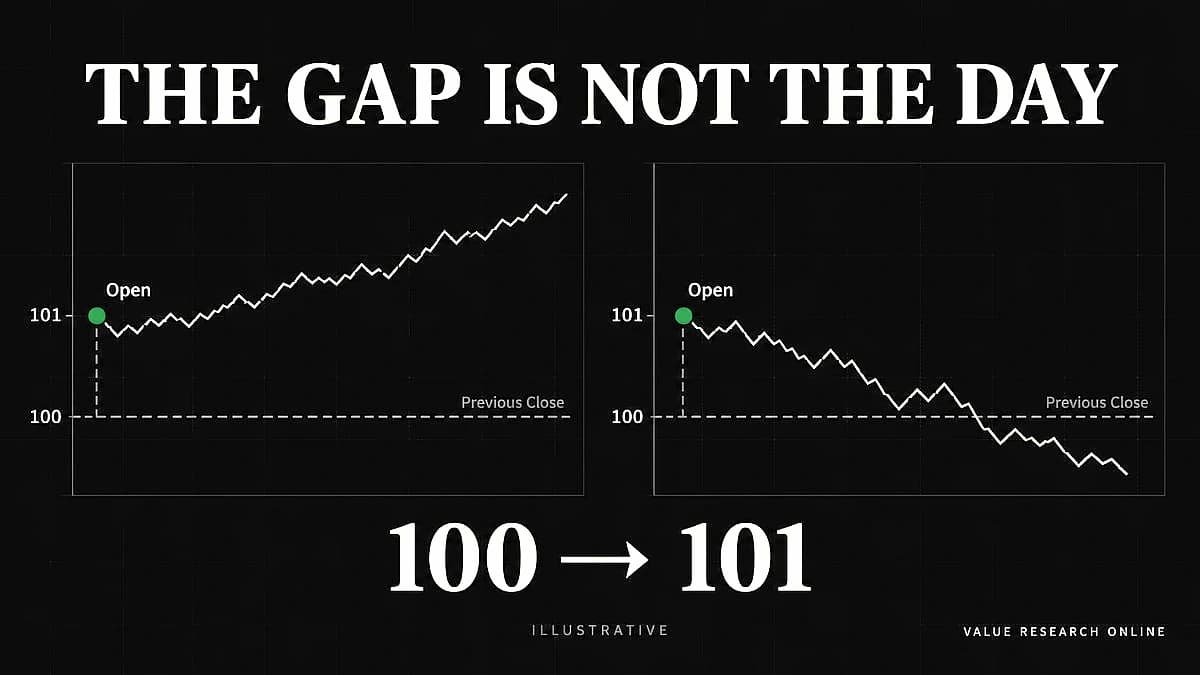
The Nifty 50's recent recovery saw it open with gains, but resistance near the 100-DMA led to a decline. According to Dalal Street Investment Journal, the index started Thursday's session on a positive note, opening with a gap-up of nearly 83 points and touching an intraday high of 24,025.40. However, the initial optimism faded as the index faced resistance near the 100-DMA, with the bulls failing to sustain the early momentum, leading to a sharp reversal during the session. From the day's high, the Nifty 50 declined nearly 152 points and eventually closed 41 points lower at the day's low. The day's price action resulted in the formation of a bearish Closing Marubozu candlestick pattern, reflecting strong selling dominance as the index closed near the lowest point of the session with almost no lower shadow.
Market benchmarks extended losses for the fourth consecutive week, with Nifty 50 declining 1.15% to settle at 23,898 on Wednesday, according to ICICI Securities' Dharmesh Shah. The index has been extending its losing streak for the fourth consecutive week amid sharp crude oil price gains and escalating geopolitical tensions. Amol Athawale, VP - Technical Research at Kotak Securities, highlighted that the market has been breaching key support levels with relative ease, which remains a matter of concern. "A decisive break below the 23,600 support zone could trigger another phase of capitulation," Athawale warned, while noting that 23,800 on the Nifty and 76,100 on the Sensex will remain crucial trend-deciding levels. The Wednesday's low of 23,786 will act as the immediate support level, with a decisive breakdown potentially leading to further weakness towards 23,600. As per Dalal Street Investment Journal, the 20-DMA is on the verge of crossing below the 50-DMA, which could act as a negative signal for the short-term trend.

Despite the recent recovery providing some support, broader technical indicators remain weak. The 14-period RSI is trading below the 40 level, indicating weak momentum, while the MACD continues to remain below the zero line with the histogram suggesting increasing bearish pressure. According to Dalal Street Investment Journal, the inability to sustain above the previous day's high highlights a lack of buying conviction, especially after the index faced resistance near the 100-DMA and the 61.8% retracement level of the previous upswing. The 24,025–24,051 zone will remain an important resistance zone, as it comprises the 20-DMA and 50-DMA, while the 24,207–24,239 range will act as crucial resistance levels. A sustained move above the 24,025–24,051 zone could provide relief and trigger a short-covering rally.
Latest options data as of September 2, 2026, reveals significant bearish positioning around the 23,600 support level. The Nifty 23,600 CE 08 SEP 2026 option is trading at ₹322.05, down 25% from the previous close, with the underlying Nifty index at 23,914.45. The option has shown substantial activity with Open Interest at 4.25 lakh contracts, representing a 150.10% increase that may indicate position unwinding by traders. The option has traded within a day's range of ₹306.05 - ₹370 with an average traded price of ₹334.24, while volume traded reached 19.59 lakh contracts, indicating high liquidity and active participation in bearish bets around this critical support level.
Despite the ongoing volatility, ICICI Securities' Dharmesh Shah notes that Nifty continues to maintain higher high-low structure on the larger degree charts, indicating structural uptrend is intact. The index has formed sequential higher bottoms off April low (22,182), with each higher base forming a peculiar pattern of arresting intermediate correction around 61.8% to 80% retracement of prevailing uptrend. Shah expects the current ~990 points pullback precisely aligns with the structural rhythm, retracing 80% of Jul-Aug 1,150 points rally. He suggests that a decisive close above psychological mark of 24,000 would confirm conclusion of corrective phase and open the door for 24,400 in the coming weeks. The broader market has remained strong, with small caps extending their record-setting run for the third consecutive week, while sector rotation continues with Realty and Oil & Gas gaining traction.