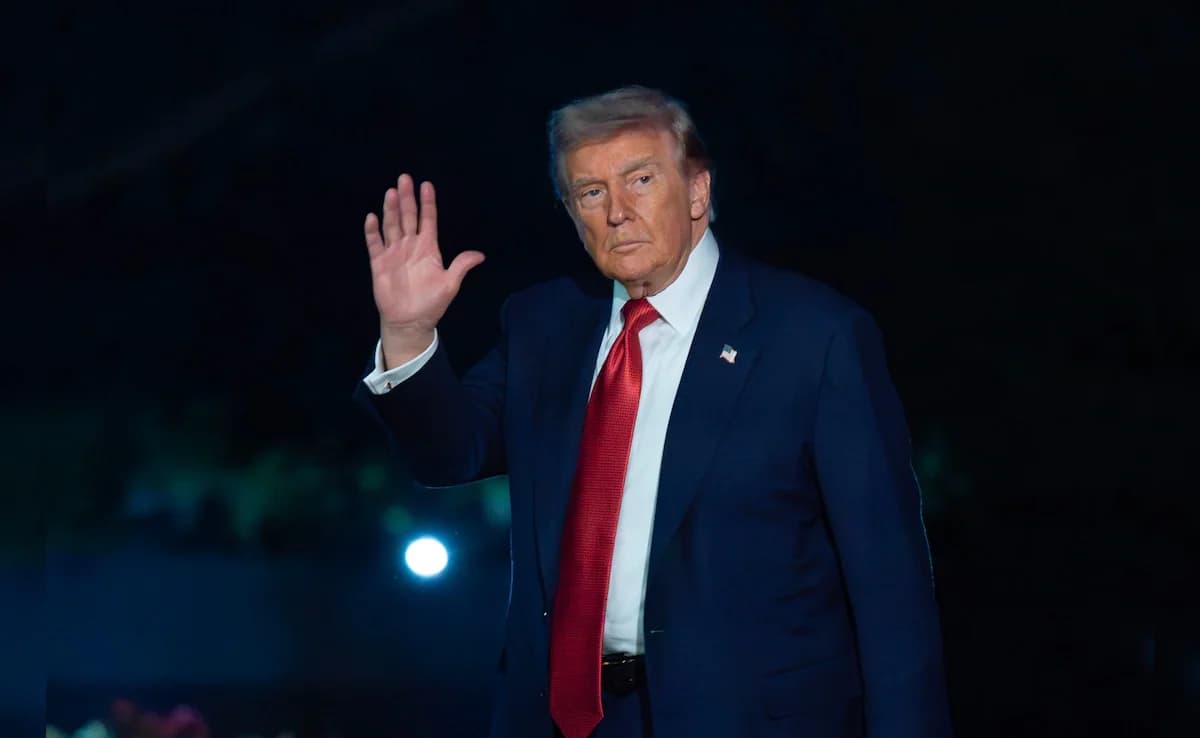
President Trump has escalated Middle East tensions by threatening that Iran will face 'hell' if the Strait of Hormuz is not opened, marking a significant hardline stance that could further destabilize the region. As reported by Intellectia.AI, Trump's statements have drawn market attention and potentially escalated geopolitical tensions that could affect energy supply and price fluctuations. The Strait of Hormuz serves as a crucial oil transport route, and Trump's remarks may trigger international concern over the security situation in the region, potentially affecting the global energy supply chain. According to Goldman Sachs strategist Daan Struyven, oil shortages are becoming a real possibility as the US-Israeli war on Iran continues to leave the critical Strait effectively closed. As the last tankers that crossed the Strait before the war are reaching their destinations, concerns about potential oil shortages are rising, with cross-product scarcity in multiple Asian countries already evident in April.
Market expert Ajay Bagga is advising investors to exercise extreme patience amid the ongoing Middle East conflict and Trump's latest escalations, warning against chasing early market upticks. According to reports from The Economic Times, Bagga emphasized that investors should 'do not try and chase that first 5–10% up move immediately' due to the binary nature of current market outcomes. He expects the conflict to resolve within one to two months but cautioned against betting on this week's developments, stating that markets will remain jittery until concrete ceasefire or peace framework agreements are signed.
Bagga outlined severe economic consequences if the conflict extends beyond current projections. As reported by The Economic Times, he warned that oil and gas disruptions continuing for another six months could trigger a very strong global recession. Fertiliser prices have already surged 50% since the war began, with urea alone rising 38%. The geographic impact would be severe, with Arab nations facing GDP degrowth of 8–10%, while India would likely absorb a 2% cut in GDP growth. China could face a 1.5% reduction, and the United States might see its growth halve or barely stay positive. According to Goldman Sachs, the risks of fuel oil and naphtha shortages remain high, especially in Asia, with already critically low supplies of petrochemical feedstocks.
Despite his caution on timing, Bagga identified specific sectors for future rallies once clarity emerges. According to The Economic Times, he highlighted power, renewables, energy security, banking, NBFCs, insurance, and IT as sectors likely to lead the next rally. Banks and select NBFCs stand out with strong loan growth across private banks, PSUs, and NBFCs, while oil-consuming companies like paints and chemicals are likely sources of earnings disappointment. Industrial gas consumers forced onto alternate fuels will show higher input costs, and real estate may disappoint due to softer-than-expected offtake.

For companies with significant Middle East infrastructure exposure, Bagga sees a two-sided narrative for companies like Larsen and Toubro. As reported by The Economic Times, near term, a prolonged conflict would hurt project execution and revenues. However, longer term, reconstruction contracts in Iran and across Arab nations could generate substantial business for Indian infrastructure companies. The timing remains deeply uncertain, which is precisely why he counsels patience.
Recent market developments show mixed responses to the ongoing Iran tensions. According to latest reports, US stocks rose on Monday amid cautious hopes for a deescalation in Middle East hostilities, with the S&P 500 gaining 0.4%, Dow Jones up 0.3%, and Nasdaq adding 0.5%. Oil prices have seen significant volatility, with US crude futures rising above $112 per barrel and Brent crude futures above $109 per barrel amid reports that Iran rejected a US ceasefire plan. Gasoline prices could hit $5 per gallon nationwide if the Strait of Hormuz remains effectively closed by mid-April, according to JPMorgan analysts. The global oil market is losing 13.5 to 14.5 million barrels per day due to the closure of the Strait of Hormuz, as reported by Lipow Oil Associates president Andy Lipow.