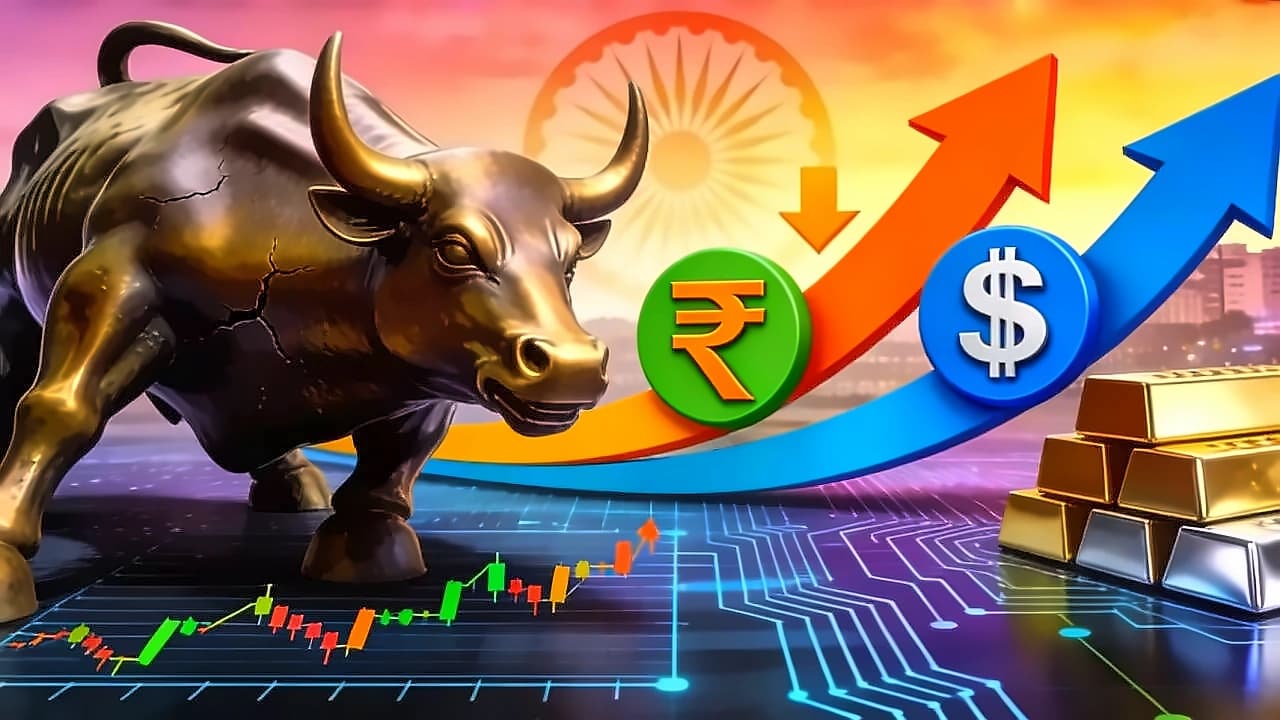
After spending more than a year on the sidelines, global investors are showing fresh interest in India as sentiment begins to improve across the country's markets. Citigroup Inc.'s India team returned from meetings with 36 US clients saying appetite for the country's assets is reviving, while Macquarie Capital Securities is seeing a pickup in customer queries after an extended lull. Goldman Sachs Group Inc. has turned more positive on the nation, and Barclays Plc says it may finally be time to view the world's fastest-growing major economy as an investment opportunity. As reported by The Economic Times, K. Balasubramanian, Citigroup's India chief executive officer, said "The 18-month long negative cycle on India is eclipsing fast." The change is starting to show up in markets, with Indian equities beating emerging-market peers in June by the most in seven months, and global funds buying a record $4.4 billion of index-eligible government debt.
Brent crude has dropped about 30% in the June quarter and is back near pre-war levels, easing concerns for the world's third-largest crude buyer. This decline has prompted Citigroup to raise its growth forecast for India, while Goldman Sachs favors 30-year government bonds as lower oil prices allay inflation and fiscal risks. According to The Economic Times, oil prices are trading below the $75 per barrel level that Julius Baer had expected, with tankers once again exiting the Persian Gulf while OPEC increases production quotas. The decline has prompted Citigroup to raise its growth forecast for India, while Goldman Sachs favors 30-year government bonds as lower oil prices allay inflation and fiscal risks. Matthews identifies a second reason as the rotation away from memory chip stocks, particularly in South Korea, toward lagging markets in other parts of Asia.
The change is starting to show up in markets, with Indian equities beating emerging-market peers in June by the most in seven months, and global funds buying a record $4.4 billion of index-eligible government debt. The rupee has rebounded, ranking as one of Asia's strongest-performing currencies last month. As reported by The Economic Times, "The economy that was too expensive a year ago is now available at a meaningful discount while still growing near 7%," wrote Barclays economists Ajay Rajadhyaksha and Aastha Gudwani. The Nifty posted 38 sessions with moves of 1% or more in either direction in the first six months of 2026, versus 59 for MSCI's emerging-market and Asian gauges, with South Korea's Kospi recording 79 such sessions.
Policymakers have helped the turnaround through measures to draw foreign capital into government debt and shore up the rupee. New Delhi scrapped taxes on government debt held by foreigners, helping drive record inflows into index-eligible bonds, while the central bank moved to attract dollars through concessional swaps for overseas borrowings. Goldman Sachs estimates another $15 billion in passive inflows if India is included in the Bloomberg Global Aggregate Index. According to The Economic Times, "Lower crude prices have helped sentiment, but the more important development has been the policy focus on stabilizing the rupee and encouraging fixed-income flows," said Krishna Bhimavarapu, APAC economist at State Street Investment Management.
According to Neema's assessment, the most compelling opportunities currently lie in financials, industrials, energy and power, and metals sectors. These sectors are benefiting from improving balance sheet health, rising capacity utilization, and supportive policy tailwinds. Matthews from Julius Baer adds that India's valuation premium remains justified despite recent market moves, noting that India currently trades at only a slight premium to emerging markets, well below its long-term average. As reported by The Economic Times, "Given the concentration risk sitting in Taiwan and South Korea, it's hard to imagine active EM managers not rotating back into China and India," said Steven Holden, founder of Copley Fund Research. The average portfolio weight among active emerging-market fund managers is at the lowest levels in 12 years for China and six years for India.