Infosys shares rallied 8% over five sessions following CEO Salil Parekh's projection that AI could account for as much as 50% of the company's work over the next two to three years. At 09:26 AM, the stock stood at ₹1,081.50, up 19.40 points or 1.83%, having hit a high of ₹1,085.50 in opening deals, up 2.2% against the previous close of ₹1,062.10. This strong market performance reflects investor confidence in Infosys's strategic positioning to capitalize on AI transformation within the IT services sector.
Infosys CEO Salil Parekh projects that AI could account for as much as 50% of the company's work over the next two to three years, representing a dramatic acceleration from current levels. Speaking at the Bloomberg New Economy Forum 2026 in New Delhi on Tuesday, Parekh revealed that AI services contributed more than 8% of Infosys' revenue in the previous quarter and were growing at a double-digit rate sequentially. The company expects this share to rise to 20-30% over the next few quarters before potentially reaching 50% over the next two to three years. This projection underscores the rapid pace of AI adoption within the IT services sector and Infosys's strategic positioning to capitalize on this transformation.
Despite the rapid expansion of AI tools within the company, Infosys continues to recruit 20,000 college graduates annually, with the latest batch joining in the current financial year. As reported by Livemint, these new recruits are specifically trained in AI before working with clients to deploy the technology and manage organizational change. Of Infosys' approximately 300,000 employees, around 80,000 are already using coding tools on client assignments and internal projects. The continued hiring highlights how Infosys is adapting its workforce to growing demand for AI implementation rather than simply reducing hiring as automation advances, with new graduates trained to help clients deploy AI systems and manage changes to existing business processes.
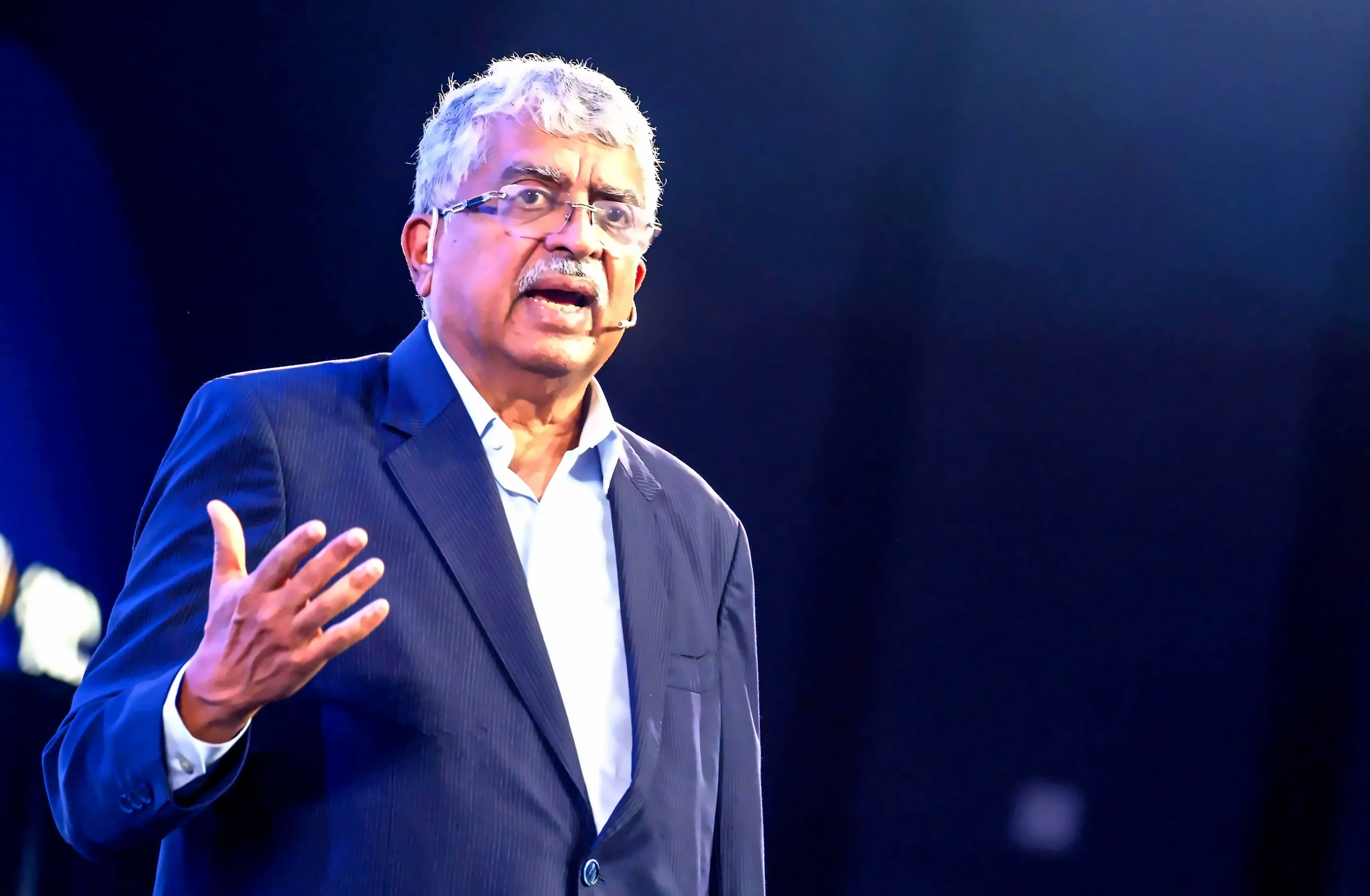
Infosys Chairman Nandan Nilekani dismissed concerns about artificial intelligence eliminating jobs, calling the idea 'disaster marketing to suit the interests of large capital' during his address at the Bloomberg New Economy Forum 2026 in New Delhi on Tuesday. According to reports from Business Standard, the 71-year-old IT industry veteran argued that AI will instead galvanize small businesses and fuel demand for new skills rather than displace human workers. Nilekani's optimistic stance comes as a direct response to IMF Managing Director Kristalina Georgieva's warning that AI represents a 'slow-moving tsunami' for global labour markets, with nearly 40 percent of jobs worldwide likely to be affected by the technology. Speaking at the forum, Nilekani emphasized that 'the requirement for companies like Infosys or others is actually more than ever before because the transformation of enterprise is a very complex activity, and AI requires you to fundamentally reimagine the way you do business'.
To address cost challenges, Infosys Finacle is adopting a multi-model approach using a hierarchy of models. As reported by Business Standard, Vijayakumar explained that if world wisdom isn't needed, they put it in a small language model, with the AI journey being an agent that relies on multiple language models to deliver optimal results. The firm uses locally deployed open-source language models to ensure that sensitive banking data doesn't have to be transferred to the cloud. Infosys Finacle currently has a repository of around 200 AI skills that function as agents within its banking software framework, covering various banking functions. Vijayakumar emphasized that 'At Infosys, we give a specific budget to everybody so that people are more AI aware and become believers in AI' to ensure commercially viable AI deployment.
Nilekani argued that India is particularly well positioned to benefit from AI deployment at scale, drawing on the country's experience in building and deploying large-scale digital infrastructure. As reported by Business Standard, he said 'India will be a leader in how AI is diffused and delivered to people at scale' rather than developing the most powerful AI models. The Infosys Chairman emphasized that 'India's biggest opportunity would not necessarily lie in developing the most powerful AI models, but in making the technology accessible to millions of people'. He noted that 'you cannot bottle this technology' and pointed to the prospect of more chips becoming available and a wider ecosystem of AI providers emerging. Nilekani argued that 'India's experience in rolling out large-scale digital technologies would provide a significant advantage in bringing AI applications to businesses and individuals'.
As reported by Business Standard, Infosys shares climbed 3.2% Tuesday while rival Tata Consultancy Services Ltd. advanced 6.2%. The performance gap reflects investor confidence in different companies' AI transformation strategies. Nilekani's optimistic outlook contrasts with broader market concerns about AI's impact on traditional IT services companies, particularly those that have historically relied on large armies of engineering graduates for programming services. The comments come as India's large IT services companies, including Infosani, face questions about their traditional business model, which has relied heavily on engineering graduates writing software for global clients.