The global artificial intelligence boom is experiencing a dramatic reversal as AI-related stocks face widespread sell-offs across major markets. Following a 7% decline in South Korea's Kospi and 3% drop in Japan's Nikkei, Taiwan's Taiex fell 4% in early Thursday trading. The rout was triggered by higher-than-expected US inflation data from the Consumer Price Index report, which showed broadening price pressures from energy to daily consumption goods and services. According to Moneycontrol Pro, this development implies that US Federal Reserve rate hikes may be closer than earlier forecasts, creating significant concerns for the AI sector which is among the highest borrowers in the corporate world globally. The United Nations Conference on Trade and Development (UNCTAD) estimates that debt financing for AI investment will reach $4.1 trillion by 2030, out of total capital expenditure of $5.5 trillion.
Veteran investor and BSE member Ramesh Damani anticipates a massive rotation of global capital into Indian equities as the artificial intelligence boom in the United States loses momentum. According to reports from CNBC-TV18, the shift is expected to accelerate as the US markets face potential instability surrounding the upcoming November 3 elections. The AI-driven rally that largely bypassed India over the last few years is winding down due to elevated interest rates, excessive valuations and market exuberance. As reported by Moneycontrol Pro, India's Nifty 50 was 400 points up and the BSE Sensex was up 1200 points at noon, with IT sector stocks leading the rally as investors reckon that foreign institutional investors' funds that were moving out of India would soon flow back if the AI boom fails.
Damani told CNBC-TV18 that Wall Street is ignoring the '1,000-pound gorilla' of the US midterm elections. A victory for Donald Trump would likely result in unchecked protectionism, unilateral tariffs and a return to crony capitalism, while a defeat could trigger an unprecedented constitutional crisis if he refuses to accept the outcome. As reported by Moneycontrol Pro, the UNCTAD's latest report has a softer view on the impact of any AI sector's bust on India and other emerging markets, with the risk being more from indirect exposure through investments made in data centres and other infrastructure. Damani noted that "at some point, the American market won't be able to ignore the higher cost of interest rates, higher inflation and the global choke points that are happening because of the midterm elections."
Despite potential global corrections, Damani believes domestic fundamentals and savings will help the Indian market recover swiftly. Drawing a parallel to the October 1987 crash, where Japan recovered first and went on a multi-decade bull run, Damani said that the domestic economy is positioned to find its feet quickly. According to Moneycontrol Pro, India's economy may be showing pockets of resilience, but some data points indicate fatigue in growth with household consumption showing moderation and the rural economy slowing down particularly as seen in the FMCI sales data. India's sheer scale will attract a larger share of global equity flows as capital rotates out of the US and countries like South Korea and Taiwan see their MSCI weightings drop.
With domestic AI infrastructure plays becoming crowded and expensive, Damani emphasizes the need to shift focus to localized defense and critical materials. The changing global rules under a potential Trump administration make alternative defense strategies and supply chain localization, specifically in critical minerals, copper and aluminum, highly promising. As reported by Moneycontrol Pro, AI revenues are said to be concentrated among a small group of players, and much of the money flows in a circle, with concerns over the circular flow of capital often raised during periods of decline in AI stock prices. Damani believes that real value addition for telecom giant Reliance will come from global-scale services rather than basic data connectivity, ensuring the upcoming Jio Platforms IPO will be well received by the market.
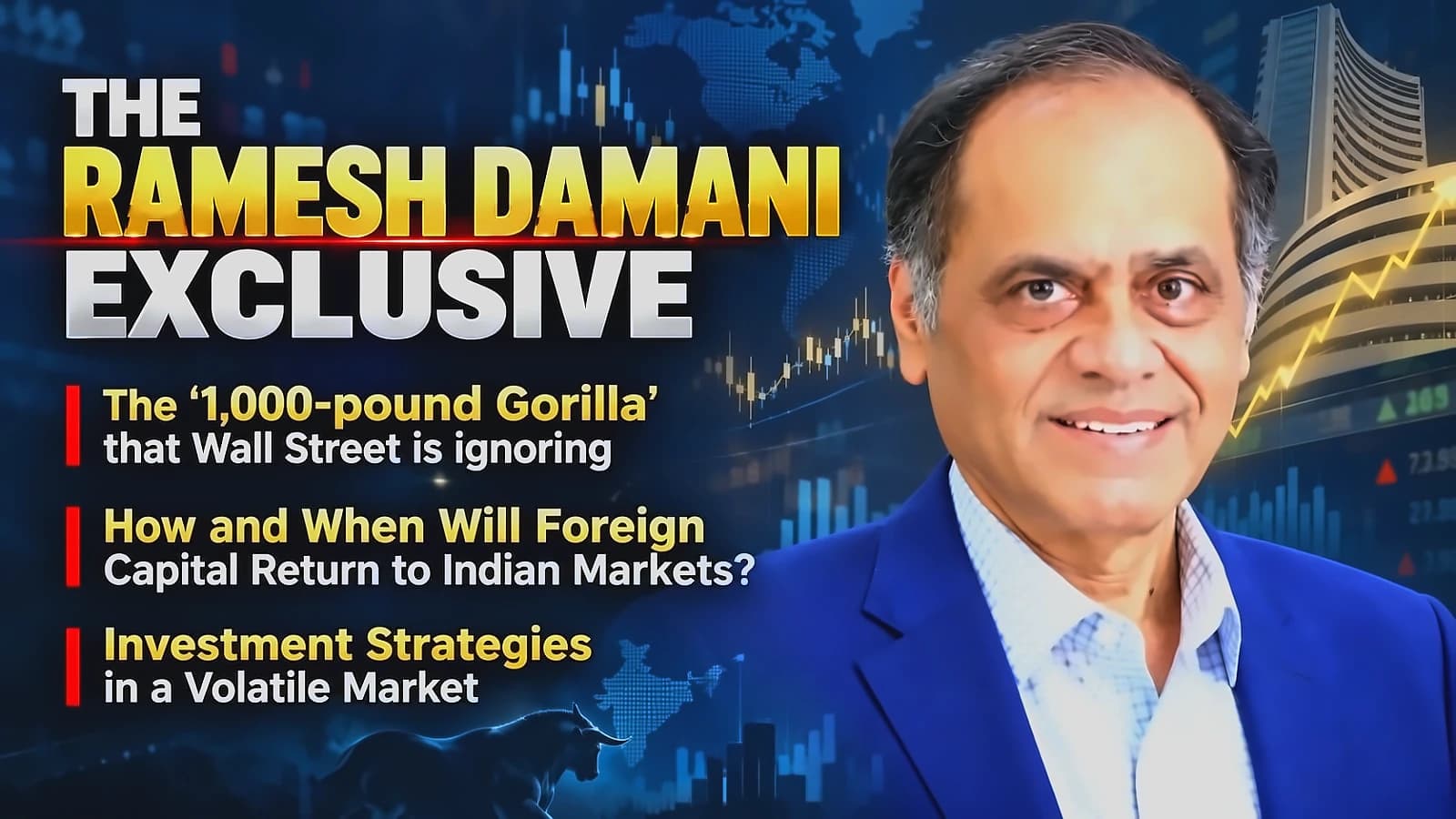
For portfolio strategy, Damani maintains a focus on bottoms-up stock picking in the ₹5,000 crore to ₹20,000 crore market capitalization range. Having paused private equity investments, he believes the listed space offers the best runway for the next decade as India's demographic dividend kicks in and the rupee potentially strengthens. According to Moneycontrol Pro, there is a forecast that gold prices would touch new records in two years as geopolitical tensions and economic uncertainty push safe haven metal prices higher. Damani advises clients to remain invested and avoid timing geopolitical events, stating that India remains a good place to invest despite potential market volatility.