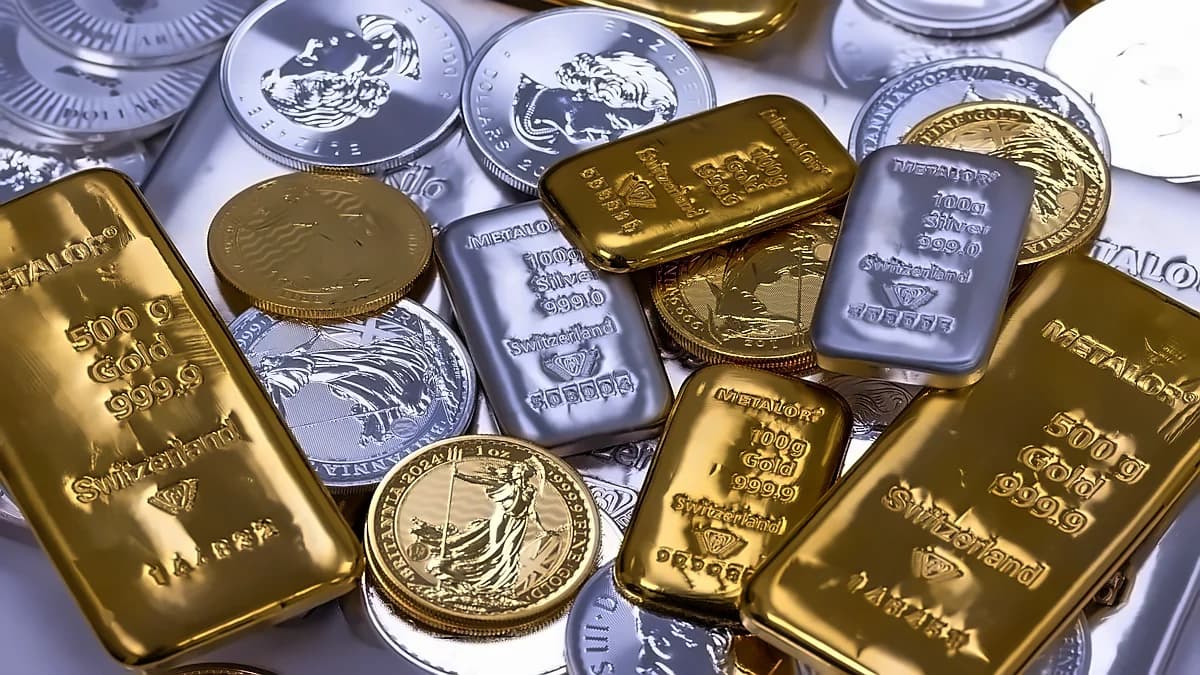
Gold prices have declined by nearly 7% since February 25, with COMEX gold settling at $4,679.70 per ounce and MCX gold closing at ₹1,49,650 per 10 grams for the week. Despite continued geopolitical tensions, gold prices rose around 2.2% over the week, though gains were limited as crude oil jumped more than 10%, heightening inflation worries and disrupting the usual safe-haven appeal. According to Sugandha Sachdeva, Founder of SS WealthStreet, the geopolitical developments remain uncertain as early indications from Donald Trump and Iran pointed toward a possible ceasefire, but the tone has since shifted with stronger rhetoric and fresh threats of extended military action. Iran's IRGC Navy continues its blockade of the Strait of Hormuz, keeping oil prices elevated and fuelling concerns around imported inflation.
With the Nifty sliding to around 22,200 amid West Asia conflict fears, investors face a critical decision: buy the dip or wait. According to The Economic Times, Jitendra Gohil, Chief Investment Officer at Bajaj Alternate Asset Management, provides a clear strategy but reveals uncomfortable truths about India's market position. Gohil argues that India's underperformance stems from its limited role in global AI and defence booms, where it remains a net importer rather than beneficiary.
As reported by The Economic Times, global AI investment has crossed $1 trillion over the past three years, with FY26 expected to see $600–650 billion in spending by major tech companies. Meanwhile, global defence budgets are heading toward $2.7–3 trillion. While markets like Taiwan have re-rated sharply from 12–14x PE to nearly 18x, and Korean companies are expected to grow EPS by 20–25% over the next two years, India trades at 18–20x PE without that earnings justification. Gohil warns that 'We are not going to see significant re-rating or earnings expansion across the board in India. Our view is single-digit earnings growth — 5% to 8% at best.'
According to The Economic Times, Gohil identifies four pockets of opportunity worth building positions in despite the cautious macro view. Metals and steel companies stand to benefit from potential reconstruction spending following the end of both Russia-Ukraine and Gaza conflicts, with quarterly numbers in Q4 and Q1 expected to already look decent. Private banks have seen valuations correct considerably, with well-capitalised private banks bought on further dips representing a strong two-year opportunity, though near-term growth will disappoint. Electronic manufacturing sees semiconductor investments accelerating in India with import substitution underway and defence-linked manufacturing benefiting from government-backed tailwinds. Consumer discretionary in the second half of the year could see pre-UP election spending push driven by the 8th Pay Commission.
As reported by The Economic Times, Gohil is not alarmed by gold's recent cooling and notes that RBI's gold reserves stand at just 11–11.5% of total reserves — compared to over 60–70% for many European central banks. He views gold as a buy-on-dips asset class for long-term structural accumulation as India grows from a $4 trillion to a $10 trillion economy. On the technical outlook, MCX gold continues to consolidate with strong resistance at ₹1,57,600-₹1,58,800 per 10gm and faces immediate support at ₹1,44,000-₹1,45,000 per 10gm. COMEX gold prices are holding above key short-term moving averages while facing resistance in the $4,700–$4,750 zone, with a decisive breakout above $4,800 potentially pushing prices toward $4,850-4,900. With US 10-year yields potentially heading toward 4.5–5% and inflation remaining unpredictable, India's market will likely remain range-bound and choppy for the next six to nine months. Despite near-term weakness, JPMorgan reports that investors held 2.8% of their assets in gold in late 2025, double the figure from a decade ago, with investment demand for gold increasing by almost 990 tonnes in 2025 over 2024.