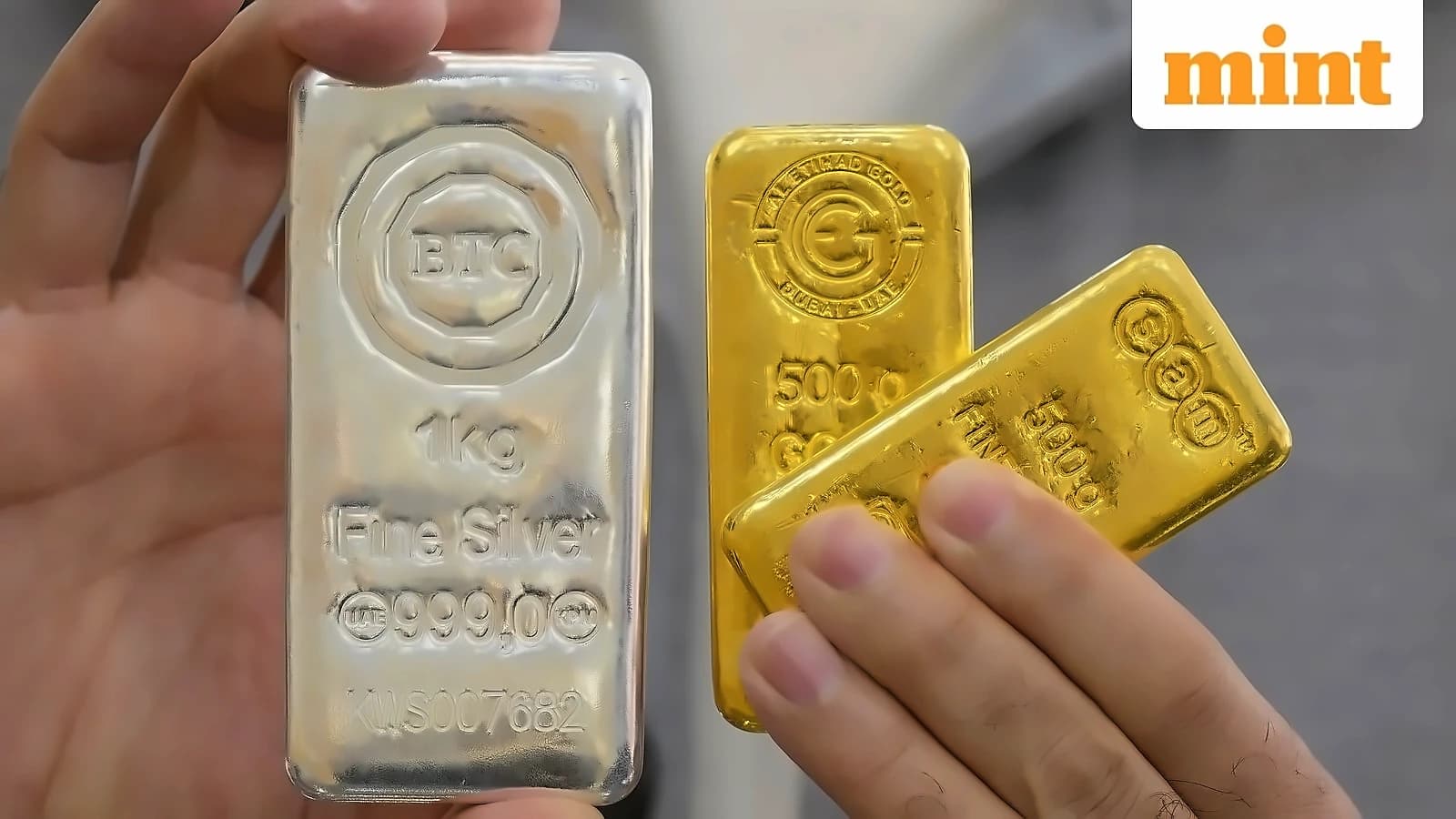
Gold prices declined 0.52% to $4,057.40 per ounce in international markets while silver edged 1.46% down to $58.35 per ounce, according to CNBC TV18. Domestically, MCX gold futures for August contract traded 1.02% lower at ₹1.42 lakh per 10 grams, hitting an intraday low of ₹1,42,690 per 10 grams compared with the previous closing price of ₹1,44,162 per 10 grams, as reported by The Hindu BusinessLine. Silver futures for September contract tumbled 1.03% to ₹2.21 lakh per kilogram, hitting the session's low of ₹2,21,172 per kilogram against the closing price of ₹2,23,472 per kilogram. The metal is headed for a fourth consecutive monthly loss of 10.4%, continuing its downward trajectory amid renewed geopolitical tensions between the US and Iran.
The week starting June 29-July 3, 2026 will see US-Iran military exchanges and crude oil price movements emerge as the primary drivers of global market sentiment. According to PTI, stock markets this week are likely to take cues from the latest round of military exchanges between the US and Iran, with their knock-on effect on crude oil prices and a clutch of domestic economic data releases expected to set the tone for investor sentiment. Crude oil futures for delivery in August advanced by as much as 1.25% or ₹82 to hit an intraday high of ₹6,661 per barrel on the MCX, mirroring the trend in global crude prices that surged amid renewed tensions despite the existing ceasefire memorandum of understanding. Over the weekend, the United States carried out a series of airstrikes against missile and drone storage sites in Iran as a retaliatory move after an alleged violation of the ceasefire agreement. The US Central Command stated that the attacks were a response to Iran's attack last week on a Panama-flagged tanker transiting near the Strait of Hormuz with more than two million barrels of crude oil. Globally, Brent crude oil futures grew as much as 1.94% to reach an intraday high of $73.39 per barrel, with WTI crude trading near $69.58 per barrel after rising as much as 1.9% earlier in the session. Crude oil prices corrected sharply by nearly 10% earlier, easing inflation concerns and reducing gold's appeal as an inflation hedge, while investors continued to prefer the US dollar over bullion, as noted by LKP Securities.
Traders expect three Fed rate hikes this year and are pricing in an about 80 per cent chance of a December increase, according to the CME FedWatch Tool, as reported by The Hindu BusinessLine. Elevated crude oil prices can fuel inflation and chances of interest rate hikes, and while gold is typically seen as an inflation hedge, it loses its appeal as a non-yielding asset in a high interest-rate environment. Investors are now looking out for June's ADP employment data and the US nonfarm payrolls data, both due later this week, to further gauge the Fed's monetary policy stance. As per KCM Trade's Waterer, "Gold could see the $5,000 level again this year but this would be based on further de-escalation, oil having a sustained move to pre-war levels to dull the inflationary impact of the conflict, and a softer dollar." Market participants also remained cautious ahead of key US economic data releases that could provide fresh signals on the Federal Reserve's interest rate path, with expectations of prolonged higher interest rates and continued strength in the US dollar keeping pressure on precious metals, as noted by CNBC TV18.
Gold and silver prices are expected to remain under pressure in the coming week as investors assess the impact of renewed hostilities between the US and Iran, movements in crude oil prices and a series of key global economic data that could influence the US Federal Reserve's interest rate path, analysts told PTI. On the Multi Commodity Exchange (MCX), gold futures for August delivery declined ₹1,472, or 1.02%, during the week to settle at ₹1.42 lakh per 10 grams, while silver futures for September delivery plunged ₹2,300, or 1.03%, to ₹2.21 lakh per kg. In overseas markets, Comex gold futures declined $149.6, or 3.5%, during the week to close at $4,096.3 per ounce, while silver tumbled $7.13, or 10.7%, to $59.67 per ounce in New York. Spot gold was down 0.6% at $4,064.47 an ounce at 8:53 a.m. Singapore time, while silver was 1.1% lower at $58.50. Gold holding above $4,000 despite renewed signs of tension in the strait "suggests marginal dip buyers have returned and are willing to defend this level," said Justin Lin, an analyst at Global X ETFs Australia. Gold is down about 23% since the US and Israel launched strikes on Iran in late February, as higher energy prices fueled inflation and raised expectations central banks would keep rates higher for longer, a negative for non-yielding bullion. Other precious metals also declined, with platinum and palladium also retreating, as noted by NDTV.

The week will feature critical macroeconomic releases that could influence global market sentiment. According to reports from Moneycontrol Pro, the focus will be on global growth, inflation, and manufacturing trends across major economies. These data points are expected to provide insights into economic momentum and potential policy implications for the coming months. As per PTI, market participants will closely monitor Industrial Production (IIP) data, the final HSBC Manufacturing, Services and Composite PMI readings, and the foreign exchange reserves data for fresh insights into the health of the domestic economy. Auto sales figures due on July 1 are also expected to draw close attention from traders, according to PTI. The manufacturing PMI and the IIP print for May, alongside the US manufacturing index, would be among the major data points investors track this week, said Motilal Oswal's Siddhartha Khemka. As per The Times of India, alongside geopolitical developments, foreign-portfolio-investor activity and the pace of the southwest monsoon's advance will also stay on investors' radar. Market participants will closely track manufacturing and services PMI data from major economies, Eurozone inflation numbers, and the US non-farm payrolls and unemployment figures for fresh cues on monetary policy, according to PTI.
Indian equity markets ended the previous week with modest gains, extending their winning streak for a third consecutive week. The BSE Sensex rose 297.57 points, or 0.38%, while the NSE Nifty went up by 42.9 points, or 0.17%. Among the major indices, Bank Nifty remained the strongest performer, climbing nearly 1% to end the week at 58,177, marking its fourth straight week of gains. The week brings significant corporate earnings, including Nike's quarterly results on Tuesday where the sportswear giant is expected to outline progress on its turnaround plan after warning of weaker sales earlier this year. Sainsbury has a first-quarter trading statement due on Tuesday, Associated British Foods updates on Wednesday, and Currys reports full-year results on Thursday. As per The Hindu BusinessLine, the monthly auto sales numbers on July 1 will also be tracked by investors closely. Gold recovered modestly on Friday after bargain buying emerged following US Personal Consumption Expenditures (PCE) data, which showed inflation rose at a slower pace than the previous month, according to JM Financial Services Ltd. Continued gold purchases by China's central bank following fresh US-Iran strikes, along with President Donald Trump's threat to impose 100% tariffs on the European Union, also supported prices, while higher US Treasury yields capped gains, as noted by analysts. The US dollar remained on the defensive on Monday but was still on track for its strongest monthly gain in nearly a year, supported by geopolitical uncertainties in the Gulf and ahead of key US jobs data that could provide further clues on the Federal Reserve's interest rate trajectory. Traders said bullion markets may continue to witness volatility in the near term as investors monitor global economic data, movement in the dollar index and developments in the West Asia.