The 18th BRICS Summit concluded in New Delhi under India's chairship, with the Declaration adopted on Saturday and final session on Sunday at Bharat Mandapam, as reported by The Hindu (International edition). The summit introduced the BRICS Global Governance of AI Framework for building safe, open-source AI models, along with a shared BRICS DPI Repository for exporting open software solutions. The summit also launched the BRICS AGRIN Network for agricultural inputs and genetic resources, established India's proposed BRICS Maritime Safety & Seafarer Network, and committed to building 'resilient and diversified' critical mineral supply chains bypassing Western monopoly exchanges. Chinese President Xi Jinping urged members to "rally the Global South" so that a volatile international order is "free from double standards," and offered a five-point AI and smart-manufacturing initiative. Russian President Vladimir Putin, under Western sanctions over the war with Ukraine, proposed a new insurance mechanism and a collaborative grain market, urging the 11-member grouping to treat both symptoms and root causes of global challenges. As per Drishti IAS, India's fourth chairship seeks to translate the grouping's growing representation into meaningful cooperation and tangible outcomes, with the summit concluding with the unanimous adoption of the New Delhi Declaration under the theme "Building for Resilience, Innovation, Cooperation and Sustainability."
Nigeria emerged as a key participant at the 18th BRICS Summit as a partner country, having been admitted as the bloc's ninth partner alongside Belarus, Bolivia, Cuba, Kazakhstan, Malaysia, Thailand, Uganda and Uzbekistan on 17 January 2025 when Brazil's pro tempore presidency granted this status. President Bola Ahmed Tinubu took centre stage at the summit, calling for an urgent overhaul of global governance structures and international financial institutions. Speaking at the summit in New Delhi, India, in an address delivered on his behalf by Vice President Kashim Shettima, President Tinubu emphasized cooperation in renewable energy, gas, clean technologies, climate-smart agriculture, sustainable infrastructure, and responsible critical-mineral development to ensure that climate responsibility drives broader economic growth. He expressed Nigeria's readiness to contribute to a BRICS partnership that moves from dialogue to delivery, from commitments to implementation, and from cooperation to measurable development outcomes. The Nigerian leader also invited foreign investors to take advantage of Nigeria's investment opportunities, urging them to view the country **"as a gateway to Africa's expanding market under the African Continental Free Trade Area."

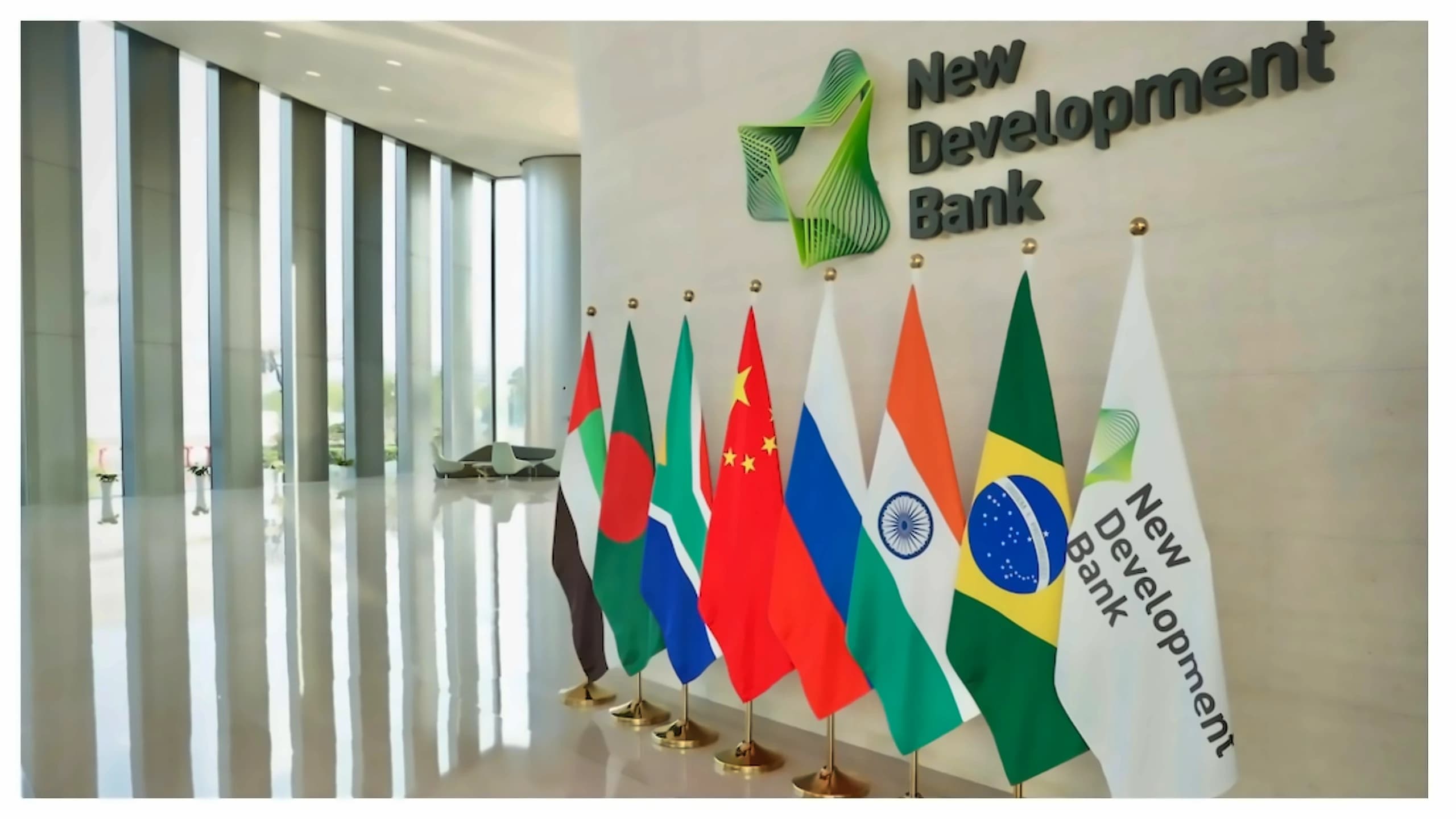
As reported by Investing.com India, Tata Consultancy Services (TCS) and Persistent Systems are positioned to benefit from AI and digital infrastructure deployments across BRICS nations. Coromandel International and UPL Ltd. are expected to gain from direct sourcing of crop protection products and fertilizer raw materials under the BRICS AGRIN network. Mazagon Dock Shipbuilders and Cochin Shipyard are anticipated to benefit from maritime security contracts and naval defense procurement. Hindustan Copper and Hindalco Industries are positioned to benefit from preferential mineral access and off-take agreements for copper and lithium processing. Iranian President Masoud Pezeshkian attacked "unilateral sanctions" as hurting global food security, weeks after fresh U.S. sanctions on Iran, urging the grouping to expand trade in national currencies and strengthen the New Development Bank.
According to the summit announcements reported by The Hindu (International edition), the BRICS Payment Task Force (BPTF) was activated to interlink national real-time payment systems including UPI, e-Dirham, and other national payment rails. The summit explicitly opposed unilateral trade tariffs, secondary sanctions, and Western Carbon Border Adjustment Mechanisms (CBAM). GIFT City was positioned as a potential operational hub for NDB investment flows and regional cross-border financial cooperation, with State Bank of India expected to benefit from expanded Vostro account balances and non-interest foreign exchange fee expansion. Iranian President Masoud Pezeshkian urged the grouping to expand trade in national currencies and strengthen the New Development Bank, saying dependence on a narrow set of financial systems leaves emerging economies exposed to political shocks, citing U.S. and Israeli attacks on Iran.
As outlined in the analysis from Investing.com India, Saksoft Ltd. and Kellton Tech Solutions are positioned to capture sub-contracting opportunities for localized code adaptation and AI model training. Nova Agritech Ltd. and Shiva Global Agro Industries are expected to benefit from direct access to raw mineral feeds for proprietary micro-nutrient formulations. Apollo Micro Systems and Marine Electricals are positioned to benefit from specialized marine component supply chains for defense vessels. Gravita India Ltd. and Oriental Rail Infrastructure Ltd. are expected to benefit from increased raw material throughput for secondary smelting operations. Iranian President Masoud Pezeshkian met Abu Dhabi Crown Prince Sheikh Khaled Bin Mohamed Bin Zayed Al Nahyan on the margins, the first such exchange since the war, and said both sides agreed to "turn the page."
According to the detailed analysis from Investing.com India, the summit's announcements create a comprehensive multi-cap capital mapping framework across AI and digital infrastructure, agriculture and inputs, maritime security, critical minerals, and financial clearing sectors. The framework shows how macro announcements translate into actionable growth drivers for established large-cap market leaders while providing operational triggers for small-cap and SME operators across every core sector. The analysis emphasizes that while large-caps capture initial sovereign capital flows, small-caps and micro-cap SMEs offer higher operating leverage through specialized components, local maintenance, and regional processing requirements. India's fourth chairship is ballast for its standing as a Global South balancer, with the analytical core being the gap between declaration and delivery: a grouping with no secretariat has produced frameworks whose value rests on national follow-through, and local-currency settlement tests whether de-dollarisation is convenience or strategy. Indian Prime Minister Narendra Modi stressed that BRICS' strength lies in its diversity and cooperation, noting that the bloc is also expanding participation beyond governments to entrepreneurs, farmers, researchers, women, and young people. He emphasized that initiatives such as BRICS CONNECT, the BRICS MSME Cooperation Portal, and the BRICS Urban Mobility Hub were designed to promote skills, employment, enterprise development and knowledge-sharing among member and partner countries.