Adani Ports and Special Economic Zone Ltd (APSEZ) has unveiled an ambitious ₹90,000-1 lakh crore infrastructure blitz over FY27-FY31, accelerating expansion across container terminals, liquid cargo facilities and logistics networks to capture India's next wave of trade growth. The company plans to spend ₹60,000-63,000 crore on domestic ports during the next five years, with over 60% of planned capex earmarked for domestic ports expansion. Key ports including Mundra, Vizhinjam, Dhamra, Hazira, Krishnapatnam, Ennore and Kattupalli will drive this aggressive scale-up, with the company targeting more than 1 billion tonnes annually by 2031 from its current domestic port capacity of 653 MTPA.
The expansion will see Mundra add 94 MTPA of capacity with CT5 coming up, while Vizhinjam will see an additional 49 MTPA capacity expansion driven by rising rail-sea-rail cargo movement. Dhamra will add 49 MTPA capacity and Hazira's liquid cargo handling capacity will be expanded by 11 MTPA. CEO Ashwani Gupta explained that "We have accelerated the capex in Mundra because we are fully utilised now. CT5 is coming up and we have accelerated future expansion." He added that "Vizhinjam is already at 100% capacity. During the West Asia crisis, we had many vessels waiting outside, so we are not waiting for Phase II and have already kicked it off." The company expects to unlock nearly 91 MMT of additional capacity through efficiency improvements at existing infrastructure.
Beyond ports, APSEZ has allocated ₹9,000 crore for logistics infrastructure, including rail rakes, multimodal logistics parks, warehouses, agri silos and trucks. ₹13,000 crore will go towards marine fleet expansion, supporting the company's strategy to expand its current fleet of 136 vessels to 200 by 2031, requiring an investment of ₹13,000 crore. An additional ₹8,000 crore has been allocated for technology upgrades, automation and decarbonisation initiatives. The company spent around ₹15,000 crore in FY26 and has guided for ₹12,000-14,000 crore capex in FY27. On international operations, Gupta said overseas ports are witnessing strong momentum, particularly in Tanzania and Colombo, with APSEZ spending around ₹15,000 crore in FY26.
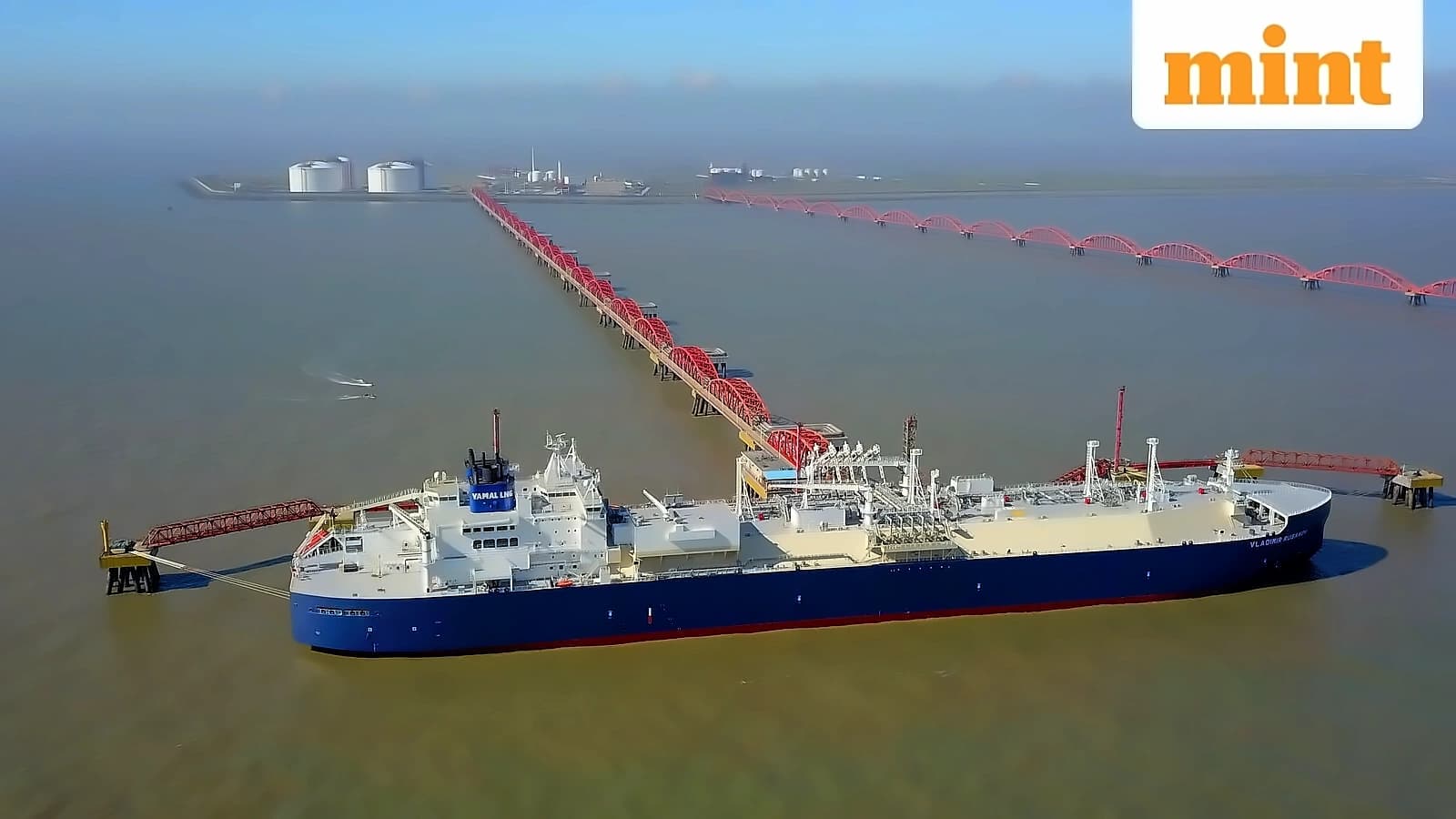
CEO Ashwani Gupta stated that "Our commitment is to deliver twice the growth in five years with a 20% return on capital at the consolidated level. If India grows at 7%, we can grow at 10-11%." The company's transition into a 200-vessel operator by 2031 isn't just about scale; it's about control, as owning marine infrastructure essentially future-proofs their dominance in Indian maritime trade. Container cargo remains APSEZ's fastest-growing segment with 16% CAGR in container volumes between FY21 and FY26, with the company targeting to maintain its net debt-to-EBITDA ratio within the 2.0x-2.5x range using incremental revenue from expanded infrastructure to offset borrowing costs.
India's maritime sector is experiencing significant growth driven by strategic infrastructure investments. According to reports from PIB, the Maritime India Vision 2030 outlines over 150 initiatives with projected investments of ₹3–3.5 trillion, supported by a recent ₹69,725 crore package for shipbuilding. Major ports handled around 855 million tonnes of cargo in FY24–25, reflecting strong growth in maritime trade and improved port efficiency. The sector's importance is underscored by the fact that it moves over 90% of India's trade by volume, with the country's 7,500-km coastline supported by 12 major ports and 200+ smaller ones.