Kaynes Technology India Ltd. is attempting to revive growth by expanding into semiconductors, printed circuit board (PCB) manufacturing and higher-value design-led products after its shares declined 56% from their peak following repeated misses on growth guidance. According to NDTV Profit, the company delivered a strong rally after listing in November 2022, with the share price rising almost tenfold to a record high of ₹7,705, but later missed its own revenue guidance several times. As of July 6, 2026, the stock traded at ₹3,356, down 56% from its peak, with the correction reducing its valuation to about 62 times earnings compared with a peak price-to-earnings multiple of 203.

Jefferies has identified Kaynes Technology and Syrma SGS as preferred picks in India's electronics manufacturing services space, positioning them ahead of assembly-focused players like Dixon Technologies. According to Jefferies, the next phase of India's production-linked incentive (PLI) programme is expected to favour component manufacturers over assembly-led EMS companies, with the brokerage maintaining a Hold rating on Dixon Technologies. This strategic preference reflects the government's shifting focus toward backward integration through the Electronics Components Manufacturing Scheme (ECMS), which has received a 75% increase in incentive outlay to ₹400 billion in February 2026 after receiving stronger-than-expected industry response.
India's semiconductor journey has entered a critical phase as the country transitions from being primarily a chip design hub to developing full-stack capabilities spanning fabrication, packaging, and testing. According to Equirius Securities, this transformation is supported by ₹600 billion in incentives announced since CY22 across major economies, with India building domestic manufacturing capabilities amid a global realignment of semiconductor supply chains. The global semiconductor market is projected to grow from around $775 billion to $1.6 trillion by CY30, positioning India as a trusted partner through its accession to Pax Silica in December 2025. India now has approximately three lakh chip designers, roughly a fifth of the global pool and second only to the US, with these engineers involved in architecture, verification and tape-outs, including a 2nm tape-out by Qualcomm's India teams.
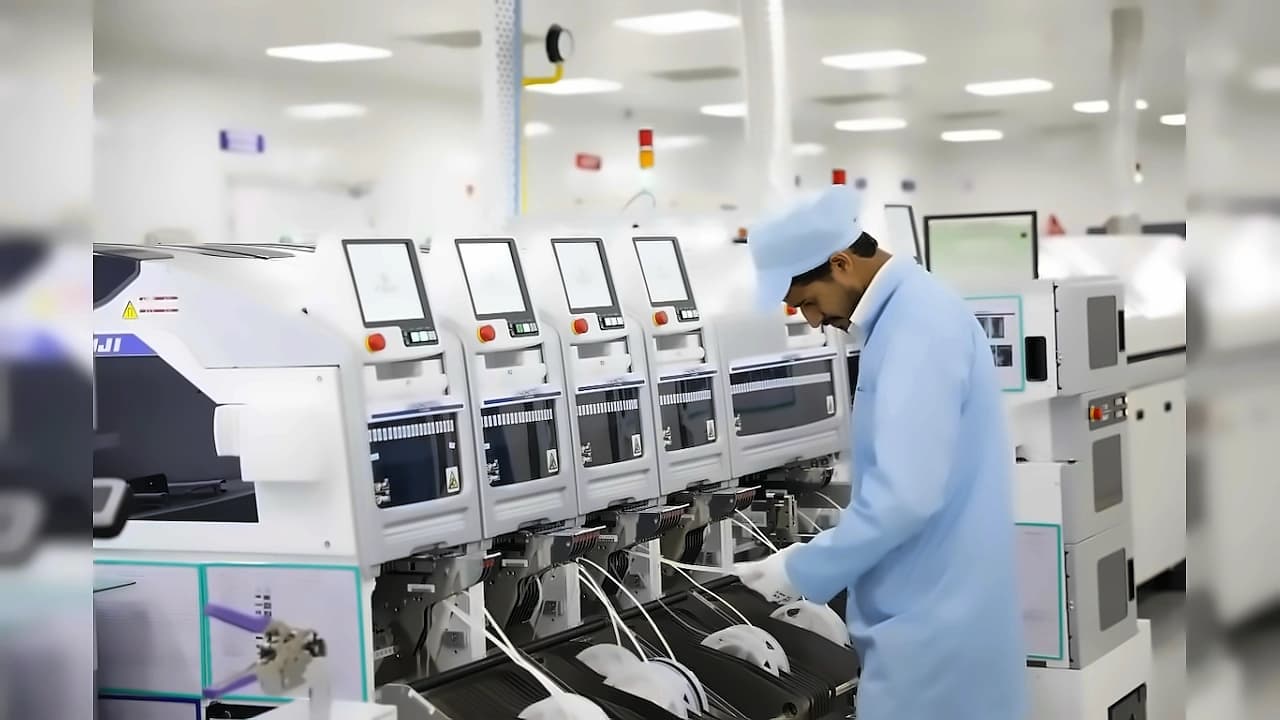
Kaynes is repositioning itself from a contract manufacturer to a company that designs, develops and manufactures electronic products, with printed circuit board assembly remaining its largest business in FY26, contributing 43% of revenue. According to NDTV Profit, the company plans to increase the contribution from new product development and other value-added solutions to 30% of revenue over the coming years from 18% in FY26. The company has started supplying complete assemblies in the electric vehicle segment instead of individual components and expanded through acquisitions, including smart metering capabilities that allow it to provide software, installation, operations and maintenance services alongside hardware manufacturing. Management expects the PCB business to generate revenue of ₹300-400 crore in FY27 with operations beginning in July 2026.
The company is widening its presence across the electronics supply chain through semiconductor packaging and PCB manufacturing. Its OSAT facility at Sanand has started operations and launched what management said is India's first commercial multi-chip module, with management expecting the OSAT business to generate revenue of ₹250-300 crore in FY27 as production ramps up. According to NDTV Profit, the semiconductor business has a demand pipeline exceeding ₹2,500 crore over the next five years, while the company also plans to use part of its semiconductor output internally while supplying external customers. The company has secured demand visibility for the next five years in the PCB business and expects to serve sectors including telecommunications, automotive, aerospace and defence.
Execution in the smart metering business has emerged as Kaynes' biggest near-term challenge, with the business contributing ₹971 crore, or 26.7%, of FY26 revenue. As reported by NDTV Profit, delays in executing an order for 35 lakh smart meters increased receivables to ₹1,365 crore and pushed working capital days to 125 in FY26 from 87 in FY25. The delays also affected cash flow, with management reporting negative cash flow of ₹600.4 crore compared to guided expectations of slightly negative cash flow. To reduce execution risks, management said the company will stop accepting end-to-end installation contracts after completing its existing backlog.