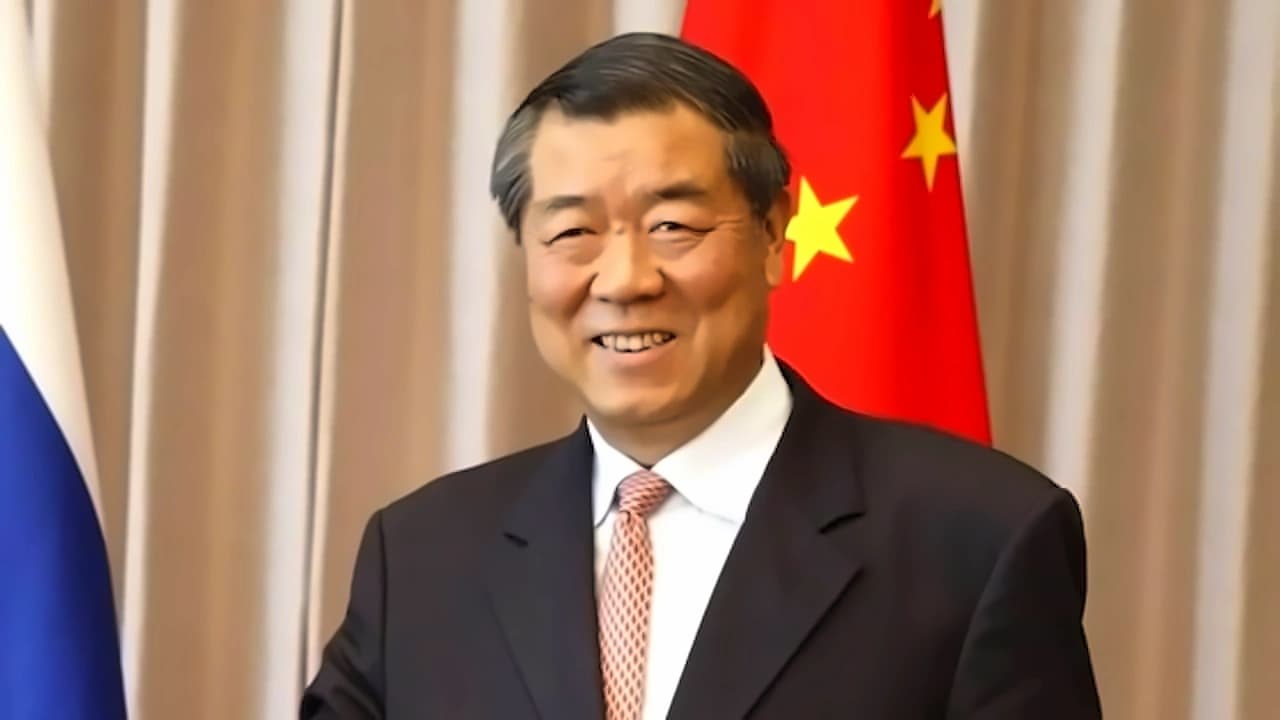
President Donald Trump's three-day Beijing summit with Xi Jinping concluded on May 15, producing a comprehensive framework covering aircraft orders, agricultural exports, and tariff reductions across roughly $30 billion. According to BeInCrypto analysts, this deal reshaped Wall Street's read on US-China trade relations, highlighting specific stocks positioned to benefit from the new framework. The agreement removes structural overhangs on major US companies' China exposure that had persisted for over a year.
Boeing (NYSE: BA) emerges as the cleanest direct beneficiary of the Trump China trip, with the company confirming an initial 200-aircraft order during the May 14-15 Beijing summit. CEO Kelly Ortberg traveled alongside the Trump delegation, ending a multi-year drought after China halted deliveries during the 2025 trade war. The stock dropped 3.8% on May 15 and declined from a $243 May 14 peak to a $213 local low by May 19, though this occurred on rising volume between April 30 and May 20, indicating accumulation by buyers. The May 21 bounce to $222 carried confirming volume of 7.71 million shares, with the stock holding inside a rising channel anchored at the late-March $187 swing low.
Archer-Daniels-Midland (NYSE: ADM) captures the soybean restart at the heart of the Trump Beijing deal, with the White House confirming China will purchase at least $17 billion in US agricultural products annually. ADM is one of the world's largest soybean processors and raised its 2026 earnings outlook on May 5, citing expectations of normalized Chinese soybean buying. The stock rallied 7.2% on the news, marking the largest single-day gain in over six years. The daily chart shows a textbook bullish flag pattern with ADM rallying 25.9% from mid-April lows to an $83 peak on May 13, forming the pole, while the pullback since May 13 has carved out a tight descending channel between $83 and $77.
Qualcomm (NASDAQ: QCOM) closes the three-pick stocks to benefit lineup as the China revenue stabilization play, with CEO Cristiano Amon traveling with the Trump delegation. While no specific Qualcomm dollar deal was announced, the strategic value lies in the tariff reduction framework covering roughly $30 billion in goods, as Qualcomm derives 46% of its revenue from China. The company already flagged the shift on April 29, with Q2 FY26 revenue topping consensus at $10.6 billion and EPS of $2.65, with management citing stabilizing China handset demand as the swing factor. The stock rallied 15% on April 30 after the earnings print and continued higher to a $247 peak on May 11.
The broader market rally extended beyond Trump-Xi summit developments, with Cisco Systems leading Wall Street to new records after reporting better-than-expected profits. The S&P 500 climbed 0.8% to set an all-time high at 7,501.24, while the Dow Jones Industrial Average rose 370 points (0.7%) to finish above 50,000 for the first time since beginning, and the Nasdaq composite added 0.9% to its own record at 26,635.22. The rally was supported by strong earnings from companies like StubHub Holdings (+13.7%), Viking Holdings (+5.5%), and Yeti Holdings (+6.2%). Corporate earnings this season have reinforced that AI-led market growth is broadening across semiconductors, infrastructure, and industrial economy sectors, with Cerebras Systems raising $5.55 billion in its IPO debut.