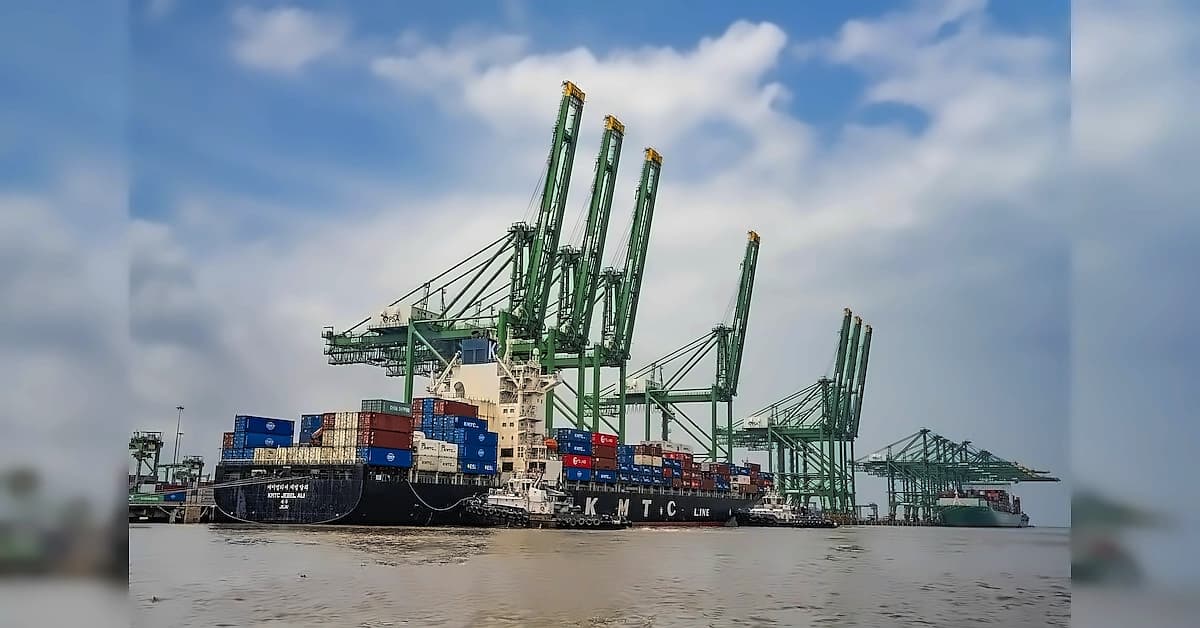
The Trump administration's 'Operation Economic Outcast' targeting Iran could significantly impact India's basmati rice exports, which represent a substantial portion of bilateral trade. According to latest government data, basmati rice accounted for $810.08 million of the $1.25 billion in total exports to Iran in FY26, compared to India's overall $11.5 billion worth of basmati rice exports during the year. Latest reports from Bloomberg indicate that India exported $383.11 million worth of rice to Iran in the first half of 2026, with Iran being the second-largest overseas market for Indian premium rice, including long-grained basmati. Despite higher prices and months of war disruption, Iranians continued buying for "food security reasons," with Tehran purchasing over 1 million tons of rice in FY26, up from 855,132 tons the previous year. Between April and June 2026, India exported about 120,847 tonnes of basmati rice to Iran, representing a 62% decline compared to the year-ago period. The expansion of US sanctions creates immediate payment settlement bottlenecks for Indian millers and trading houses in northern agricultural belts such as Punjab, Haryana, and Western Uttar Pradesh, with exporters fearing that heightened compliance friction and freezing of correspondent banking channels will paralyse rice shipments during the upcoming autumn harvest season.
The closure of the Strait of Hormuz and transportation difficulties have already impacted basmati rice exports since April 2026, as reported by Business Standard. However, exporters have successfully developed alternative payment networks to circumvent sanctions. According to Ajay Bhalothia, general secretary of the All India Rice Exporters Association, importers and exporters have established payment networks in Dubai and the wider United Arab Emirates, Germany, China and most recently Turkey. These transactions have not faced disruptions so far, allowing Indian exporters to maintain trade flows despite the challenging environment. As reported by Bloomberg, Indian traders have been using financial channels in the UAE, Germany and China, and more recently Turkey, to settle payments for trade with Iran rather than transacting directly with Iranian banks. These channels have continued to operate without disruption so far, with exporters now exploring Turkey as an alternative route for transactions after the UAE suspended trade activities, exchanges and financial transactions with Iran until further notice. The UAE's decision to halt trade activities, exchanges and financial transactions with Iran has disrupted the established system, with exporters facing greater uncertainty over payments, shipping and access to established trade routes.
The US Department of State sanctioned four India-based companies on Tuesday over Iranian petroleum and petrochemical trade, according to Business Standard reports. The sanctioned companies include Gujarat-based customs broker Portease Partners and two of its designated partners, accused of facilitating shipments of Iranian petroleum products to India. This expansion of US secondary sanctions raises compliance and financial risks for Indian businesses dealing with Iran, even where their direct exposure is limited. The US Treasury's Office of Foreign Assets Control (OFAC) and the US State Department designated nearly 60 entities, individuals, and ocean-going vessels spanning multiple jurisdictions, including India, Singapore, the United Arab Emirates, and Switzerland. The sweep targets five primary financial and logistics vectors: petroleum and petrochemical exports, illicit shipping networks, digital asset exchanges, gold trading, and dual-use technology procurement. The formal inclusion of four Indian commercial firms and an executive in the US Department of the Treasury's Specially Designated Nationals (SDN) list under Executive Order 13846 freezes any assets they hold within US jurisdictions and prohibits US citizens and entities from engaging in transactions with them.
India's rice exports to Iran have demonstrated remarkable resilience, with Iran purchasing over 1 million tons of rice last financial year, up 17% from a year ago, according to Bloomberg. Rice dominates trade between the two countries, accounting for nearly two-thirds of India's $1.25 billion in exports to Iran in the fiscal year-ended March, with Iran buying about 7% of India's $11.5 billion in global rice exports. The essential nature of the staple, which falls under humanitarian exception, as well as limited alternative suppliers should help sustain the trade, exporters say. Rice is a staple on the Iranian table, from chelow, the fluffy steamed rice served alongside kebabs and stews, to tahdig, the prized crispy crust formed at the bottom of the pot. Iran was India's second-largest basmati market by volume during the year, behind Saudi Arabia. S.C. Ralhan, President of Federation of Indian Export Organizations, said "Indian exports to Iran shouldn't get impacted" while exports to Iran aren't substantial, adding that "the government should immediately intervene on humanitarian grounds with some arrangement to help exporters." Other key Indian shipments to Iran include pharmaceuticals, tea, bananas, cereals, bovine meat and some chemicals, with exporters saying these are unlikely to be disrupted citing humanitarian exception and limited alternatives.
According to Prashant Vashisht, senior vice president at Icra, the latest uncertainty could increase vessel transit times and push up freight rates, as reported by Business Standard. The average number of vessels transiting the Bab-el-Mandeb has fallen to 22 from around 77 earlier, with some vessels taking the longer Cape of Good Hope route. However, global crude prices are unlikely to rise much further because traffic through the Strait of Hormuz has already fallen sharply, with additional volumes at risk being only around 0.5 million barrels a day for China. The recent US announcement leaves India navigating a tricky landscape, with the Ministry of Commerce and Industry and Ministry of External Affairs expected to pursue a multi-pronged strategy to mitigate economic fallout. Global and Indian commercial banks routinely engage in "over-compliance" — refusing to process legitimate letters of credit or trade documentation linked to Iranian ports or buyers out of fear of incurring US regulatory penalties. Consequently, Indian pharmaceutical exporters are facing payment delays and heightened insurance premiums on shipments bound for Iranian ports. Ajay Srivastava of the Global Trade Research Initiative said India's Iran trade had already suffered under earlier sanctions, with the latest restrictions potentially deepening existing problems. The broader India-Iran trade relationship has already declined sharply from its 2018-19 levels, with bilateral trade having fallen by more than 90% from its 2018-19 peak of $17 billion, with Indian exports now largely concentrated on goods covered by humanitarian exemptions.