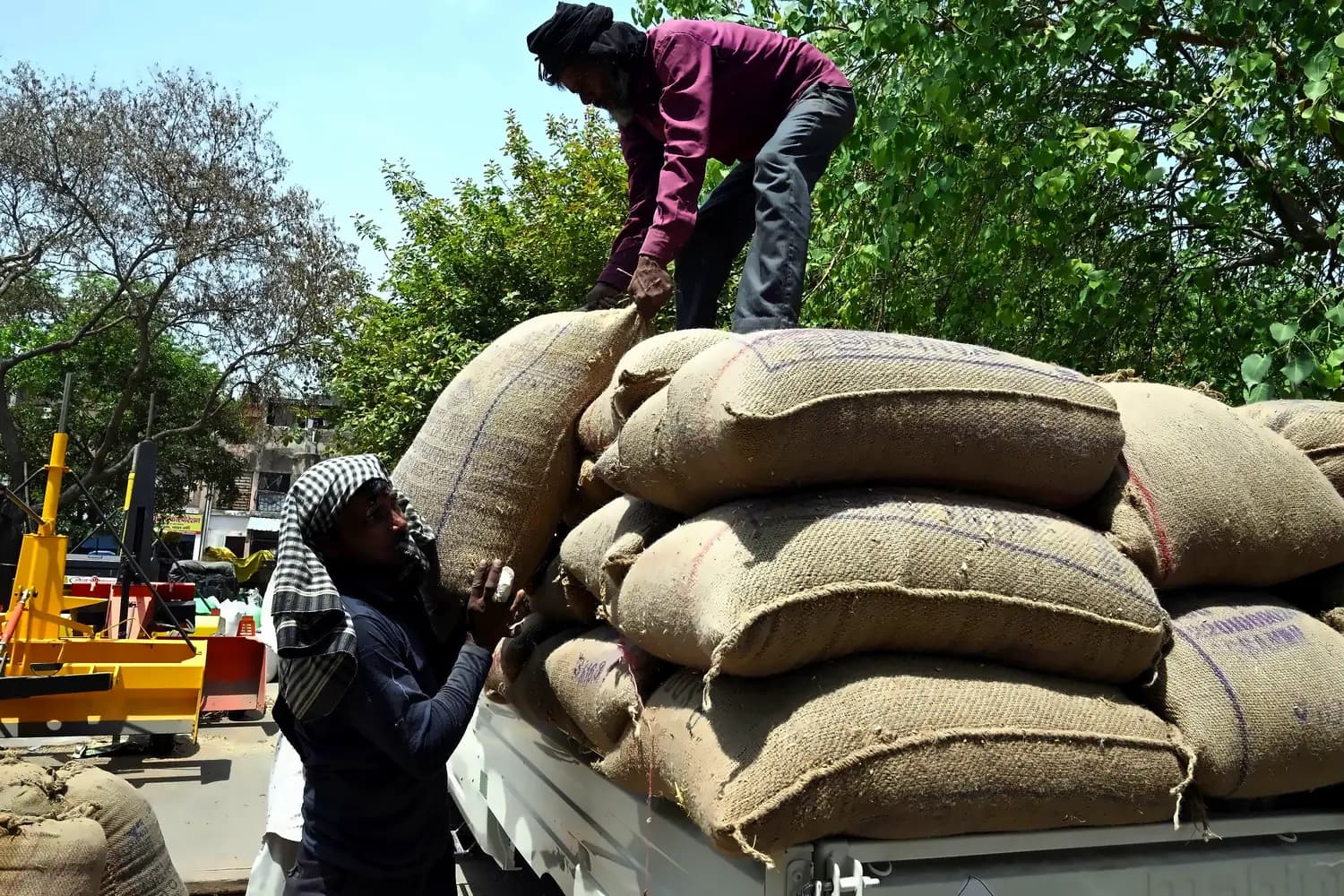
The Indian government is taking proactive measures to address rising food costs by resuming sales of subsidized Bharat Atta and Bharat Rice ahead of the festival season. According to The Economic Times, the Ministry of Consumer Affairs has allocated significant quantities of wheat and rice for this purpose, with Bharat Rice priced at ₹35 per kg initially, with a slight increase later. This initiative aims to provide essential staples at lower prices as the country navigates supply chain disruptions from multiple fronts.
India, the world's largest sunflower oil buyer, is facing significant supply chain challenges as attacks in the Black Sea region disrupt imports from key suppliers. According to reports from Business Standard, shipments from top producers Russia and Ukraine are experiencing delays of up to 60 days with rising prices, forcing the country to seek alternative vegetable oil sources. Mannan Khan, director of MK Agrotech Pvt. Ltd., a vegetable oil importer, confirmed that dozens of shipments, especially from Russia, have been delayed as violence in the Black Sea region intensified in the past month. The disruptions are having a cascading effect on global markets, with attacks in the Black Sea being "definitely affecting us," as Khan noted, adding that the pivot to alternative oils is expected to further tighten an already constrained global vegetable oil market.

Indian importers are pivoting to South American suppliers and alternative oils to address the supply gaps. As reported by Business Standard, Khan's company was forced to source half its sunflower supply from Argentina as Black Sea violence intensified. The company is also betting on Australian canola oil, subbing it in for 3-4 per cent of their total import volume, with plans to raise this further. Importers are now urging the government to approve new tur and urad supplier destinations as they seek to reduce import reliance on specific countries. Brazil is attempting to cultivate tur for India, with a small harvest expected soon, while the trade sector is working to expand tur cultivation to Australia. This diversification strategy is expected to help meet rising demand ahead of the festival season starting next month, though it stands to further tighten global markets already facing supply constraints from multiple fronts.
The disruptions are already affecting domestic pricing and market dynamics. According to Business Standard, India's local sunflower oil price index has risen 6 per cent this month, widening its premium over palm and soy oils. Sunflower oil, which made up about a fifth of India's total vegetable oil imports in the first half of the year, with the majority of about 1 million tons coming from the Black Sea region. Ukraine has stepped up drone attacks on Russia-linked shipping infrastructure, while the third-largest sunflower oil exporter in Ukraine last week suspended operations citing sharp intensification of Russian attacks. Together, Russia and Ukraine accounted for 63% of global sunflower oil exports last season, according to the US Department of Agriculture, making their disruption particularly significant for global supply chains.
Indian vegetable oil buyers are significantly increasing imports of alternative oils to meet demand. As reported by Business Standard, imports of palm oil are expected to jump around 40 per cent on a monthly basis to 700,000 tons in July, while a higher-than-normal 500,000 tons of soy oil is expected to come in every month. Aashish Acharya, vice president at Patanjali Foods Ltd., one of the country's top vegetable oil buyers, confirmed that demand is now starting to shift to rivals. The increased import volumes are expected to further tighten global vegetable oil markets already facing supply constraints from a strong El Niño and expanded biodiesel mandates in Indonesia and Malaysia, the world's biggest palm oil producers.
India's domestic oilseed production faces additional challenges that will increase import dependence. According to Business Standard, India's own oilseed planting has lagged due to a below-average monsoon, likely to hit output and increase the country's reliance on imports. This comes as the global vegetable oil market faces supply constraints from a strong El Niño and expanded biodiesel mandates in Indonesia and Malaysia, the world's biggest palm oil producers. Khan from MK Agrotech expects India's import requirements will be large with prices likely to stay firm and likely firm further, as the country navigates both regional supply disruptions and domestic production challenges.