India's mango export sector has achieved a significant milestone with a 12.5-tonne shipment of Dashehari and Langra mangoes from Uttar Pradesh reaching Dubai by sea after a 25-day journey. According to reports from Devdiscourse, this marks the first successful commercial sea shipment of premium Indian mangoes from UP to Dubai under an extended harvest-to-market transit period. The consignment was exported by Shehnaz Export, Amroha, in partnership with Attashi Global, to Lulu Group, UAE, one of the Gulf region's leading retail chains. The shipment was harvested on June 22, 2026 and arrived in Dubai on July 17, 2026, demonstrating the effectiveness of the technology even during challenging weather conditions.
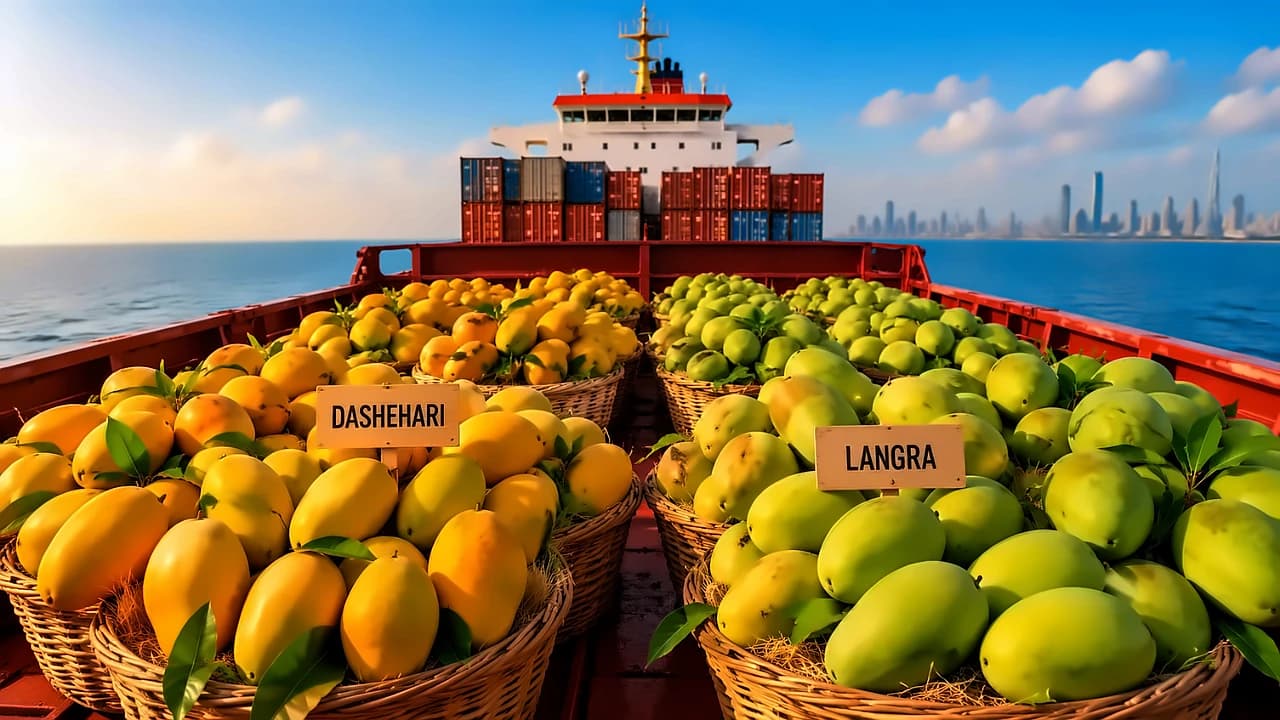
The successful shipment was made possible using a post-harvest protocol jointly developed by the ICAR–Central Institute for Subtropical Horticulture (ICAR-CISH), Lucknow, and the Agricultural and Processed Food Products Export Development Authority (APEDA). As reported by Devdiscourse, the mangoes were harvested on June 22, 2026 and processed using recommended scientific post-harvest practices, including treatment with METWASH, a shelf-life extension technology developed by ICAR-CISH. Despite western disturbance-related disruptions that extended the transit period to 25 days, nearly 90% of the mangoes were found to be in good marketable condition upon arrival, demonstrating the effectiveness of the technology. The mangoes were packed at an Amroha pack house and transported in a 40-foot refrigerated container under a continuous cold chain, ensuring optimal quality maintenance throughout the journey.
The sea freight export model has delivered substantial financial benefits for mango growers. According to the ministry, mango growers realised an additional income of approximately ₹15–20 per kg over conventional export channels, significantly enhancing farm profitability while maintaining the competitiveness of Indian mangoes in international markets. Since transporting mangoes by sea is significantly cheaper than by air, exporters were able to pay growers better prices for their produce, making the technology more sustainable and cost-effective for the entire supply chain. The successful commercial shipment offers a more affordable alternative to air freight, which has traditionally been the preferred option for exporting fresh mangoes, enabling exporters to offer better returns to farmers while keeping Indian mangoes competitive in international markets.
The successful trial is expected to encourage exporters to use sea freight for shipping fresh mangoes to the Gulf and other overseas markets. As reported by Devdiscourse, the ministry stated that the technology could accelerate commercial sea exports of mangoes not only from Uttar Pradesh but also from other mango-producing states. The protocol is expected to open up more opportunities in the Gulf and other international markets while boosting export earnings, reducing logistics costs and improving farmers' livelihoods across the sector. ICAR-CISH and APEDA believe the technology can be adopted by other mango-producing states, helping expand India's presence in international markets while reducing transport costs, increasing export earnings and creating better returns for mango growers across the country.