The Maersk-DCM Shriram Partnership: A Strategic Milestone
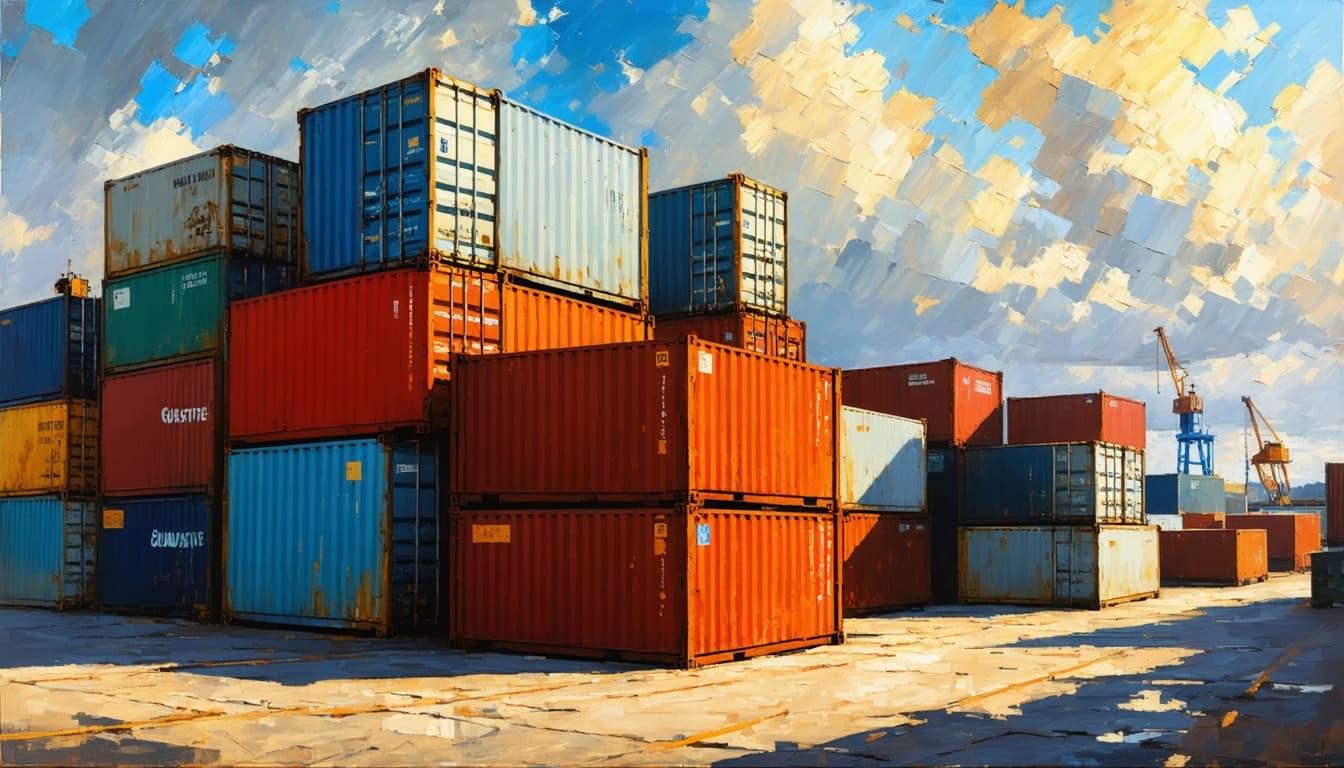
On July 3, 2026, Union Minister Sarbananda Sonowal unveiled India's first export-import (EXIM) shipping container manufactured by DCM Shriram Group for global shipping major A.P. Moller–Maersk at the Maersk-CONCOR Inland Container Depot in Dadri, Uttar Pradesh. During the event, Maersk placed an additional order for 1,000 India-manufactured containers, marking the beginning of a long-term commercial partnership expected to strengthen India's position in the global maritime value chain.
This achievement follows Prime Minister Narendra Modi's February 2025 meeting with Maersk Chairman Robert Uggla, where the Prime Minister encouraged the company to actively support the development of world-class container manufacturing in India. Within just sixteen months, that vision culminated in the successful rollout of the country's first internationally procured, India-manufactured EXIM shipping container.
What Drove Maersk's Additional Order
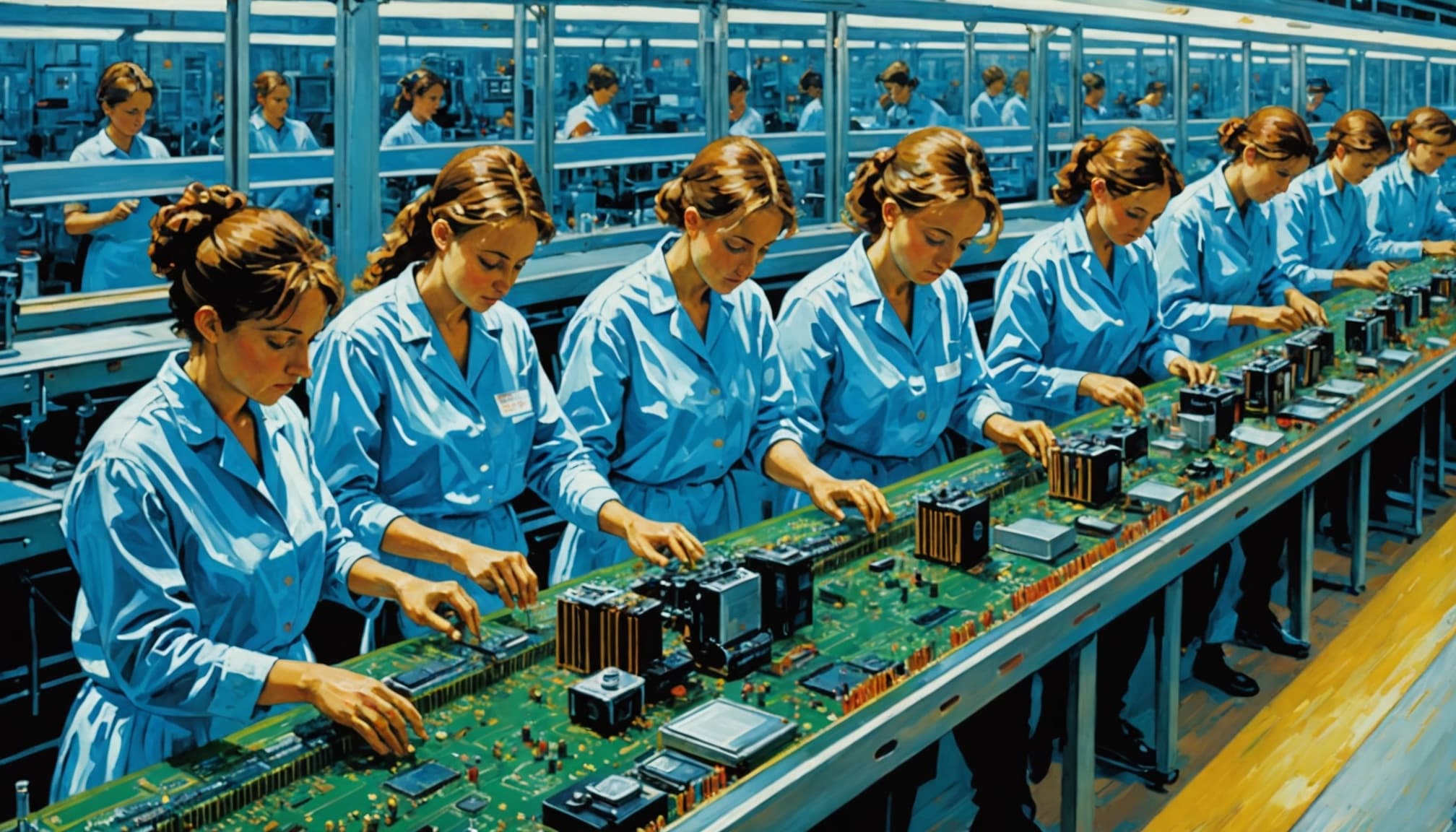
Maersk's decision to place an additional 1,000-container order was driven by several strategic factors. The two prototype cargo containers built by DCM Shriram at its Faridabad facility to Maersk's specifications successfully passed comprehensive structural prototype testing, including stacking, lifting, racking, floor strength, and weatherproofing tests, receiving full CSC safety approval.
Quality was paramount. Maersk conducted extensive audits of 12 Indian manufacturers with support from teams from Denmark and independent auditors before selecting DCM Shriram. The focus was placed on quality, manufacturing processes, and the ability to meet global standards. As an industry executive familiar with the project noted, "Quality was the first priority. Shipping lines cannot afford to compromise on safety and reliability, particularly for equipment operating in harsh marine conditions".
The partnership also aligns with the government's broader strategy to strengthen supply-chain resilience. During the meeting with Maersk executives, Prime Minister Modi emphasized that India would pay a heavy price if container rates doubled or quadrupled due to China's monopoly in this segment, as India doesn't manufacture containers domestically.
Revenue Visibility and Order Book Stability
The long-term commercial partnership significantly enhances DCM Shriram's revenue visibility and order book stability. Maersk views the milestone not as an endpoint but as the foundation for a long-term supply relationship that will grow in scale as Indian manufacturers consistently demonstrate they can meet global quality standards at competitive costs.
The order follows a Memorandum of Understanding signed between Maersk and DCM Shriram during India Maritime Week in October 2025. Since then, both companies have collaborated on technical specifications, procurement planning, and manufacturing processes, with Maersk facilitating exposure visits to overseas container production facilities.
Maersk reckons it can place more orders under the container manufacturing scheme being finalized by the Central government and state governments such as Gujarat. The successful execution of the initial order is expected to pave the way for larger procurement commitments as India's container manufacturing ecosystem gains momentum and policy support takes shape.
The Cost Competitiveness Challenge
To sustain Maersk's procurement volumes against established global container manufacturers (primarily China), DCM Shriram must address significant cost disadvantages. Containers manufactured in India are currently 30-40% costlier than those manufactured in China, due to higher material costs and fewer production facilities.
The core cost challenge lies in corten steel—an all-weather, corrosion-resistant material that accounts for roughly 60-65% of total container manufacturing expenses. While India produces over 125-130 million tonnes of crude steel annually, specialized weathering steel suitable for container manufacturing accounts for well under 1% of domestic output, creating a supply bottleneck.
China's advantage lies in its massive steel ecosystem. With annual crude steel production exceeding 1 billion tonnes, Chinese mills benefit from scale, integrated supply chains, and long-term contracts with container manufacturers, allowing significantly lower input costs. China's scale advantage allows manufacturers to produce containers often $500–$1,000 cheaper than competitors.
CMPS Framework: Transforming Unit Economics
The ₹10,000 crore Container Manufacturing Promotion Scheme (CMPS) announced in the Union Budget 2026-27 represents a comprehensive policy intervention designed to establish India as a globally competitive container manufacturing hub. The scheme targets an annual domestic manufacturing capacity expansion by 10 times to reach 7.5 lakh TEUs.
The CMPS framework encompasses three critical support mechanisms: Capex support for establishing Greenfield container manufacturing and expansion of existing brownfield facilities; Opex support to bridge the cost gap per container to improve competitiveness of domestic manufacturing; and R&D support for promotion of research, testing, skilling, and capacity building.
For DCM Shriram, this support significantly improves unit economics. The opex support component directly improves gross margins by offsetting the 30-40% cost disadvantage. As capacity utilization increases from current low levels to targeted 7.5 lakh TEUs annually, fixed costs per unit will decline substantially, improving operating margins.
Capital Efficiency and ROIC Enhancement
The CMPS framework provides differentiated support for both greenfield and brownfield projects, each with distinct implications for DCM Shriram's capital efficiency. Brownfield expansion at existing facilities like DCM Shriram's Faridabad plant delivers 40-60% lower CAPEX per unit of new capacity compared to greenfield projects by leveraging existing land, utilities, buildings, and workforce.
Brownfield projects also deliver 30-50% faster execution than greenfield projects. The operational ecosystem already exists—trained workforce, qualified suppliers, validated logistics partners, established customer relationships, regulatory familiarity, and institutional learning curves are all in place.
The CMPS framework significantly improves DCM Shriram's Return on Invested Capital (ROIC) through multiple mechanisms. Capital subsidies and viability gap funding reduce the equity component of investment, improving the equity return multiple. Brownfield expansion advantages translate to significantly shorter payback periods and higher IRR.
Quality Assurance and Global Standards Compliance
DCM Shriram implemented a robust quality assurance infrastructure to meet international standards, building upon decades of experience in heavy sheet metal fabrication and structural engineering. The company maintains ISO 14001:2015 (Environmental Management System) and ISO 45001:2018 (Occupational Health and Safety Management System) certifications.
The company's quality management systems include pre-auditing by world-renowned classification agencies including DNV (Det Norske Veritas), BV (Bureau Veritas), and Lloyd's Register. Quality plans are detailed in partnership with customers to comply with their requirements, with implementation aligned impeccably to ensure high-quality products.
The first India-manufactured container has been produced in accordance with internationally accepted quality and safety standards, including ISO specifications and the International Convention for Safe Containers (CSC), making it suitable for global deployment. Every container in Maersk's fleet must meet ISO structural and dimensional specifications, the International Convention for Safe Containers (CSC), and the company's own quality standards.
Logistics Integration Through Dadri ICD
The Maersk-CONCOR Inland Container Depot in Dadri serves as a critical logistics hub that facilitates seamless integration of DCM Shriram's domestically manufactured containers into Maersk's global logistics network. Dadri represents Asia's biggest ICD commissioned by CONCOR in 2003, providing strategic advantages for container deployment and distribution.
The most significant cost saving comes from eliminating international ocean freight for container procurement—saving $3,200-4,800 per 40ft container.
The dramatic lead time reduction—from 45-65 days (China sourcing) to 5-10 days (domestic sourcing)—directly impacts Maersk's inventory carrying costs. Using industry-standard inventory carrying costs of 24% per annum, the lead time reduction generates substantial economic benefits.
For a fleet of 10,000 containers with average value of ₹1.5 lakh, the lead time reduction generates ₹270 crore in annual carrying cost savings and frees up ₹1,125 crore in working capital.
Government Policy Alignment and Competitive Moat
The Ministry of Ports, Shipping and Waterways' support for domestic container manufacturing represents a comprehensive alignment with the Atmanirbhar Bharat initiative. Container manufacturing has been identified among the seven strategic and frontier sectors for scale-up in the Union Budget 2026-27.
The government's policy intervention creates a formidable competitive moat for DCM Shriram against potential new entrants. DCM Shriram completed the journey from vision to first container rollout within 16 months, establishing a significant first-mover advantage. The Maersk partnership provides powerful third-party validation that new entrants cannot replicate quickly.
First movers secure initial CMPS incentive tranches before scheme exhaustion, while established production capacity enables cost advantages that new entrants cannot match initially. The policy-created competitive moat provides both short-term protection and long-term sustainable advantages.
Conclusion: A Transformative Partnership
The Maersk-DCM Shriram partnership represents a significant milestone in India's quest to develop domestic container manufacturing capabilities and challenge China's dominance. While current cost differentials present challenges, the combination of government policy support, strategic alignment with supply chain resilience goals, and the potential for long-term cost optimization through scale and process improvements creates a compelling case for the partnership's sustainability.
The success of this initiative will depend critically on DCM Shriram's ability to bridge the 30-40% cost gap through manufacturing excellence, backward integration, and economies of scale, while maintaining the quality standards that Maersk demands for global operations. With the CMPS framework providing comprehensive support and the Dadri ICD enabling seamless logistics integration, India is well-positioned to become a significant global hub for shipping container manufacturing.