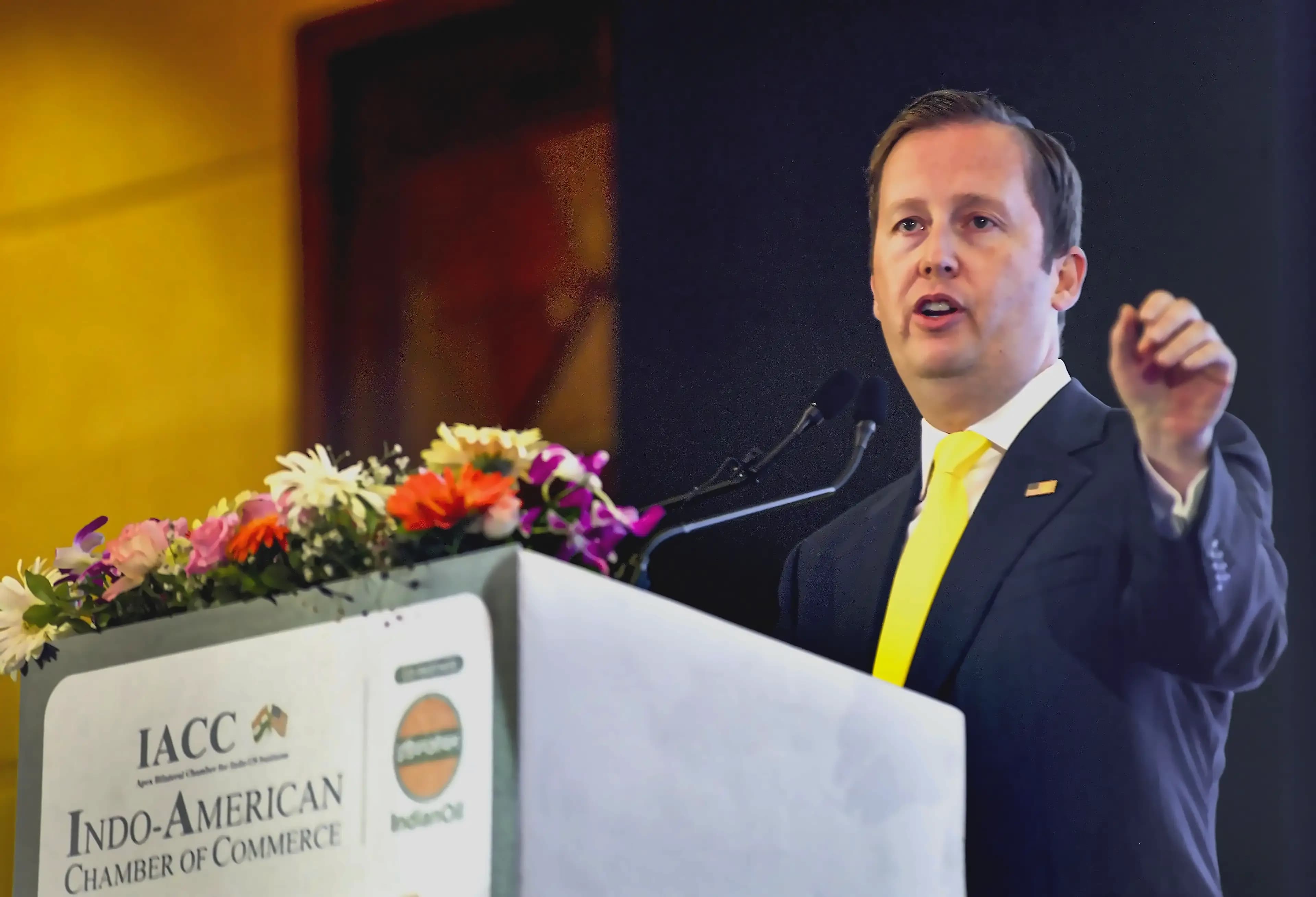
US Ambassador to India Sergio Gor has expressed strong optimism that a bilateral trade agreement could be finalised within weeks or months, signalling fresh momentum in negotiations that have been underway for over a year and a half. Speaking at the Annual Leadership Summit of the American Chamber of Commerce in New Delhi, Gor outlined that President Trump's primary goal is to 'facilitate bilateral trade in a way that creates lucrative opportunities for American businesses and workers'. He confirmed that an interim trade agreement is already on the table, with both sides now focused on completing a more comprehensive framework that would expand market access, reduce trade barriers, and create greater regulatory certainty for businesses on both sides. 'This agreement, if done right, will strengthen supply chains, catalyse new investments, and drive sustained inclusive growth,' Gor emphasised, noting that talks have been ongoing for 18 months but contextualising the pace by comparing it to the European Union's trade negotiations which took nearly 19 years to conclude.
Indian trade officials will seek comparative advantage over other countries during negotiations to advance a trade deal with Washington this week. A team, led by chief negotiator Darpan Jain, reached the US on Monday for a three-day trip to conclude the first phase of a trade pact agreed in February. As part of the deal, US tariffs on Indian goods were to be cut to 18 per cent from 50 per cent, with New Delhi pledging to buy $500 billion of American goods over five years. However, the Supreme Court's decision to strike down President Trump's sweeping reciprocal tariffs has prompted countries including India to review the deal, as the agreed rates were based on reciprocal tariffs. Commerce and Industry Minister Piyush Goyal said Monday that while the first phase of the deal has been finalized, efforts are underway to ensure India gets preferential access to the US market compared with competitors.
US trade negotiators are expected to visit India next month for bilateral trade talks, Commerce and Industry Minister Piyush Goyal announced on Thursday. According to Goyal, the US team will visit India to continue negotiations under the broader bilateral trade agreement (BTA), following the Indian side's visit to Washington, DC in April to finalise details of the interim pact. When asked about the US chief negotiator's participation, Goyal clarified that 'he's not coming with him, but there is some plan for them to come next month'. This development comes as US Secretary of State Marco Rubio is scheduled to undertake a four-day visit to India from May 23-26, marking his first visit to the country as he seeks to further cooperation in trade, defence and energy sectors. As per the US State Department, Rubio will visit Kolkata, Agra, Jaipur and New Delhi during his trip, discussing cooperation in energy, security, trade and defence with senior Indian officials.
Commerce and Industry Minister Piyush Goyal announced that the government is monitoring the external situation and several steps are under consideration to contain the current account deficit (CAD). Speaking at an event organised by the American Chamber of Commerce, Goyal said 'We are monitoring the situation. All the various arms of the government are working as a team. Several steps are under consideration. The situation globally is quite challenging, but we have the confidence and courage of conviction that we will come out winners even in this challenging time'. However, Goyal emphasized that 'the government has no plans to cut non-essential imports into India as of now' but urged citizens to be more conscious about spending on import-dependent products. Economists expect India's CAD could widen markedly in the current financial year as the West Asia conflict lifts crude prices, squeezes remittances and weakens export growth. India's merchandise imports surged to a six-month high of $71.94 billion in April, while foreign exchange reserves have depleted by over 4 per cent from the record high of $728.49 billion before the US-Iran war on February 28.
The push for a deal comes at a significant moment as India and the United States paused reciprocal tariffs earlier this year as part of a broader global trade detente initiated by the Trump administration, creating a 90-day window for countries to negotiate bilateral arrangements. India, as one of America's largest trading partners with bilateral trade exceeding $190 billion annually, has been among the most active in pursuing a formalised agreement during this period. The central government has signalled willingness to offer concessions on agricultural imports and lower tariffs on select American goods, while seeking greater access for Indian pharmaceuticals, textiles, and IT services in return. Last month, an Indian delegation travelled to Washington DC to advance the discussions, with both sides now focused on completing a comprehensive framework that would expand market access and reduce trade barriers.
Despite ongoing trade tensions, several big US companies have announced investments in India as the country remains a favoured investment destination. According to Goyal, 'in the last six months, if I look back at the various commitments that we have seen from American industry, probably the number will be upwards of $60 billion'. Notable commitments include Google's announcement of $15 billion investment over the next five years in setting up an AI hub in India, which would include the country's largest data centre in partnership with Adani Group. Amazon India said it plans to invest over ₹2,800 crore to strengthen associate safety, health and financial well-being measures, and boost its operations network across the country, with the latest investment part of the company's stated commitment to infuse more than $35 billion in India by 2030. The minister emphasized that 'America and India truly are working as natural partners' and noted that 'we complement each other' in the current global economic environment.