India has strongly defended its position following the White House classification of the country as a major hub in a global network allegedly used to evade US tariffs on Chinese goods. MEA Spokesperson Randhir Jaiswal stated that India has robust laws and procedures governing customs, exports and rules of origin, emphasizing that any violations are dealt with in accordance with the law. According to Jaiswal, 'We would like to study the findings and the methodology that has been adopted in detail' before responding comprehensively to the White House report. The comments came after the White House flagged India among more than 40 countries in what it described as a 'Shadow Transshipment Network' linked to the movement of Chinese goods to the US to potentially avoid higher tariffs. As per The Global Trade Research Initiative (GTRI), India should ask the United States to disclose the detailed basis of its allegations, including country-specific, product-level and shipment-level data, as well as India's share of the estimated $67 billion in alleged transshipped goods. The research institute recommends that India independently examine exports of pumps and compressors by comparing firm-level imports from China with exports to the United States and verifying the extent of domestic value addition.
The White House has flagged India as one of the key hubs in a global network used to evade US tariffs on Chinese goods, placing the country among more than 40 nations identified in its 'Shadow Transshipment Network'. According to the latest White House report, India has been categorised as a 'Tier-1 Diversified Scale Leader', alongside the European Union, Canada, Mexico, Japan and South Korea. This classification places India among the major global trade hubs where transshipment risks are considered significant because of the scale and diversity of legitimate trade flows into the US. India, Mexico and Vietnam emerged as the top three hubs for goods originating from China in 2025, with the report estimating that around $67 billion worth of goods were transshipped through these three countries. The report divided countries into three categories based on their economic relationship with China and transshipment risk levels, with Tier 1 countries including India, Canada, the European Union, Israel, Japan, Mexico, South Korea and Taiwan being large and diversified industrial economies where transshipment risk is embedded within legitimate trade flows. However, as per GTRI, the report does not specify India's share of that estimate, identify any Indian exporter or provide details of a single fraudulent shipment, making it difficult to establish widespread rerouting of Chinese exports.
The Trump administration is developing an AI-powered "Detective Border" to combat trading partners suspected of enabling China to skirt US tariffs through third-country transshipments. According to a report released Thursday by the White House Office of Trade and Manufacturing Policy, this new technology will scan shipment data against routing histories, confirm production capacity and ownership relationships, and analyze packaging patterns and X-ray imaging at ports to detect mismatches between declared contents and actual shipments. The report, titled 'The Great Transshipment Scam: Rise, Scope, and Costs', outlines the administration's push to develop a system that would support U.S. Customs and Border Protection by integrating shipment data, routing histories and other information to help identify high-risk shipments and facilitate duty collection. The US administration's latest assessment puts greater scrutiny on countries such as India that have become increasingly important links in global manufacturing and supply chains. Washington is planning several measures to intensify its crackdown, including an executive order aimed at strengthening enforcement powers at US Customs and Border Protection and incorporating anti-transshipment provisions into new trade agreements.
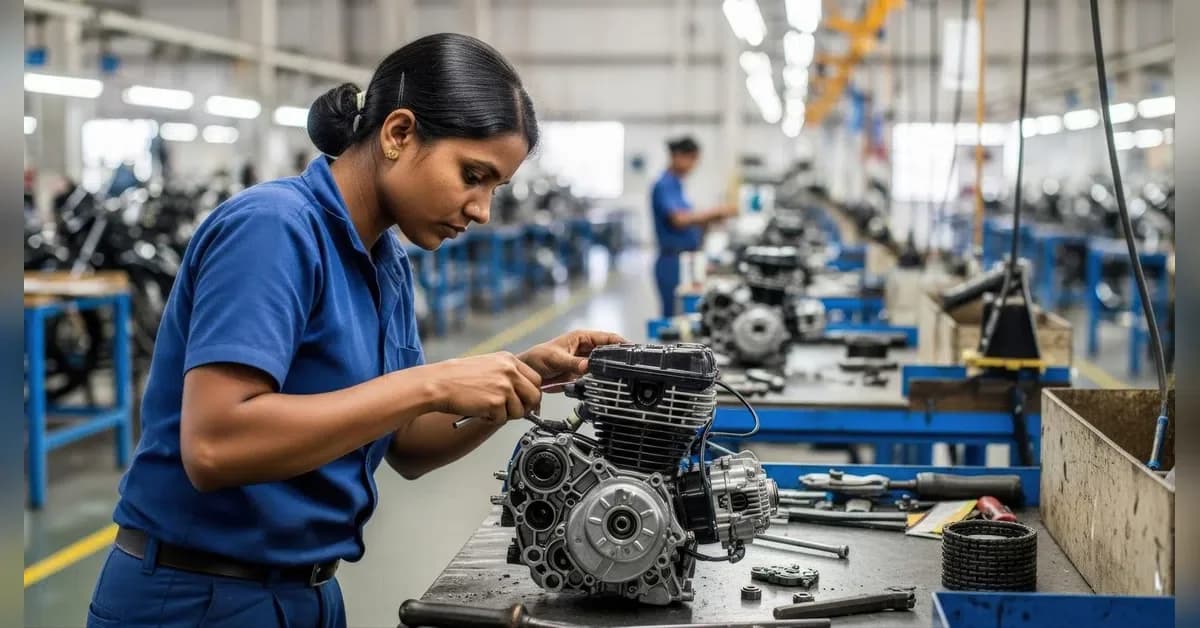
The US administration has specifically highlighted India's Pune-Gujarat-Chennai corridor as a route for pumps and compressors, where Chinese companies can use India for minor processing before goods are shipped to the US. According to the White House report, this allows Chinese companies to potentially benefit from the difference between higher US tariffs on Chinese products and lower duties applicable to Indian-origin goods. The report notes that the transshipment risk involving India is embedded within broad and legitimate trade flows between the two countries, highlighting the complexity of distinguishing between legitimate trade and evasion activities. The practice became more prominent after the US imposed Section 301 tariffs on Chinese goods in 2018, according to the report. The report describes some facilities as 'screwdriver factories', where imported components undergo only limited assembly before being exported as products originating from another country, with US officials noting that such processes may not constitute the 'substantial transformation' needed for legitimate country of origin acquisition. The report identifies the Pune-Gujarat-Chennai production belt, covering pumps and compressors under HS 8413-8414, as a representative corridor of potential transshipment exposure, linking such flows to US industrial supply chains in Cincinnati, Dayton and Columbus. However, as per GTRI, an analysis indicates that India has significant domestic manufacturing capability in these product categories, with India exporting liquid pumps worth $1.61 billion worldwide, including shipments worth $414.5 million to the United States, while importing liquid pumps valued at $326.4 million from China. Similarly, India exported air pumps and gas compressors worth $1.48 billion globally, of which $335.4 million went to the US, even as imports from China stood at $1.63 billion.
The report revealed that China preserves access to the US market counter to US trade policy while the spoils of illegal transshipment enrich transshipping countries themselves. According to the White House findings, local firms capture assembly fees, warehousing revenue, logistics margins, port charges, customs brokerage income, land rents, and export-processing-zone investment. Governments benefit from jobs, tax receipts, foreign investment, and trade growth through this illicit activity. As reported by the White House, China's biggest enablers range from Mexico and Canada on US land borders to the European Union, India, Japan, and South Korea, with the administration noting that 'by routing around the tariffs, China and its state-supported manufacturers and trading firms could push goods into jurisdictions with cheap labor, weak customs oversight, permissive free zones, or preferential U.S. trade access.' Under the proposed enforcement approach, if a shipment is subsequently found to have been transshipped, CBP could potentially seek tariffs retrospectively on a company's shipments going back one year, rather than limiting action to the specific consignment identified. The report estimates associated tariff revenue losses at $19 billion-$34 billion and $19 billion-$26 billion in foregone federal revenue arising from the broader economic impact. The US Commerce Department's Office of Trade and Economic Analysis (OTEA) analysis using transaction-level customs data estimated that about $67 billion of US-bound goods were transshipped from China through Mexico, India and Vietnam in 2025, resulting in approximately $28 billion in lost US tariff revenue. However, GTRI argues that the report suffers from four major weaknesses, including broadening the conventional definition of transshipment to include activities such as assembly and component integration, relying on trade correlations as evidence, and failing to account for the US's own tariff structure creating large differentials making evasion financially attractive.
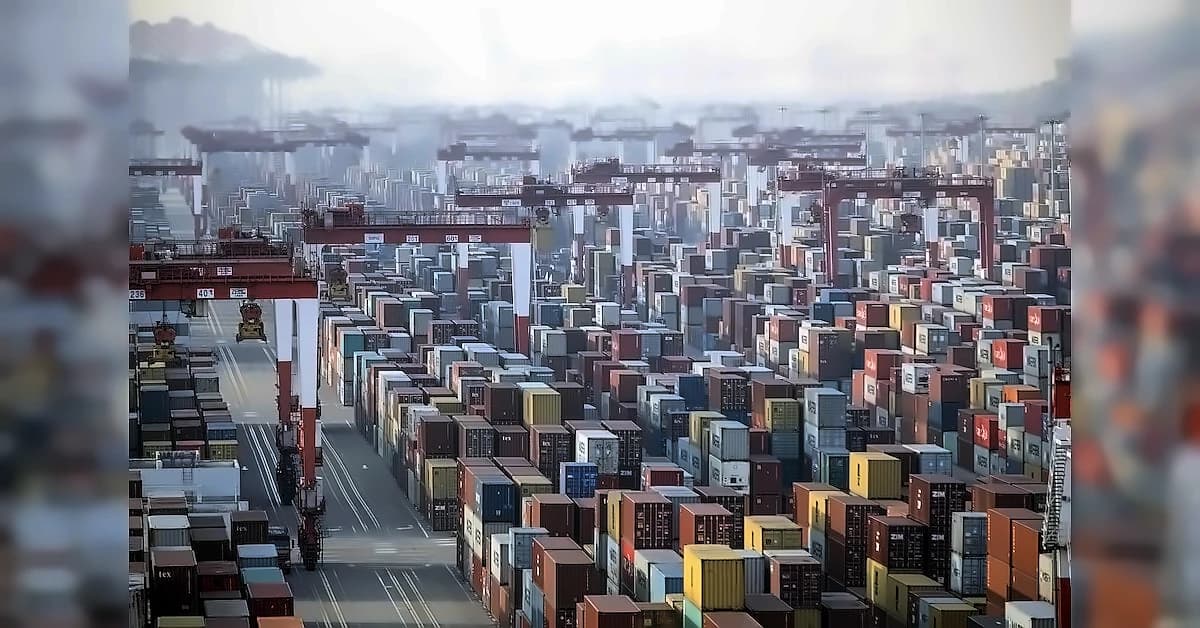
The enforcement initiative comes as President Trump has unleashed a wave of country-specific duties with some of the highest rates aimed at US allies and major trading partners. As reported by The New Yorker, countries are increasingly wary of trading with the U.S. due to Trump's unpredictable tariff and trade policies, leading many to revert to trading with China instead. Senior US trade adviser Peter Navarro specifically named India during a briefing on the report, warning that countries facing higher US tariffs could have an incentive to facilitate the routing of Chinese goods through their territories. 'This is about the 40-plus countries that are enabling the transshipping, and as we impose higher tariffs on other countries, India, Vietnam, down the line, they're going to try this transhipment too,' Navarro said. He added that countries seeking lower tariffs should not use transshipment as a way to circumvent US trade measures, stating 'The way to pay less is not to cheat; it is to stop dumping, respect intellectual property, drop your barriers to American goods and move towards reciprocity.' The report emphasizes that 'there's been a feeling among a number of places that they, frankly, don't trust either the United States or China right now. They don't feel as if either one of these countries is particularly looking out for their interests,' with many countries feeling 'caught between these two giants - essentially, these two elephants. And when these elephants fight, the grass gets trampled.' The report comes at a sensitive point in India-US trade negotiations over a reciprocal tariff agreement, with Washington's concerns over Chinese goods potentially adding another issue to negotiations already complicated by disagreements over India's trade and energy ties with Russia. The report notes that 'the timing and direction warrant further investigation but acknowledges that some of the shift reflects genuine changes in production and trade,' with the administration stating it was 'too early to assess the net impact of the administration's latest tariff and anti-transshipment measures' as trade and customs data become available with a lag.