Prime Minister Narendra Modi's meeting with Russian President Vladimir Putin at the Shanghai Cooperation Organisation (SCO) Summit in Bishkek on August 31-September 1 will focus on increasing bilateral trade and addressing the widening trade imbalance between the two countries. According to the Ministry of External Affairs, the discussions will build on the 27th session of the India-Russia Inter-governmental Commission on Trade, Economic, Scientific, Technological and Cultural Cooperation held earlier this week between External Affairs Minister Subrahmanyam Jaishankar and Russian First Deputy Prime Minister Denis Manturov. The meeting comes as bilateral trade has grown from $13 billion in 2021 to $60 billion in 2025, though the trade imbalance has widened from $6.6 billion to over $50 billion in Russia's favour.
External Affairs Minister Subrahmanyam Jaishankar has identified addressing the trade imbalance as one of the foremost priorities for India-Russia relations. As reported by Business Standard, Jaishankar noted that progress on market access, removal of tariff and non-tariff barriers, strengthening payment mechanisms and stronger business-to-business engagement would be critical to addressing the imbalance and achieving the shared objective of $100 billion in bilateral trade by 2030. The Russian President expressed Moscow's willingness to increase its fertiliser supplies to India's agricultural sector during his meeting with Jaishankar, with Putin stating that "One of these issues is not only energy – it is, of course, fertilizer supplies. We are doing everything to address this issue for Indian farmers, for agriculture; we are increasing these supplies and are ready to do so further."
The upcoming SCO Summit in Bishkek will mark a significant diplomatic milestone, with Modi also holding meetings with other leaders, and a meeting with Chinese President Xi Jinping is likely. According to Business Standard, Modi will visit Tashkent, the capital of Uzbekistan, on August 29-30 before reaching Bishkek, where he will review cooperation with Uzbekistan President Shavkat Mirziyoyev in trade, investment, defence, digital connectivity, energy, and education. The 18th BRICS Summit is scheduled to be hosted by India in New Delhi next month, with Indian External Affairs Minister Subrahmanyak Jaishankar, who co-chairs the intergovernmental commission, saying the countries would aim to boost trade to $100 billion by 2030, representing a significant increase from the around $60 billion recorded in 2025.
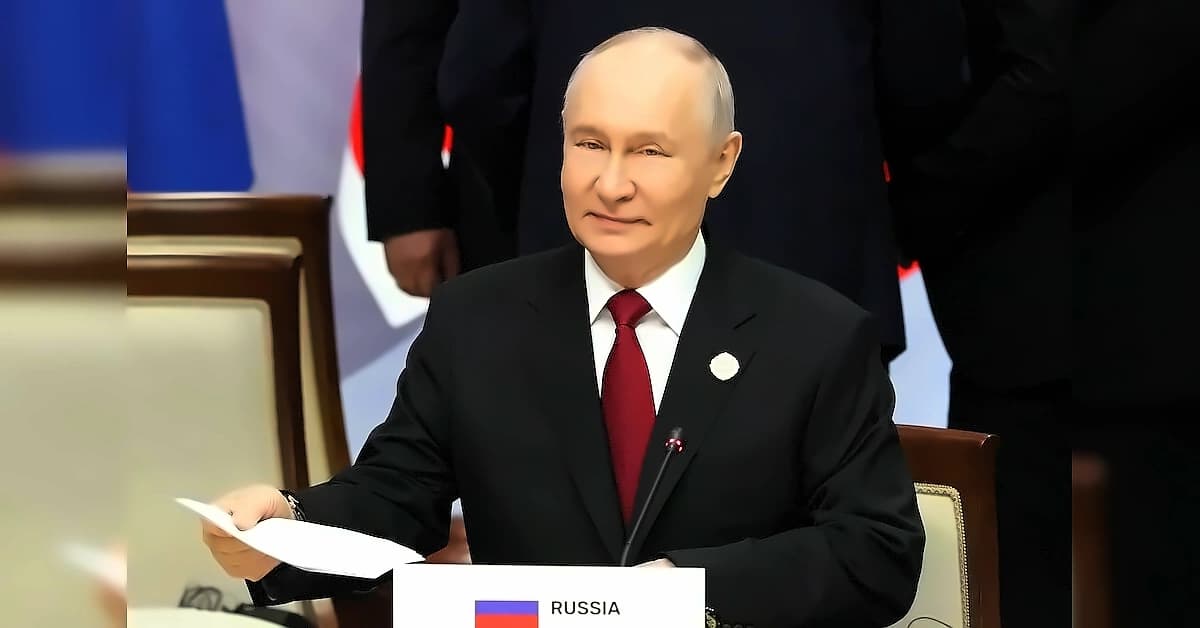
The meeting addressed multiple areas of bilateral cooperation beyond fertiliser supplies. As reported by Sputnik, the two sides discussed civil nuclear cooperation and trade diversification. Russia and India increased bilateral trade by 8 per cent in the first half of 2026, with trade expanding in agricultural produce, machine-building goods, metallurgy, forest products, and traditional fuel and mineral fertiliser supplies. India's imports from Russia include pharmaceuticals, agricultural products, industrial raw materials, equipment and components, and light industry goods. Putin highlighted that "One of these issues is not only energy – it is, of course, fertilizer supplies. We are doing everything to address this issue for Indian farmers, for agriculture; we are increasing these supplies and are ready to do so further." He added that cooperation in nuclear energy and high-tech sectors was progressing steadily.
Before reaching Bishkek, Modi will visit Tashkent, the capital of Uzbekistan, on August 29-30, where he will review cooperation with Uzbekistan President Shavkat Mirziyoyev. According to Business Standard, India and Uzbekistan are keen to increase their bilateral trade, which is currently at an underwhelming $1.32 billion, with India being among the top 10 trade partners of Uzbekistan. The discussions in Tashkent will include issues related to trade access and tariffs and could sign an agreement on cooperation in critical minerals. Over 16,300 Indian students study in Uzbekistan, mostly medicine, with the number of Indians visiting Uzbekistan increasing from 45,500 in 2023 to 80,800 in 2025.