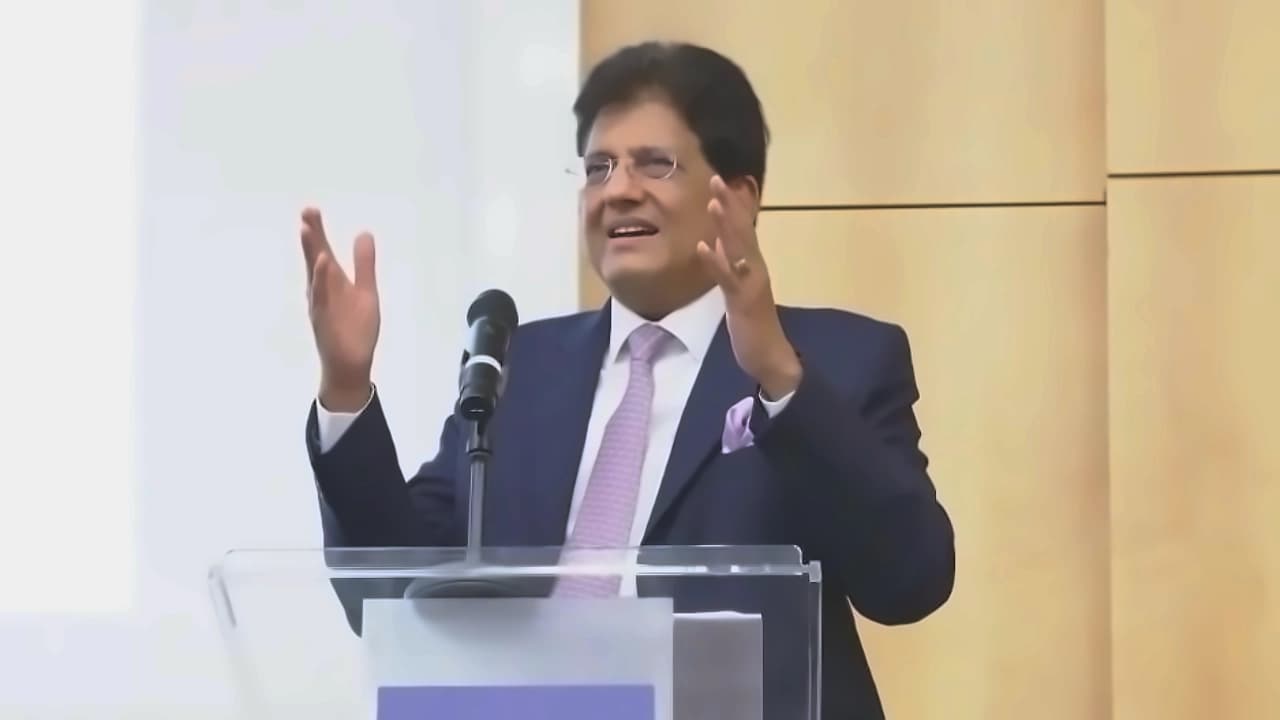
The Board of Trade (BoT), chaired by Commerce and Industry Minister Piyush Goyal, is scheduled to meet on July 3 to discuss strategies for scaling up India's exports to $2 trillion by 2030-31. According to an official document reviewed by Business Standard, the meeting will bring together representatives from states, industry bodies and export promotion councils to maximise gains from recent trade agreements. The BoT includes participants from various states, Union territories, and senior officials from the public and private sectors, with representatives from industry bodies including the Federation of Indian Micro and Small & Medium Enterprises, Confederation of Indian Industry, the Federation of Indian Export Organisations, and export promotion councils expected to attend.
The meeting's significance stems from India's implementation of five free trade agreements (FTAs) since 2021 with Mauritius, Australia, the UAE, Oman, and the four-nation European EFTA bloc. As reported by Business Standard, India has also signed a pact with the UK, which will come into force on July 15. The trade pact with the 27-nation EU is expected to be signed by the end of this year and may come into force next year. The last meeting of the board was held on November 25, 2025.
The meeting is particularly important as India is looking to take the country's merchandise exports to $2 trillion by 2030-31, compared to $863 billion in 2025-26. According to Business Standard, India's exports climbed to a six-month high of 18 per cent to $45.2 billion in May, while the trade deficit widened to $28.21 billion. During April-May 2026-27, exports rose 16.09 per cent to $88.91 billion, while imports jumped 15.14 per cent to $145.35 billion, with the trade deficit standing at $56.44 billion during the period. The meeting will focus on improving logistics efficiency, reducing compliance costs, leveraging FTAs for market diversification and strengthening the Districts as Export Hubs initiative to enhance India's export competitiveness.
Gautam Khattar, principal at Price Waterhouse & Co LLP, emphasised that while FTAs have become key instruments for expanding exports and diversifying markets, the bigger challenge now is improving their utilisation. He noted that micro, small and medium enterprises (MSMEs) need greater support in understanding tariff preferences, partner-country regulations and rules of origin, backed by simpler procedures, digital certificates of origin and training. Khattar also stressed that export promotion should be approached as an integrated mission covering the entire value chain — from product development and standards to logistics, trade finance and market intelligence. On trade remedies, he suggested that anti-dumping, countervailing and safeguard measures should be more accessible to industry, including MSMEs, with greater awareness and capacity building to help domestic producers respond to unfairly priced imports through evidence-based petitions.
Rajasthan exports remain concentrated in Jaipur and Jodhpur, which together account for nearly 48% of the state's exports, according to the Federation of Indian Export Organisation (FIEO). As reported by FIEO, the top five districts contribute about 60% of the state's exports, leaving most districts with only a marginal role in global trade. This concentration limits the state's ability to fully exploit new tariff advantages under FTAs. Sectors such as gems and jewellery, wooden handicrafts, engineering goods and pharmaceuticals stand to gain better access to international markets due to the FTAs, but Rajasthan must correct its regional imbalance by developing new clusters and improving infrastructure.
Earlier this month, the government nominated 29 non-official members, including SBI Chairman C S Setty, Apple India MD Virat Bhatia, and Mahindra & Mahindra MD Anish Shah, to the Board. As reported by Business Standard, in 2019, the government merged the Council of Trade Development and Promotion with the Board of Trade to bring greater coherence in the consultation process with all stakeholders for promoting exports and imports. At the upcoming meeting, the Department of Commerce is expected to make presentations on FTAs and their utilisation, the Export Promotion Mission, Government e-Marketplace (GeM), trade remedies and how stakeholders can use them, the Bhavya industrial park scheme, innovation and startup funds, and data centres. Rishi Shah, partner and economics advisory services leader at Grant Thornton Bharat, highlighted that India needs a sector-specific strategy to strengthen its position in global value chains amid intensifying competition from China, noting that China's 12-month rolling trade surplus hit a record $1.1 trillion in Q1 2026.