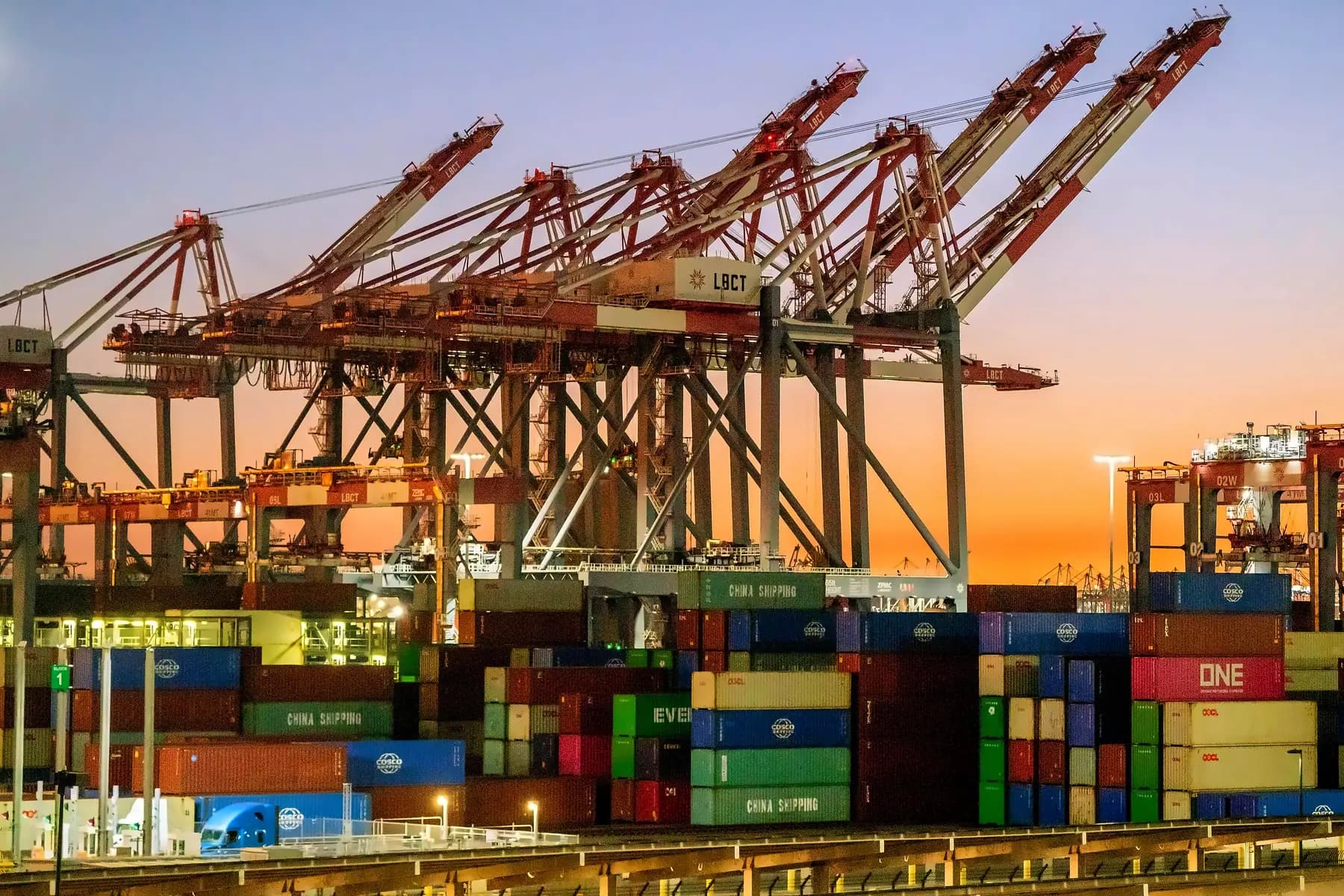
India's goods trade deficit unexpectedly narrowed to $26.86 billion in August from $32 billion expected by economists, according to government data released Tuesday. The deficit reduction was primarily driven by a sharp decline in gold imports to $2.3 billion from $4.16 billion in July, as reported by Reuters. Total imports fell to $70.67 billion from $76.22 billion in the previous month, while merchandise exports remained strong at $43.81 billion, marking the highest August exports in at least a decade. According to Business Standard, India's merchandise exports surged 26.12% to $43.81 billion in August, driven by a jump in electronics, engineering and petroleum product shipments. Imports rose by 14.1% year-on-year to $70.76 billion due to growth in sectors such as crude oil, project goods, electronic items, silver, coal and coke.
India and China have made significant progress in addressing bilateral trade concerns, with discussions continuing after the BRICS summit in New Delhi provided an early opportunity for senior officials from both countries to take up trade issues. According to Commerce Secretary Rajesh Agrawal, the recent meeting between Commerce and Industry Minister Piyush Goyal and his Chinese counterpart Wang Wentao on September 12 was an initial discussion aimed at understanding each other's positions on various trade-related issues. As reported by PTI, Agrawal indicated there will be subsequent meetings to take these discussions forward, noting these discussions are happening after a long gap. The Commerce Secretary emphasized that both sides would need to put forward their concerns and positions on issues raised by the other country to take the discussions forward. "Both sides should work together to address each other's concern in the trade space...also look at the structural trade imbalance, supply chain issues, and how to build trust in the trade between the two sides," Agrawal told reporters. He added that "this is a work in progress. On trade, we have started engaging. Both sides are engaging very positively."
The bilateral trade between India and China rose 7.9% in 2025-26 to USD 127.7 billion from USD 118.39 billion in 2024-25, with India's exports to China growing 36.62% to USD 19.47 billion from USD 14.25 billion a year ago. However, imports from China increased 16% to USD 131.62 billion during the period, resulting in the trade deficit widening to USD 99.19 billion in the last fiscal from USD 85 billion in 2024-25. According to PTI, this trade deficit remains an area of concern for India, with China accounting for 17% of India's total inward shipments in 2025-26. During April-August 2026-27, India's exports to China increased to USD 9.61 billion from USD 6.93 billion a year ago, while imports from China rose to USD 65.49 billion from USD 51.56 billion during the same period. The main export sectors where India has recorded healthy growth include engineering goods, electronic items, petroleum products, organic and inorganic chemicals, and iron ore. The pattern has continued in 2026, with Chinese customs data showing India's exports to China rising 37.2% year-on-year to USD 12.31 billion in the first six months, while China's exports to India reached USD 79.41 billion, resulting in a USD 67.1 billion deficit in just six months alone.
India has been seeking greater market access for its products in China as it looks to diversify and strengthen its export base, with engineering goods, electronics, petroleum products and chemicals among the key categories driving India's exports to China. According to Commerce Secretary Rajesh Agrawal, the discussions aim to narrow the trade gap and make cross-border commerce more balanced between the two nations. The two countries are exploring measures to address structural issues surrounding the trade deficit and supply chains, with India seeking to expand its exports to China while reducing its dependence on imports from the country. Beyond trade concerns, India has tightened its foreign direct investment policy for countries sharing land borders with India, affecting China's investment flows. According to PTI, India received foreign direct investment worth USD 2.51 billion during April 2000 and March 2026. Beijing's curbs on rare earth and critical mineral supplies are among New Delhi's trade-related worries with China. There are encouraging signs of movement, with India's engineering exports to China rising 74% in June to $361.47 million, while government officials have pointed to growth in shipments of printed circuit boards, electrical appliances, telephone systems, shrimp, aluminium ingots, vessels and some agricultural commodities. The country is also seeking to diversify its export markets, with its trade deal with Britain now in force and a broader pact with the European Union moving towards implementation, potentially opening up greater access for domestic goods.
Despite the August improvement, India's trade challenges persist with the country seeking to address its structural trade imbalance with China. The U.S. remained the top destination for Indian exports at $42.79 billion in April-August, up from $40.39 billion a year earlier, while goods and services exports rose almost 25% year-on-year to $82.68 billion in August. Services exports remained robust at $38.87 billion, while services imports totalled $21.42 billion, resulting in a surplus of $17.45 billion. However, the crude oil basket averaged $90.19 per barrel in August, up from $82.04 in July, and has climbed to $109.76 so far in September, adding to inflation risks for the world's third-largest oil importer. The ongoing U.S.-Iran conflict continues to disrupt oil supplies and shipping, testing nerves in the Middle East after attacks on Saudi oil pipelines and Yemen's Houthis. India's automobile exports showed strong performance with 22.2% year-on-year growth to 681,000 units in August, driven by strong growth in two-wheelers and three-wheelers, though passenger vehicle exports declined 17%.