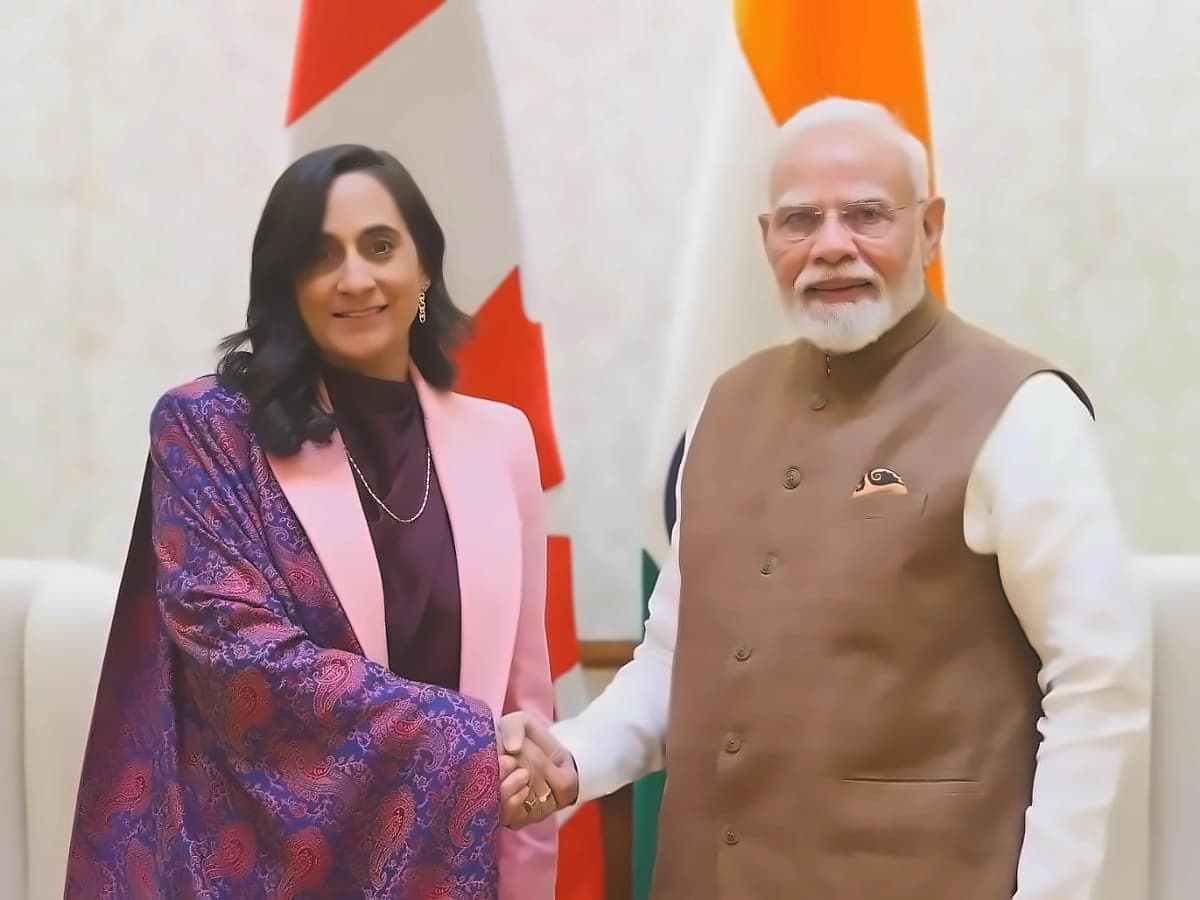
India and Canada signed a series of commercial agreements and memoranda of understanding (MoUs) on Friday, as companies from both nations explored opportunities for collaboration during the Canada-India Business Ceremony in Karnataka. The agreements were signed during proceedings attended by Canada's minister of international trade, Maninder Sidhu, who took part in the proceedings. According to The Times of India, the MoUs come as India and Canada aim to conclude negotiations for a proposed Comprehensive Economic Partnership Agreement (CEPA) by the end of 2026. As per the ministry of commerce and industry presentation on Thursday, both countries have reaffirmed the deadline for completing negotiations on the proposed trade pact.
During the meeting on Wednesday, the two leaders highlighted the Team Canada Trade Mission to India, led by Canadian International Trade Minister Maninder Sidhu, as a concrete step towards expanding bilateral trade and strengthening Canada's engagement in the Indo-Pacific region. As reported by the Canadian government, this trade mission represents a tangible example of growing the economic partnership and advancing Canada's broader engagements in the Indo-Pacific region. Sidhu is currently in India leading a delegation of 300 Canadian business representatives, the largest trade mission in 30 years, spanning sectors like clean technology, space, aerospace, and agritech. According to ANI reports, Sidhu stated 'I want to thank India for the hospitality extended to my delegation of 300 Canadian business delegates, the largest in 30 years. It's something to celebrate. The last time this happened was in January 1996.'
Sidhu highlighted significant opportunities for bilateral cooperation, particularly in energy and critical minerals sectors. As reported by ANI, he emphasized that 'India is requiring about 70 per cent more energy by 2035. We're investing in plenty of LNG terminals in Canada. We're going to be a top-five LNG exporter in the world. In addition to that, it's about LPG. That's part of the conversation.' He also pointed to potential cooperation in the nuclear sector, noting Prime Minister Narendra Modi's SHANTI Act initiative to expand nuclear capacity twelvefold. Sidhu explained that 'Canada has the capabilities and nuclear technology, including uranium, to support India in its objectives.' During interactions with major conglomerates in Mumbai, discussions heavily featured alternative supply chains for critical minerals essential for electric vehicles (EVs) and advanced manufacturing. As Sidhu noted, 'Canada is abundant in resources, and we're looking for partners to get those resources out of the ground.'
The discussions come as both countries intensify efforts to conclude the Comprehensive Economic Partnership Agreement (CEPA) negotiations. According to ANI reports, the fifth round of CEPA negotiations was held in Ottawa from October 5 to October 9, covering key areas including market access for goods and services, investment parameters, rules of origin, intellectual property rights and trade remedies. The next round is scheduled to take place in New Delhi in early November. According to The Times of India, the proposed CEPA aims to lower trade barriers and improve market access for businesses in both countries. Bilateral trade between India and Canada stood at $7,956.43 million in FY26, according to government data. Official estimates suggest the agreement could increase bilateral trade by $4.4 billion to $6.5 billion, with Canada projected to gain $3.8 billion to $5.9 billion in gross domestic product by 2035.
Sidhu outlined Canada's ambition to double its exports to markets outside the US over the next decade, identifying India as a market Canadian companies could not afford to overlook. Speaking at a business reception in Bengaluru on Thursday, organised as part of the Team Canada Trade Mission to India, Sidhu highlighted the country's potential as a commercial market for Canadian companies. He pointed to artificial intelligence, quantum computing, aviation infrastructure, digital innovation, sustainability and smart mobility as areas where businesses from the two countries could work together. As reported by The Times of India, Sidhu said businesses were looking to bring technology, innovation and long-term partnerships to India's dynamic market. He also highlighted the existing presence of Canadian companies in India, including Kinaxis, OpenText, CGI, CAE, Magellan Aerospace, MDA Space and BCE Global Tech. Sidhu cited India's economic growth, population and expected rise to become the world's third-largest economy as factors underpinning its importance to Canada's export ambitions.