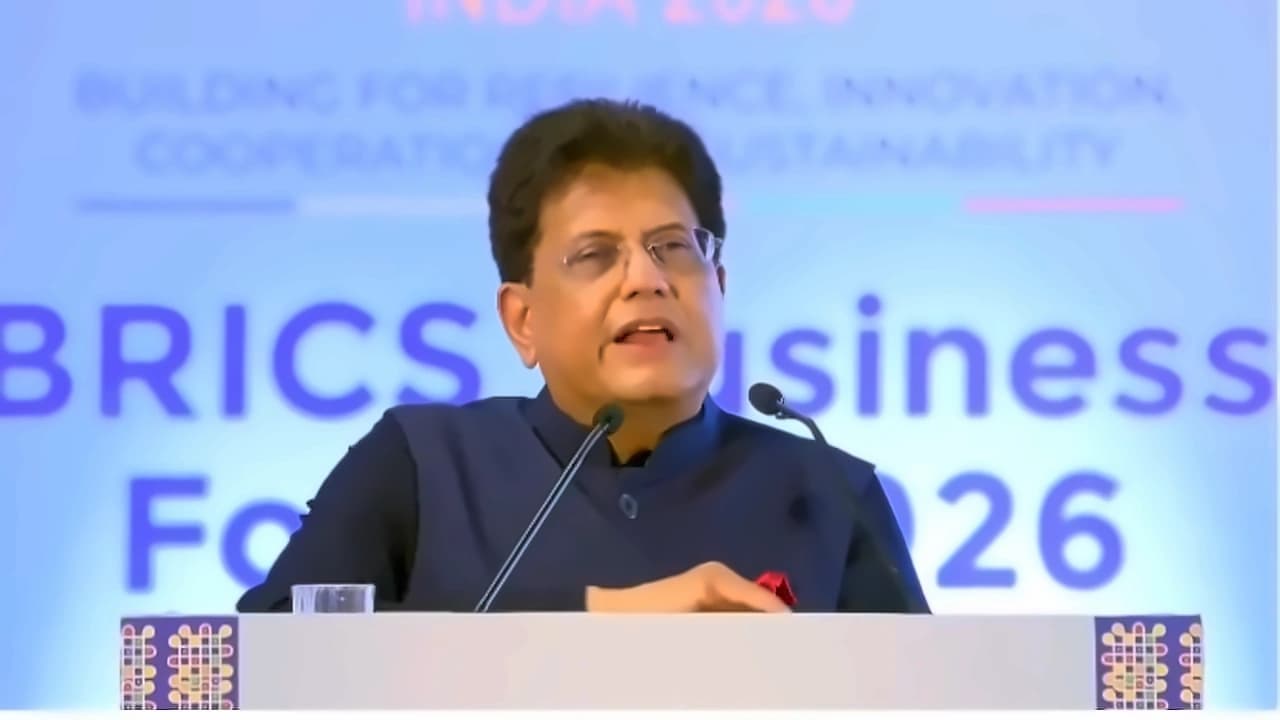
Commerce Minister Piyush Goyal has urged Indian and British businesses to look beyond incremental gains from the India-UK Free Trade Agreement (FTA), emphasizing that the pact should become a catalyst for 'transformational growth' when it comes into force on July 15, 2026. Speaking at a plenary organized by the High Commission of India in London during his three-day visit to review implementation preparations, Goyal stated 'Transformational growth and entry into hitherto uncharted territory should also be a prime focus of this team, and the message you take back home, and the message my British brothers and sisters in this room take to your companies and your colleagues here is going to be very important'. He emphasized that 'Collaborations, cooperations, partnerships will be, in my humble opinion, the right way to come in quickly for both British businesses and Indian businesses', noting that such partnerships could 'wedge your way faster' for businesses confident enough to pursue them. Goyal warned against limiting India's ambitions to traditional trade growth rates, stating 'International trade normally grows at 4 to 6 or 5 per cent. If that is the level of ambition that we will keep as a nation, it will be completely a betrayal of the trust that the world has on us today'. The minister described the agreement as extending well beyond tariff reductions, noting it represents a comprehensive framework to deepen a bilateral economic partnership currently valued at around £48 billion annually.
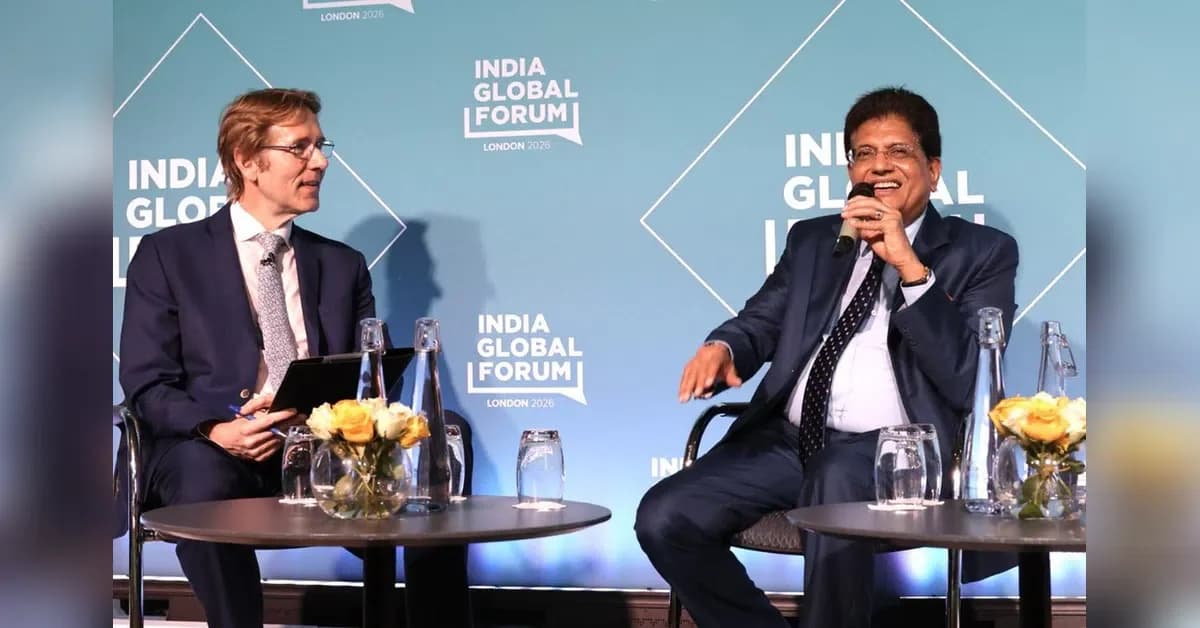
Commerce Minister Piyush Goyal is visiting the UK from June 25-27 ahead of the July 15 implementation of the India-UK Comprehensive Economic and Trade Agreement (CETA) and Double Contribution Convention (DCC). According to the commerce and industry ministry, Goyal held 'meaningful discussions' with UK Business and Trade Secretary Peter Kyle during this visit to review progress on expanding bilateral economic ties. The discussions focused on aligning regulatory roadmaps, streamlining cross-border customs coordination and finalising administrative mechanisms to ensure smooth implementation of both agreements. The minister interacted with business leaders at the plenary, highlighting the growing business interest in the upcoming trade partnership. The ministry described this engagement as an 'important step' towards operationalising the agreements while safeguarding domestic economic interests and promoting a transparent, rules-based framework for bilateral commerce. Goyal received the India Global Forum's UK-India Award for 'Exceptional Leadership in Elevating UK-India Ties' at a ceremony in London, joining his UK counterpart Peter Kyle on stage. The visit is part of the broader India-UK Vision 2030, a transformative roadmap redefining bilateral cooperation across business, research, innovation, science and technology.
Commerce and Industry Minister Piyush Goyal has described the India-UK Free Trade Agreement as the most comprehensive agreement that India has entered into so far. Speaking at India Global Forum's UK-India Week 2026: Capital Frontiers in London, Goyal emphasized that the agreement represents a partnership between two complementary economies and two growing economies with significant similarities in mindset. As reported by PTI, Goyal explained that 'the UK free trade agreement will be the first most comprehensive agreement that India has entered into so far', highlighting that 'we understand each other, the mindset has got a lot of similarities'. The minister highlighted that India sees the pact as a way for domestic industry to 'evolve and go up the ladder' while competing and collaborating with businesses in the UK. According to the latest trade data, India's exports to the UK fell 7.6% year-on-year to $13.44 billion in FY26, while imports rose 36.1% to $11.7 billion. Goyal expressed optimism about the agreement's potential, stating that 'sky is the limit' in terms of economic benefits that will flow from the FTA, noting that the estimated 48-billion-pound annual bilateral trading partnership represents a significant opportunity for both countries. The agreement is expected to provide an additional tariff advantage of 7-10 per cent to Indian exporters, bringing India at par with several other countries that already enjoy zero-duty access to the UK market, opening up a market worth over $500 billion for Indian businesses.
The CETA provides zero-duty access on approximately 99 per cent of India's exports to the UK, covering nearly all of the trade basket. Tariffs of up to 70 per cent on processed food products, up to 21.5 per cent on marine products, up to 18 per cent on engineering goods and auto components, and up to 12 per cent on textiles and clothing will be eliminated. The agreement is expected to provide an additional tariff advantage of 7-10 per cent to Indian exporters, bringing India at par with several other countries that already enjoy zero-duty access to the UK market. The UK has provided one of its most comprehensive services commitments ever, covering all major services sectors and 137 sub-sectors of export interest to India, including IT and IT-enabled services, financial services, professional services, healthcare and education. India's services exports to the UK reached approximately $21.6 billion in 2024, compared to services imports of $13.7 billion. The agreement also includes provisions for 'detached workers', allowing employees temporarily posted overseas to continue making social security contributions exclusively in their home country for a specified maximum period, with the existing exemption period being extended to 60 months.
The Double Contribution Convention (DCC) is a significant component of the India-UK trade agreement, designed to facilitate business operations and prevent double social security contributions for workers. According to the latest reports, the DCC will come into effect on July 15, 2026, extending the existing 52-week exemption period reciprocally to 60 months for eligible workers. The convention ensures that employees and their employers moving between India and the UK are only required to make social security contributions in one country at a time, preventing disruptions to social security records for those on temporary assignments. The DCC exempts Indian workers and employers from making dual social security contributions in the UK during temporary assignments, with the period of exemption increased from 3 years to 5 years. The agreement allows 'detached workers', allowing employees temporarily posted overseas to continue making social security contributions exclusively in their home country for a specified maximum period. More than 75,000 Indian professionals and over 900 companies are expected to benefit from the DCC provisions. The DCC will benefit professionals on temporary assignments of up to five years in either country, with Goyal highlighting that 'Indians who come to work here on temporary work permits up to five years can save 25 per cent straight into their savings'. He explained that 'Indians can now pay into their Provident Fund account in India, and of course it earns 8.25 per cent interest tax free; not a bad return on sales and also provides for your family's social security'. The UK is India's second-largest export market for IT services, accounting for an estimated 17 per cent of sector export revenues.
The India-UK Comprehensive Economic and Trade Agreement (CETA) is scheduled to enter into force from July 15, 2026, following the resolution of issues related to the UK's steel measures. According to the commerce and industry ministry, the CETA's tariff liberalisation commitments will provide enhanced market access opportunities for Indian exports in the UK. The minister highlighted the level of continuity provided at the UK ministerial level despite political instability that witnessed changes in governments from the Conservatives to Labour over the course of FTA negotiations. The UK government has confirmed that businesses in both countries will be able to trade under the agreement from July 15, 2026, with the pact expected to reduce tariffs, streamline customs procedures and support digital trade. As reported by PTI, Goyal praised the UK for 'continuity in decisions and continuity in following through what was already negotiated', noting that 'ministers may have changed, but I must compliment the UK for continuity in decisions'. The India Global Forum's UK-India Awards 2026 marked its tenth anniversary on Thursday evening with a celebration of the India-UK Comprehensive Economic and Trade Agreement. Both countries are aiming to double bilateral trade, currently estimated at around $60-70 billion, to $120 billion by 2030.