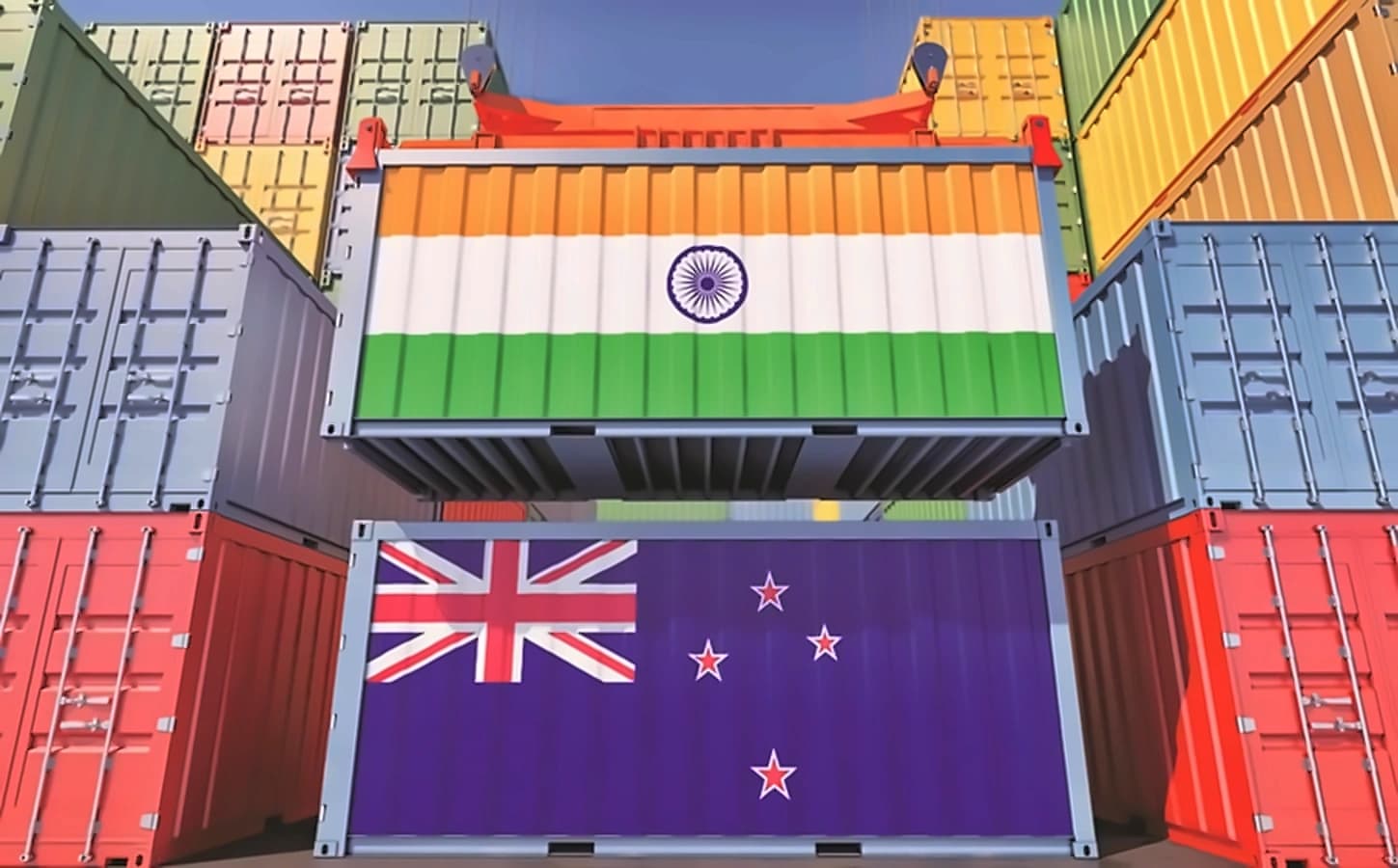
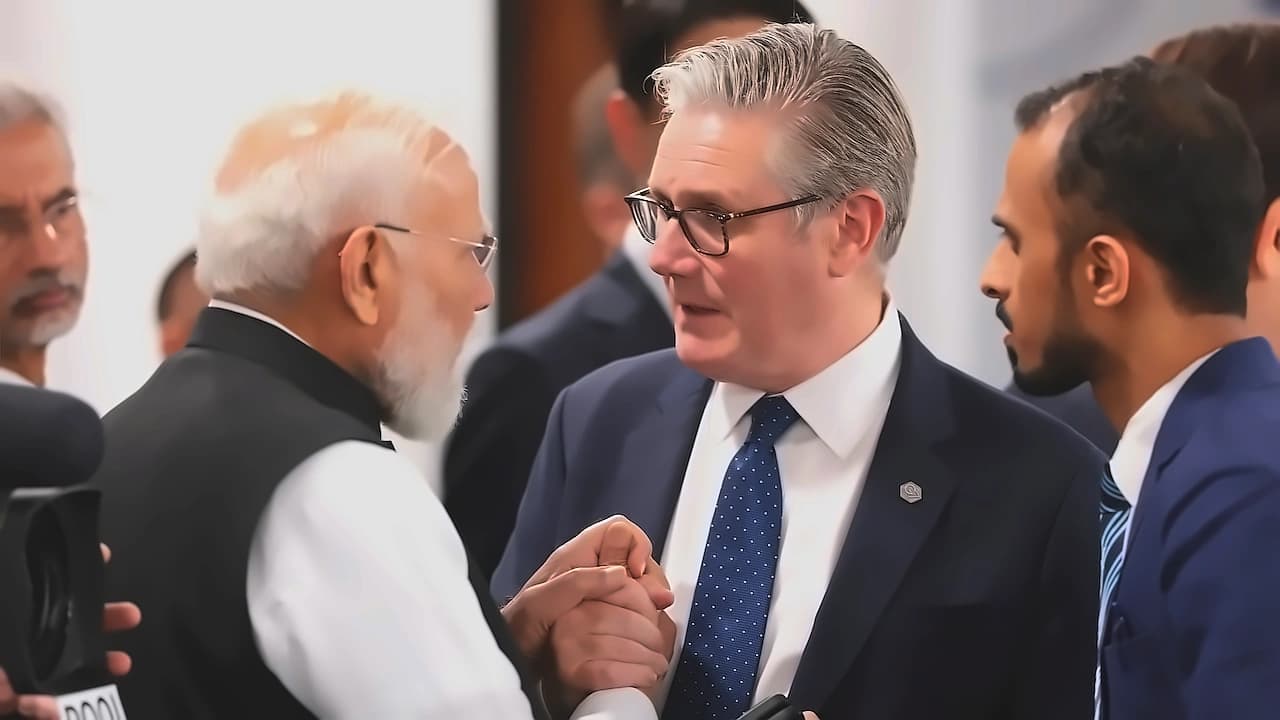
India and the UK have officially announced that their landmark free trade agreement will come into force on July 15, 2026, marking the final step before implementation of the trade pact that was signed last year. Prime Minister Narendra Modi made the announcement on Wednesday while attending the G7 Summit in France, stating 'A historic milestone for India-UK relations. Delighted to note that the India-UK Comprehensive Economic and Trade Agreement will enter into force on 15th July 2026.' The confirmation came after both countries completed their internal procedures and ratification processes for the agreements, which are expected to deepen bilateral trade, investment and economic cooperation. According to Upstox News Desk, the trade agreement was concluded on May 6, 2025, after 14 rounds of negotiations and was signed in London on July 24, 2025. The implementation faced delays as both sides sought to resolve differences over Britain's new steel safeguard measures and its planned Carbon Border Adjustment Mechanism (CBAM). Following constructive deliberations between PM Modi and his UK counterpart Keir Starmer at the sidelines of the G7 meeting in France, the agreement provides businesses with 28 days to prepare before the agreement takes effect, with both sides mutually agreeing to protect commercial interests, minimise market disruptions and ensure an overall balanced and stable trading environment for exporters.
Indian exporters are set to receive a major boost as the India-United Kingdom Comprehensive Economic and Trade Agreement (CETA) comes into force on July 15, 2026, providing duty-free access for a wide range of products in one of India's most important export markets. According to the Ministry of Commerce and Industry, the agreement provides zero-duty access to nearly 99% of India's exports to the UK, covering almost 100% of the trade value. The government expects the tariff concessions to create new opportunities for farmers, fishermen, workers, MSMEs and manufacturers by improving market access and making Indian goods more competitive in the UK market. Tariffs of up to 70% on processed food products, 21.5% on marine products, 18% on engineering goods and auto components, 16% on leather and footwear products, 12% on textiles and clothing, and 8% on chemicals and pharmaceutical products will be reduced to zero under the pact. The agreement will eliminate tariffs on 99% of exports from India and also open services sectors along with easier visa rules, as reported by Upstox News Desk. Prime Minister Modi emphasized that 'This will open many opportunities for Indian farmers, workers, MSMEs, startups and innovators and will make an important contribution towards achieving the goal of 'Viksit Bharat 2047', positioning the trade agreement within India's long-term development objectives. Government officials estimate Indian exporters could gain an additional tariff advantage of 7-10% across several sectors, with India currently exporting around $15 billion worth of goods to the UK annually. The wider trade deal is projected to boost bilateral trade by GBP 25.5 billion annually in the long run, while boosting UK GDP by GBP 4.8 billion and Indian GDP by GBP 5.1 billion.
The India-UK CETA establishes a comprehensive automotive trade framework with significant concessions for both countries. India will allow import of up to 3.78 lakh units of conventional-engine passenger cars from the UK at concessional duty during the first 15 years of the agreement implementation. Under the agreement, import duties on automotive products will fall from about 110% to 10%, with quotas on both sides. According to the India-UK CETA document released on Wednesday, the quota for conventional-engine passenger cars will peak in the fifth year at 37,000 units across specified categories, with customs duties reduction reaching a final 10% from the first year. In the first year, the quota for passenger cars of engine size more than 3,000 cc (petrol) and over 2,500 cc (diesel) is 10,000 units with customs duty reduced to 30% from 110%, while cars with engine size of 1,500 cc (petrol), 2,500 cc (diesel) and 3,000 cc (petrol) have a quota of 5,000 units with duty reduced to 50% from 66%. For the mass market segment of engine size up to 1,500 cc, the allowed quota of import in the first year is 5,000 units with customs duty reduced to 50% from 66%. From the 15th year onwards, the total quota will remain constant at 15,000 units annually with duties fixed at 10% across the three categories. This framework will benefit Indian manufacturers such as Tata Motors Passenger Vehicles, Mahindra & Mahindra, and Maruti Suzuki, as reported by NDTV Profit.
The agreement establishes a phased approach for electric vehicle trade between the two countries. From the sixth year, electric/hybrid/hydrogen passenger cars priced between GBP 20,000 to GBP 80,000 will enter India duty-free with quotas expanding, with the total quota reaching a peak of 88,000 units from the 15th year and continuing in subsequent years. In the first five years, India has not given any concessions for electric/hybrid/hydrogen-passenger cars, but from the sixth year, vehicles priced between GBP 40,000 CIF to GBP 80,000 CIF will have duties reduced to 50% with a quota size of 400 units, while vehicles priced above GBP 80,000 CIF will have duties lowered to 40% with an import limit of 4,000 units. In the tenth year, custom duty will stabilise at 10% for both price segments. Notably, India has not opened its market for vehicles priced below GBP 40,000 (CIF), ensuring complete protection for the mass-market EV segment in which India seeks global leadership through homegrown firms like Tata Motors, Mahindra & Mahindra, and Maruti Suzuki. The agreement also includes provisions for zero emission vehicles (electric or hydrogen fuel vehicles), which are two-wheeled vehicles, buses or trucks, are excluded from any commitment or obligation to reduce or eliminate customs duties.
A significant new provision in the agreement provides 5-year social security payment waivers for Indian workers moving to the UK for temporary assignments. According to The Times of India, thousands of Indian professionals working in Britain through Indian employers will stop paying dual social security contributions from July 15, with officials estimating that 90-95% of such workers will benefit from the India-UK social security pact. The Agreement on Social Security, also known as the Double Contribution Convention (DCC), will also take effect from July 15 along with the comprehensive economic and trade agreement (CETA). The DCC was signed on February 10, 2026, and the exemption period for Indian professionals and their employers from making dual social security contributions in the UK has been extended from three years to five years. Under the arrangement, employees temporarily deputed from India to the UK, or vice versa, will be exempt from contributing to the host country's social security system for up to five years, provided they continue contributing in their home country. 'If an employer is contributing in India for the social security of the employee, they do not have to pay in the UK. For that, they have to share a certificate of coverage. From July 15, Indian employers can start enjoying this exemption,' an official said. This enhancement is expected to benefit around 75,000 Indian professionals currently working in Britain, while more than 900 Indian companies have operations there. The average annual salary of a professional in the UK is estimated at GBP 40,000-50,000, with about 15% of earnings typically going towards social security contributions. The exemption is available only to employees of Indian companies on temporary assignments and will not apply to Indians employed directly by foreign companies in the UK. The DCC will give a major boost to IT majors like Tata Consultancy Services (TCS) and Infosys, as the UK is the second-largest export market for India's $283 billion IT industry, contributing 17% to its export basket. India's services exports to the UK stood at $21.6 billion in 2024, while imports were $13.7 billion. The UK has also reciprocated similar benefits to India under the DCC, with India exporting $21.6 billion worth of services to the UK in 2024 and recorded a surplus of $7.9 billion.
Experts emphasize that Indian exporters will need to upgrade product standards and align with British regulatory requirements to fully capitalize on the India-UK free trade agreement benefits. Law firm SAM & Co Partner Rudra Kumar Pandey stated that 'A comparable effort is needed on the Indian side, with CETA-specific outreach export-readiness programmes in manufacturing clusters across the country that can help businesses convert the agreement's potential into actual commercial activity.' He added that Indian exporters will need to upgrade product standards and align with UK regulatory requirements to become reliable supply chain partners, not just one-off suppliers. The UK's Department for Business and Trade has already launched a nationwide free trade agreement roadshow this week across six cities to prepare British businesses for the agreement's entry into force. Gulzar Didwania, Partner, Deloitte India, noted that 'Realising this will require focused effort on implementation, both at the structural level and in execution.' The projected gains from the Indian-UK FTA are significant and go beyond just trade facilitation to integrating supply chains. For investors, the agreement is expected to catalyse a new generation of two-way capital flows across advanced manufacturing, electric vehicles and EV components, fintech, life sciences and pharmaceuticals, clean energy and green hydrogen, and high-value services. For the UK, India offers scale, manufacturing depth and an increasingly mature regulatory architecture, while for India, the UK offers a gateway into European and global markets, a deep services economy and access to advanced technology and R&D ecosystems. International trade expert Deep Kapuria highlighted that 'The biggest achievement is the social security agreement. The UK is one of the preferred locations for Indian knowledge workers as both students and professionals from India have been the major beneficiaries of work and study visas.'