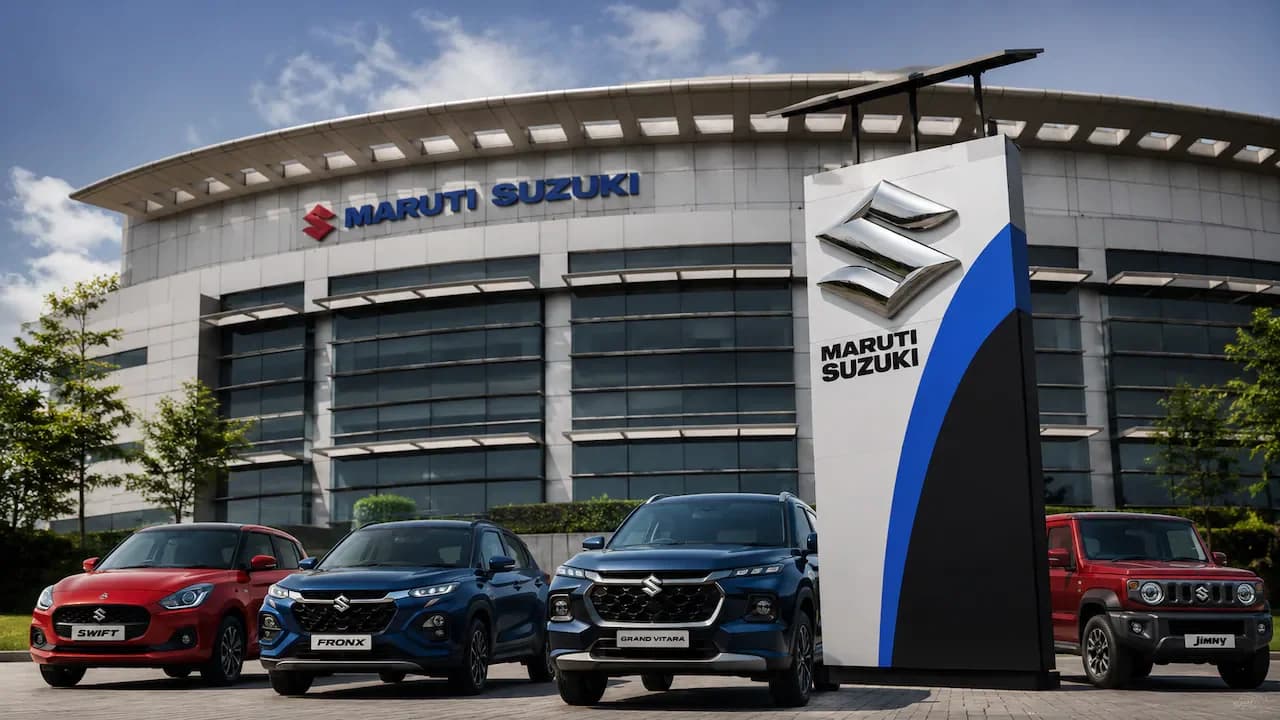
Maruti Suzuki India shares hit an 18-month low of ₹11,126.05, falling 2% in Tuesday's intraday trading on the BSE. According to reports from Business Standard, the stock price has declined 33% in calendar year 2026, significantly underperforming the broader market. The BSE Sensex and BSE Auto indices were down 15% and 12% respectively during the same period. The stock traded at its lowest point since April 2025 amid investor concerns about potential profitability impact from rising commodity prices.
The stock decline was driven by concerns that geopolitical tensions in West Asia may exert pressure on profitability through higher commodity prices in the near term. As reported by Business Standard, these geopolitical developments have raised investor worries about the company's ability to maintain profitability amid rising input costs. The company's exposure to commodity price volatility has become a key concern for market participants, with the stock hitting its lowest level since April 2025 reflecting these ongoing concerns.
According to Business Standard, Maruti Suzuki outlined its strategy in its FY26 annual report to regain a market share of 50% by addressing diverse mobility needs of India's automobile market. The company emphasized that greater customer choice increases the likelihood of products matching individual requirements, helping increase market share. While strengthening presence in the fast-growing SUV segment remains a key priority, the company will continue addressing small car market and other passenger vehicle segments.
As reported by Business Standard, the company highlighted that increasing adoption of advanced automotive technologies is leading to greater dependence on specialized materials and critical components whose supply chains remain concentrated in limited countries. The company noted that risks related to material availability are likely to persist in an increasingly dynamic geopolitical environment. Recent developments underscored the importance of resilient and diversified supply chains for operational continuity.
According to analysts at Systematix Institutional Research cited by Business Standard, the automobile sector is entering a phase of earnings normalization in FY27 as GST-led demand boost fades and raw material inflation pressures impact margins. The brokerage noted that while a high base is likely to moderate near-term industry growth, structural drivers such as premiumization, electric vehicle adoption, replacement demand, exports, and sustained OEM capex continue to underpin long-term outlook. Analysts remain constructive on the sector's long-term outlook but advocate a selective approach prioritizing sustainable earnings growth and margin resilience.