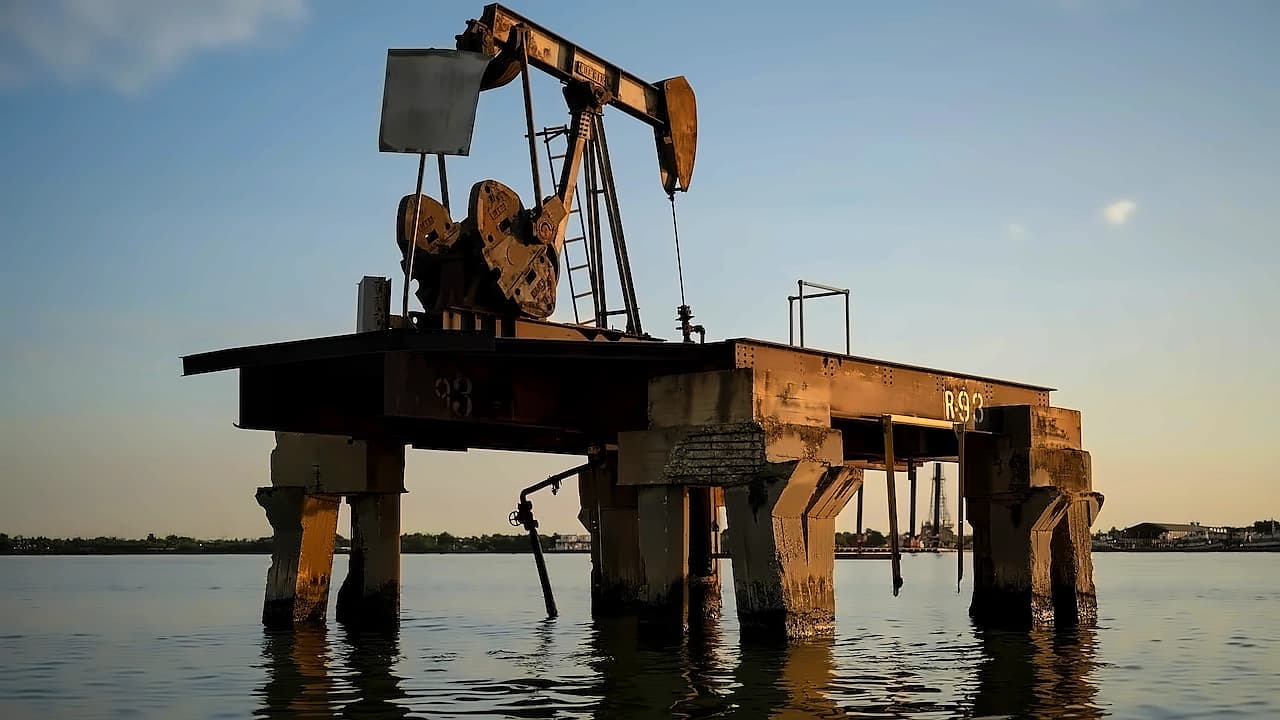
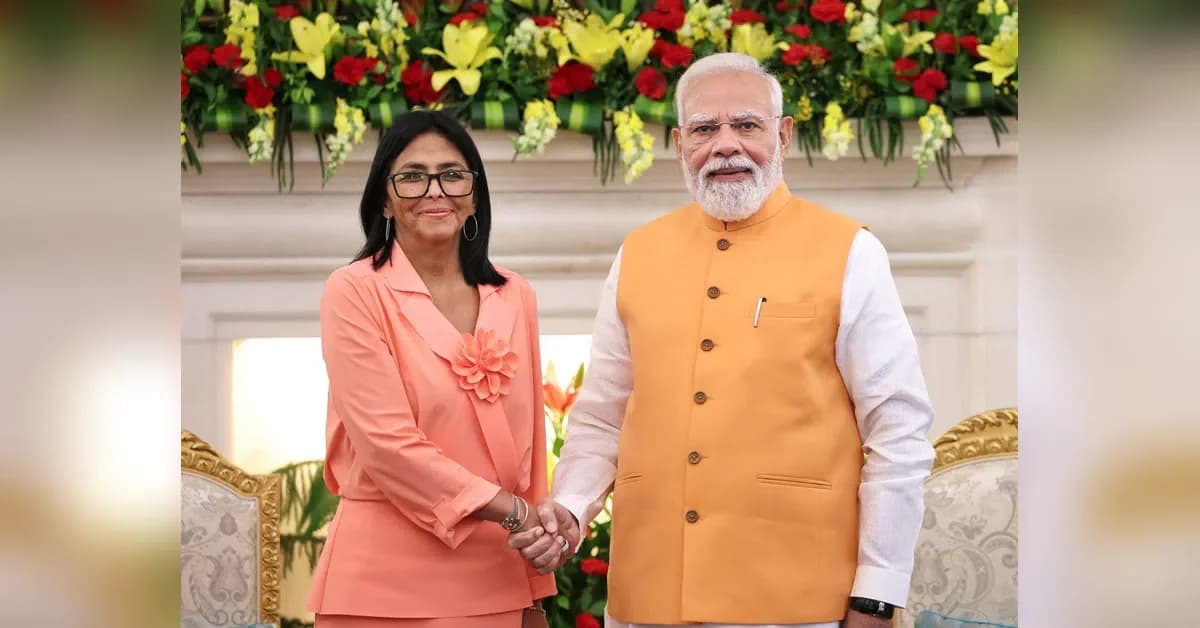
Prime Minister Narendra Modi and Venezuelan Acting President Delcy Rodriguez held comprehensive discussions at Hyderabad House on Thursday, focusing on energy cooperation and long-term partnerships. According to reports from Business Standard, the talks centered on encouraging long-term energy contracts between public and private sector oil marketing companies (OMCs) operating in both countries. The discussions highlighted the 'perfect complementarity' between the two nations, with Venezuela's position as one of the world's largest oil reserves and India's status as a growing and stable oil consumer market. Secretary (East) Rudrendra Tandon emphasized that the proposed partnership would extend beyond a traditional buyer-seller arrangement, stating that "the goal of a partnership would not just be buy-sell" and that both upstream and downstream opportunities were discussed extensively. As per the Ministry of External Affairs (MEA), "This creates a strong natural complementarity between the two economies in the energy sector" with Venezuela's energy sector undergoing significant transformation.
India has significantly increased its reliance on Venezuelan crude oil in recent weeks as part of its energy diversification strategy. As reported by Business Standard, India is now the second-largest purchaser of Venezuelan oil after the United States, with the South American country emerging as India's third-largest source of oil in spot purchases. This shift comes as India diversifies its energy sourcing due to disruptions in the Strait of Hormuz, with Indian OMCs actively purchasing oil from available sources to ensure energy security. Tandon confirmed that Venezuela is being viewed as an additional source of supply rather than a replacement for any existing supplier, with India pursuing a strategy of diversifying energy imports "from as many sources as possible" to strengthen long-term energy security. The discussions also explored expansion of energy cooperation beyond crude oil trade into exploration, production and refining, with both countries expressing interest in upstream and downstream energy projects. According to the MEA, "Venezuela has already emerged as the third largest supplier, this month, so naturally today's discussions focused on forging an energy partnership" with Venezuela seeing India as a "stable demander for many years to come".
Discussions touched on unresolved financial issues involving Indian companies operating in Venezuela. Tandon acknowledged that the matter remains under active discussion, with questions raised about more than $500 million in dividend payments owed to ONGC Videsh from its Venezuelan operations. He described it as "our money" and said the issue remains on the table during bilateral discussions. Indian pharmaceutical companies have also been awaiting payments running into several hundred million dollars from supplies made during earlier years. Tandon said Venezuelan authorities are aware of these concerns and that New Delhi has repeatedly raised them in its engagement with Caracas. While declining to discuss operational details, Tandon acknowledged that Venezuela is "undergoing a transition" and said arrangements are currently in place to facilitate transactions, with commercial entities ultimately determining payment methods.
The discussions extended beyond energy to encompass cooperation in mining, including critical minerals, pharmaceuticals, animal husbandry, transportation, agriculture equipment and the automotive sector. According to Business Standard, Venezuela was described as a resource-rich country with significant potential for cooperation in gold, diamonds, and other critical materials. Tandon described mining as "very much there", noting that Venezuela's potential extends beyond oil into other strategic resources. The partnership discussions also covered healthcare cooperation, with Tandon highlighting India's ability to supply high-quality generic medicines at affordable prices. He emphasized that Indian refining industry has become so sophisticated that it is no longer tied to a particular type of crude oil, with Indian refiners capable of processing heavy grades including Venezuelan oil. As per the MEA, the talks focused on "creating opportunities for Indian companies to establish a stronger presence in Venezuela, particularly in sectors where Indian expertise and manufacturing capabilities could complement Venezuelan resources and market requirements". The discussions also examined possibilities for Indian investment in Venezuela's mining and critical minerals sectors, which are becoming increasingly important globally due to their role in clean energy technologies and advanced manufacturing.
Indian officials emphasized that there was no credence to speculation that India's purchase of Venezuelan oil was under pressure from another country. As reported by Business Standard, Rudrendra Tandon, secretary (East) in the MEA, stated that the conflict in West Asia, which disrupted India's energy supplies, dictated Indian OMCs purchasing oil from wherever it was available. The government's approach focuses on aggressively seeking new sources of crude oil and energy to ensure India's energy security. Venezuela conveyed a clear message that it views India as a preferred long-term partner due to the size of India's economy and its growing energy requirements. Tandon noted that "there was genuine warmth between the two delegations and an acknowledgment by the Venezuelan side that India has stood with Venezuela in bad times as well as in good times", reflecting confidence in the long-term trajectory of bilateral ties. While no major agreements were signed during the visit, Tandon indicated that "there won't be any big-ticket announcements for this visit," with the focus on identifying opportunities and creating conditions for future commercial engagement.