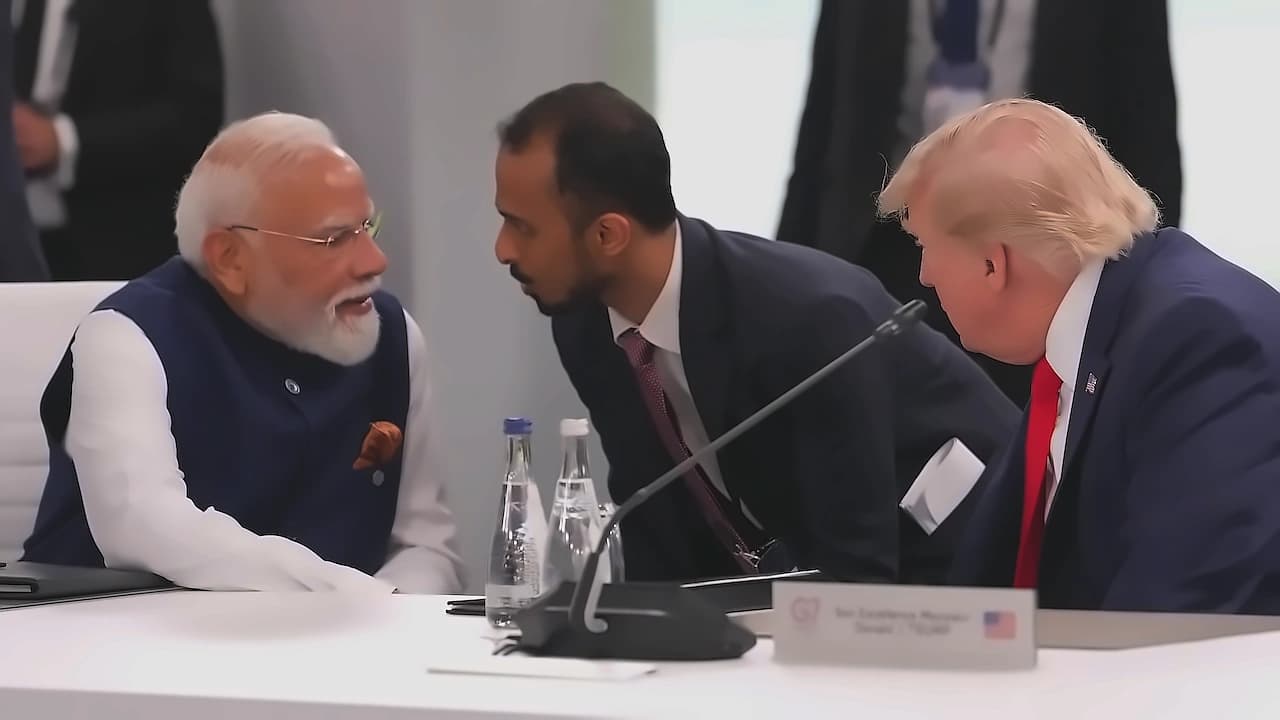
US President Donald Trump expressed confidence that India and the US will reach a trade agreement, calling Prime Minister Narendra Modi a 'good friend' during recent remarks. According to Moneycontrol, Trump's comments come as both countries continue negotiations on a bilateral trade deal aimed at strengthening economic ties. The President's confidence comes amid ongoing discussions between the two nations, with officials from the Office of the United States Trade Representative (USTR) visiting India from June 1 to 4 to advance negotiations. As per State Department Spokesperson Tommy Pigott, the US remains very optimistic about the progress of trade negotiations with India, with a bilateral trade deal remaining a priority for the Trump administration.
India and the US have begun three-day talks this week in New Delhi to finalise the details of their interim trade pact, with Commerce and Industry Minister Piyush Goyal scheduled to meet with the US team on Thursday. According to the commerce ministry, the US team is led by chief negotiator Brendan Lynch from the United States Trade Representative (USTR), while India's chief negotiator is Darpan Jain, an additional secretary in the Department of Commerce. The Ministry of Commerce and Industry confirmed that a USTR delegation visited India from June 1 to 4 to advance discussions on the proposed trade agreement. As per the ministry, the two sides held 'constructive and positive' discussions on a wide range of issues, including trade in goods, non-tariff measures, customs and trade facilitation, and economic security alignment. US Ambassador Sergio Gor confirmed that 99% of the deal is already in place, with the final negotiations focusing on technical and legal issues. As per Gor, speaking at Citi's 2026 India Conference, 'We are on the last 1 per cent. 99 per cent of this deal is in place. That last per cent we will figure out sooner than later.'
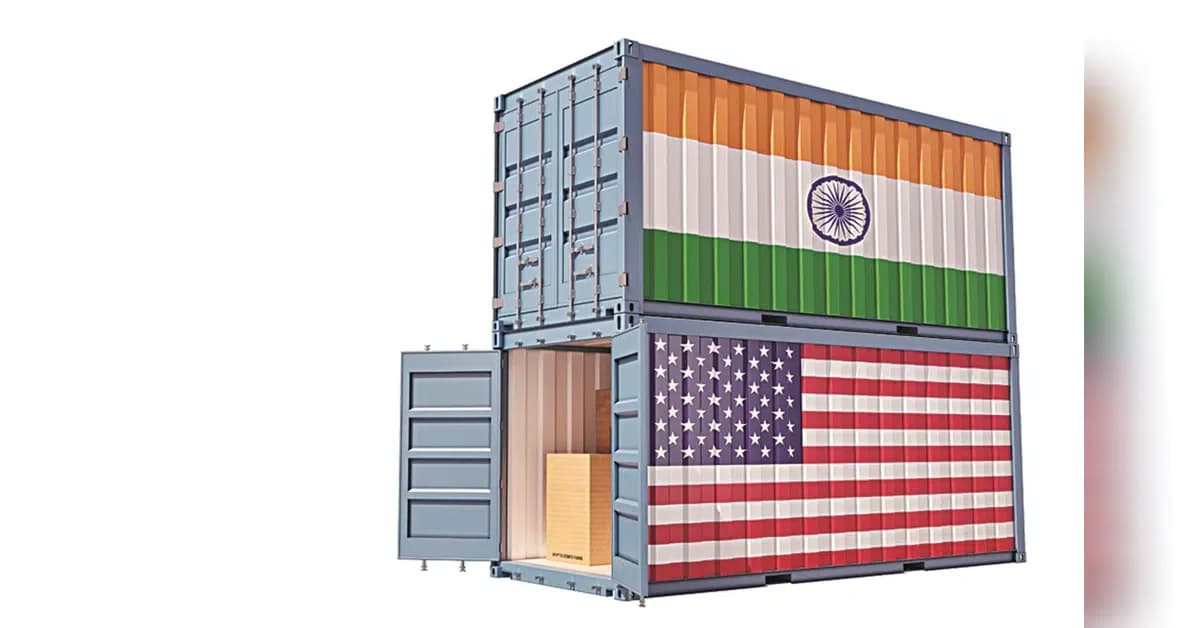
Despite the progress on trade negotiations, the Trump administration has unveiled plans for additional tariffs on imports from 60 economies, including India, following investigations under Section 301 of the US Trade Act of 1974. The review examined measures adopted by various countries to prevent imports allegedly linked to forced labour practices, with the proposal raising concerns among exporters. Products from India, China, Japan, South Korea, Brazil and Switzerland could face a higher 12.5 per cent levy if the measures are ultimately implemented. However, New Delhi has sought to reassure businesses that discussions with Washington continue on multiple fronts. The Commerce Ministry has said India remains actively engaged with the United States on the Section 301 proceedings while simultaneously pursuing a broader bilateral trade framework announced earlier this year. According to Gor, the optimism comes amid this fresh trade policy push from the Trump administration, with officials on both sides insisting that broader trade discussions remain firmly on track despite the new tariff proposals.
Addressing concerns about H1B visa policies and their impact on Indian professionals, Pigott clarified that there was 'inconsistent application of visa law during previous administrations' which is no longer the case. 'That is no longer the case. We are consistently applying visa law across the board. I think that will offer clarity. There are no visa laws that target India. These are global visa laws that are being implemented with clarity, clear instructions that are being applied across the board,' he stated. According to the US Citizenship and Immigration Services (USCIS), Indians make up an estimated 71 per cent of all approved H-1B applications in recent years, with China in the second spot. The major fields include technology, engineering, medicine, and research. Pigott emphasized that every country seeks to ensure that its citizens benefit from economic opportunities generated within its borders, while noting that the US wants to ensure Americans have access to employment opportunities created through investments. The spokesperson confirmed that the US wants to facilitate and allow ways that people need to come in to facilitate investment, to train workers, and make sure that visa policies are in place to allow that to happen.
Gor highlighted significant American corporate commitments to India, citing Amazon's expected investment of $35 billion into the country by 2030, Microsoft's announced $17.5 billion outlay, including hyperscale cloud infrastructure, and Google's recently announced $15 billion artificial intelligence hub. The ambassador also revealed that the US-India Critical Minerals Framework was formally signed last week, alongside US Secretary of State Marco Rubio and External Affairs Minister S Jaishankar. This framework will help ensure the foundational elements required to prevent technology and energy are available within trusted networks. Under the TRUST (Transforming Relationship Utilising Strategic Technologies) initiative launched in February 2025 by Trump and Modi, the two sides have committed to boosting cooperation on artificial intelligence development and strengthening trusted supply chains for active pharmaceutical ingredients and critical minerals. Gor noted that American companies often ask whether India is a safe destination for proprietary technology and research, particularly after experiencing intellectual property and research-and-development theft in other jurisdictions. He emphasized that India is a country that American businesses can trust, with the US currently importing nearly 40 per cent of its generic pharmaceuticals from India.
The US was India's second-largest trading partner in 2025-26, with India's outbound shipments to the US growing marginally 0.92 per cent to USD 87.3 billion during the last fiscal year, while imports increased 15.95 per cent to USD 52.9 billion. The trade surplus declined to USD 34.4 billion in 2025-26 from USD 40.89 billion in 2024-25. In March, the US Trade Representative launched two unilateral Section 301 investigations against India over excess capacity and failures to eradicate forced labour in global supply chains, with India strongly rejecting these allegations. According to Zee News, the discussions are also expected to include tariffs imposed under Section 301 of US trade law, with India seeking relief from ongoing investigations and trade-related concerns emerging as an important agenda item. India has maintained that it will continue buying Russian crude oil despite pressure from Washington, as the US had earlier imposed an additional 25% tariff on India over purchases of Russian oil, resulting in overall 50% tariffs. Regarding the Section 301 investigations, Gor noted that the tariffs imposed by the US were applied globally and were not targeted specifically at India.