US President Donald Trump has made a dramatic shift in his assessment of India's economic performance, praising the country's 7-8% growth while speaking to CNBC ahead of US Independence Day celebrations. 'You have a couple of countries, India is one, doing very well, but it's at 7, 8%,' Trump said, marking a sharp contrast to his remarks in July 2025 when he described India as a 'dead economy' amid trade tensions. The latest comments represent a significant turnaround from Trump's previous criticism, when he wrote on Truth Social: 'I don't care what India does with Russia. They can take their dead economies down together, for all I care.' At that time, he also announced 25% tariffs on Indian imports and accused India of maintaining 'the most strenuous and obnoxious non-monetary Trade Barriers of any Country'. The escalation continued with an additional 25% penalty tariff on August 6, 2025, taking cumulative US tariffs on Indian goods to 50%.
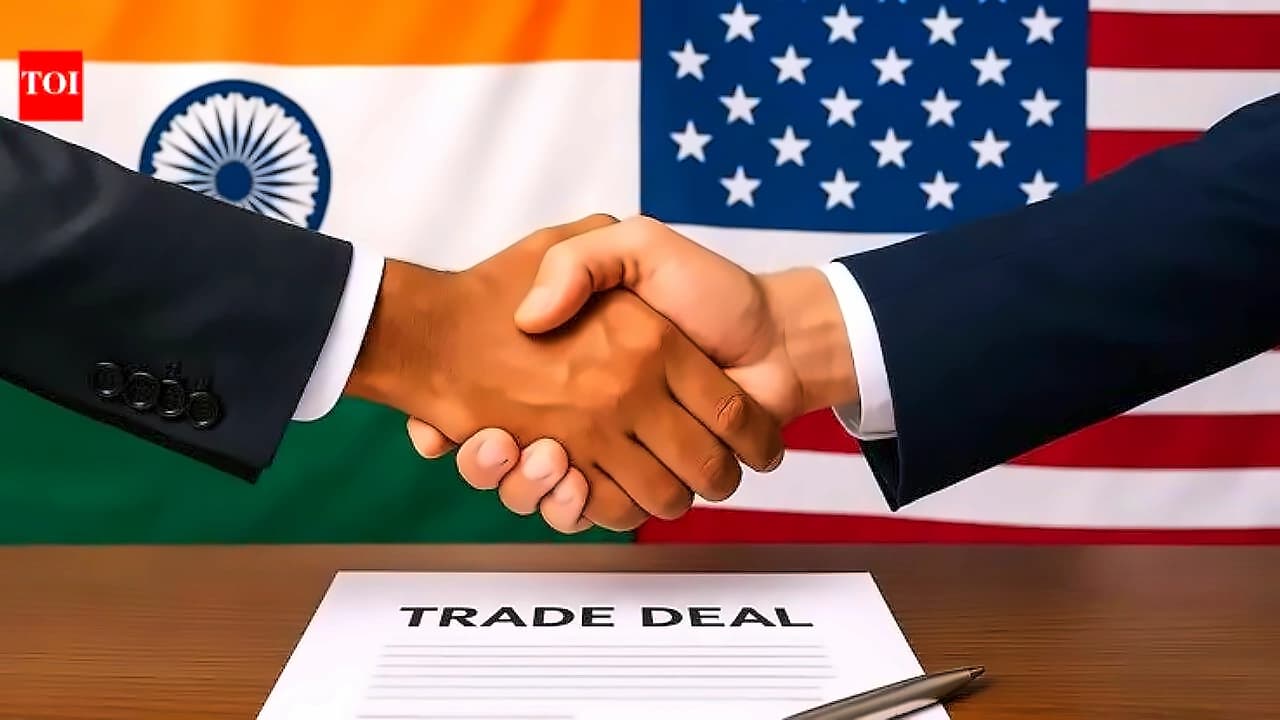
US Ambassador to India Sergio Gor announced that the long-awaited India-US trade agreement is in its 'last one or 2 percent' of negotiations, with both countries in the final stages of conclusion. Speaking at the US-India Strategic Partnership Forum (USISPF) Leadership Summit in Washington, Gor said 'Most of this deal is complete. There are a few items that remain from both sides, but it's in the last one or 2 percent of that deal'. The negotiations gained momentum after Prime Minister Narendra Modi and Trump met on the sidelines of the G7 Summit in France in June, with both countries now working to conclude an interim trade pact before the temporary US tariff regime expires on July 24. Union Commerce Minister Piyush Goyal recently confirmed that the framework for the proposed deal had been finalised, although implementation depends on India securing a tariff advantage over competing exporting nations. The proposed agreement is expected to deepen cooperation in trade, investment and technology while expanding market access for businesses in both countries.
India's ambassador to the United States, Vinay Mohan Kwatra, outlined an ambitious long-term growth roadmap at the IX USISPF Leadership Summit 2026, emphasizing India's role as a 'indispensable anchor' of global economic growth. According to reports from The Times of India and Firstpost, Kwatra revealed that India's current $4.3 trillion economy is positioned for significant expansion, targeting $7 trillion by the end of this decade. The envoy projected even more ambitious long-term goals, stating that India hopes to transition to $14 trillion by the middle of 2030s and eventually reach a $25 to $30 trillion goal by 2047. Speaking at the summit in Washington, DC, Kwatra highlighted that India's economic transformation has been 'driven by domestic demand' with 'consistently high growth of seven plus per cent' since 2014. Kwatra emphasized that 'Prime Minister has propounded... a mixture of self-reliance and self-sufficiency, but an ecosystem which has positive externalities, which is not insular in nature' through the Atmanirbhar Bharat vision, with 'A set of these three allows India actually to be a huge enabler internationally'.
The summit highlighted significant progress in India-US cooperation across critical technology sectors. Jacob Helberg, US Under Secretary of State for Economic Growth, Energy and the Environment, described India as America's most important long-term technology partner in building resilient supply chains beyond China. Helberg emphasized that 'India obviously is the only country on earth that fundamentally rivals China with respect to the depth of its engineering workforce and talent pool'. Kwatra highlighted biotechnology, artificial intelligence and semiconductors as the next frontiers of cooperation, pointing to India's 12,000 biotechnology startups and the recently launched BioSaarthi 2026 initiative. On semiconductors, he noted that 'Two, three years ago, we had a nascent to negligible semiconductor industry,' with pilot production expected to commence by the end of this year and commercial production by the end of next year, following Micron's investment. Regarding AI, Kwatra said India was working 'across all five layers' of the AI value chain, emphasizing that 'AI should ultimately be judged by the outcomes it produced rather than the technology itself' and seeking 'a degree of strategic autonomy and resilience' while partnering closely with the United States.
The summit revealed significant diplomatic and economic achievements between the two nations. Sergio Gor announced that the US Embassy in New Delhi had attracted $20.5 billion in new investments into the United States this year, making it the highest-performing American diplomatic mission globally in investment promotion. The ambassador also announced that Quad foreign ministers were expected to meet in the Philippines in about two weeks before holding another ministerial meeting in Australia, with preparations also underway for a future Quad leaders' summit that would include President Donald Trump visiting India. Gor underlined the personal rapport between President Trump and Prime Minister Narendra Modi, describing it as an important pillar of the bilateral relationship, recalling a recent evening with Trump at a UFC event in Miami where the president spontaneously suggested calling Modi. Gor emphasized that 'The president truly considers the prime minister a friend' and that Trump 'deeply cares about this relationship'. Kwatra highlighted that India looks forward to working closely with the United States at this year's G20 Summit, recalling that New Delhi had achieved consensus during its own presidency despite a challenging geopolitical environment.
The summit highlighted strengthening diplomatic ties and strategic convergence between the two nations. Gor noted that US Secretary Marco Rubio invited PM Modi during his visit to India from May 23 to 26, with the invitation extended on behalf of Trump. Gor expressed hope that Modi would visit the United States again, stating that 'We love to have him back here' and confirming Modi's upcoming visit to the US in December for the G20 Summit. Kwatra emphasized that 'Prime Minister Modi's India is not just an indispensable bridge, but an indispensable anchor of the global order, of economic growth, of stability, of trust and reliability'. The US-India partnership is described as the 'most consequential partnership of our time' and a 'globally transformative' relationship, with cooperation seen as crucial for shaping the future of global trade, technology, and security. Looking ahead, Kwatra said that 'trust, reliability and secure supply chains would define the future of India-US cooperation' and that 'trade doesn't move in isolation' but requires stronger supply chains, greater investment, manufacturing collaboration, innovation and mobility of skilled talent to converge together.