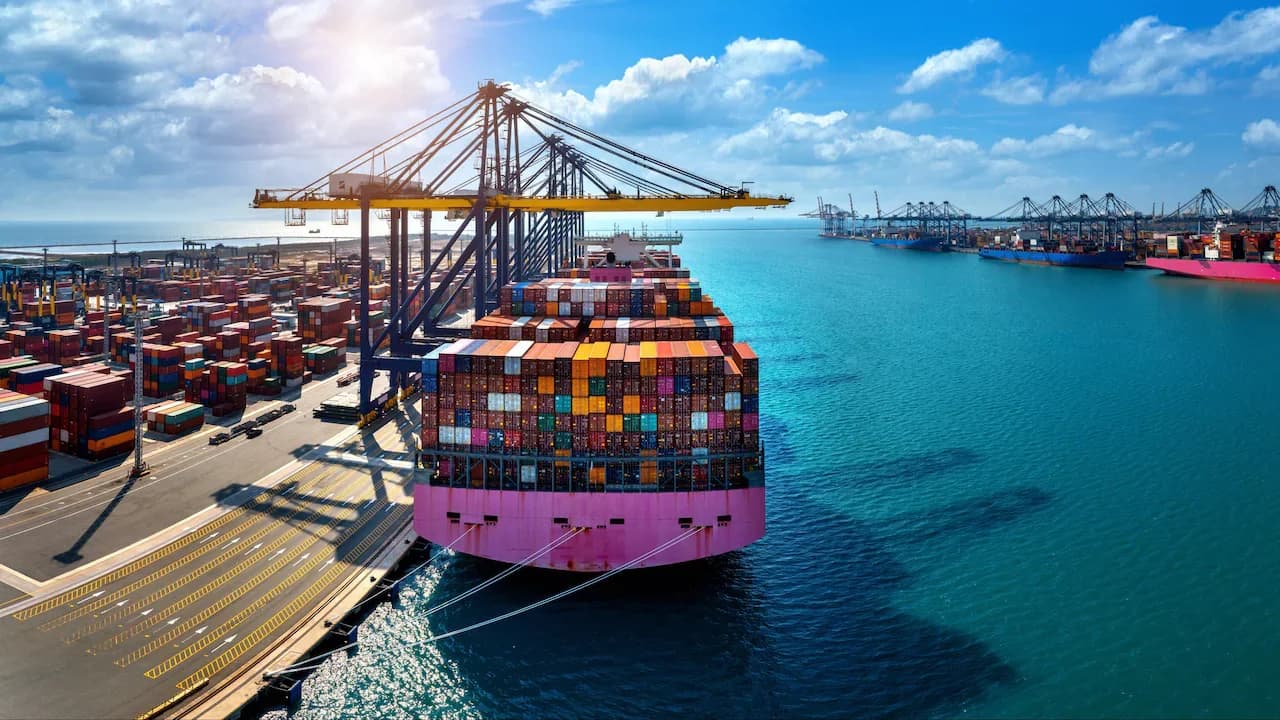
India is aiming to significantly increase its share of global merchandise exports from 1.8% in 2024 to around 10% by 2047, according to the latest World Trade Organisation (WTO) report. However, the WTO secretariat emphasises that India will need to address structural challenges, including high trade costs, regulatory complexity, infrastructure gaps and barriers to deeper global integration to sustain strong economic growth and achieve the Viksit Bharat vision of becoming a developed country by 2047. The WTO report indicates that this growth strategy is integral to India's broader economic vision, with the organisation stating that "as India seeks to expand its role in global trade, diversify exports and meet its long-term development objectives, the balance between self-reliance and openness, as well as its engagement in the multilateral trading system and its reform, will remain key determinants of its future growth and resilience."
The WTO secretariat has forecasted real GDP growth to range between 6.8% and 7.2% in FY2027-28, continuing the trend of strong growth posted during the review period where India was the fastest-growing G20 economy. However, the report emphasises that to attain high-income economy status by 2047, India will need to sustain real GDP growth of approximately 8% annually. The Indian government, in its prepared report, stated that "as India pursues its 'Viksit Bharat 2047' vision, aiming for developed-nation status amid complex digital, green and demographic transitions, unimpeded access to global markets, critical minerals and high-end technology remains a non-negotiable imperative." The WTO secretariat noted that India was consistently the fastest-growing G20 economy in the post-pandemic period, recording average annual real GDP growth of 7.3% between FY2022-23 and FY2025-26, with domestic demand continuing to be the main engine of growth. The IMF has projected India's economy to expand 6.3% in 2026 and account for about 17% of global real GDP growth.
India's combined merchandise and services exports reached a record $863.1 billion in 2025-26, up 6.3% from $676.5 billion in 2021-22, according to the latest WTO report. However, experts emphasise that FTAs alone cannot fulfil India's export ambitions and require a comprehensive approach to achieve their full potential. Tariff reduction is certainly important, but by itself, this is a limited outcome, improving price competitiveness without altering the underlying structure of production. The larger opportunity lies in using FTAs to attract investment into new, higher-value segments of the supply chain, particularly through tariff concessions on intermediate goods such as components, machinery, specialised materials, and semi-finished products that circulate within regional and global value chains. For India, this is particularly relevant as the country desires a larger footprint in modern industries like electronics, automobiles, medical devices, renewable energy equipment, aerospace components and pharmaceuticals - industries that depend intrinsically on cross-border movement of inputs and technology.
The WTO secretariat described the digital economy as one of the standout performers, estimated to be growing at "twice the pace of the overall economy." It highlighted the expansion of the JAM Trinity, UPI and India Stack, noting that monthly UPI transactions increased from four billion in 2021 to more than 18 billion by early 2025, while India's digitally delivered services generated a trade surplus of over $200 billion in 2025. India's trade-to-GDP ratio touched 50% in FY2022-23 before moderating to 45% in FY2024-25, still remaining above pre-pandemic levels. On manufacturing, the Secretariat said India had emerged as the world's second-largest mobile phone producer and fourth-largest automobile manufacturer, while supplying 20% of the world's generic medicines. However, the report cautioned that "high input costs partly linked to tariffs, high capital costs, inadequate industrial infrastructure, reliance on technology transfer, business operation hurdles, and access to land" continue to weigh on manufacturing growth.
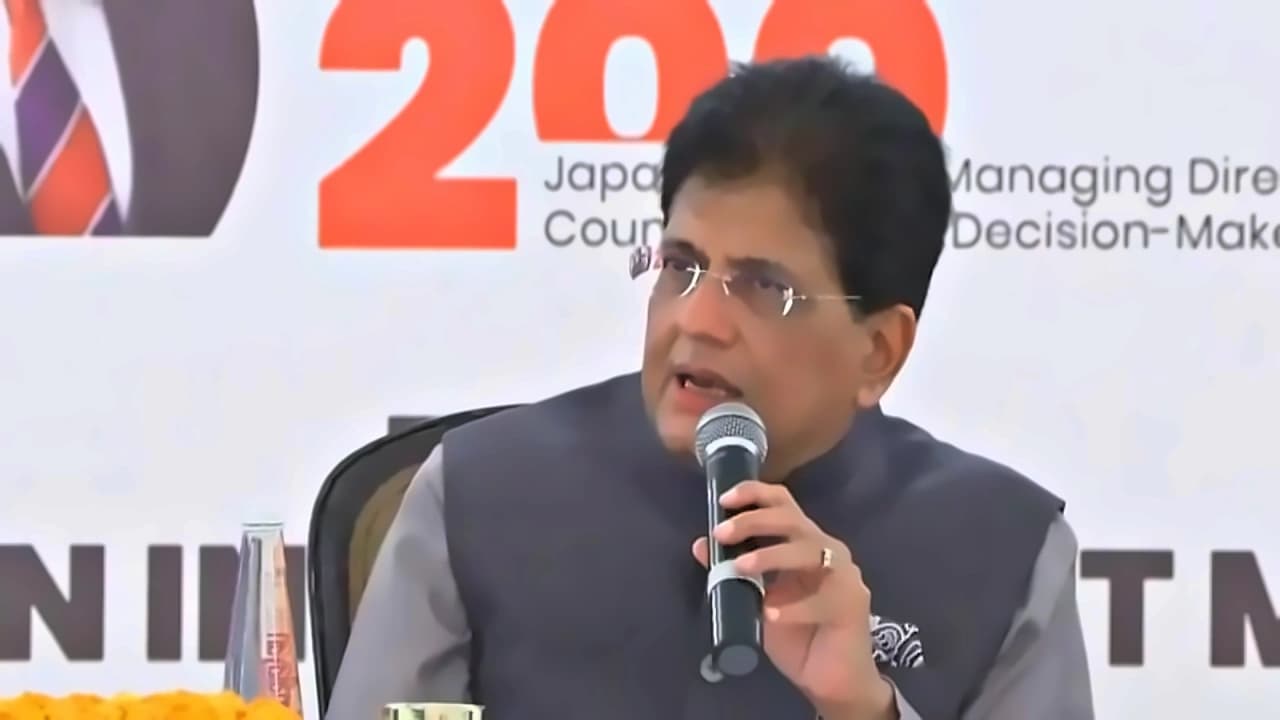
The eighth review of India's trade policies and practices is scheduled to take place on July 21 and July 23 in Geneva. Commerce Secretary Rajesh Agarwal is representing India in these meetings, sharing details of the opening day where he emphasised that India's economic journey during the review period had been defined by "resilience, reform and renewed ambition" despite a challenging global environment. The WTO report specifically notes that "the basis for the review is a report by the WTO Secretariat and a report by the Government of India." The Indian government's prepared report emphasises that India's trade policy will remain firmly aligned with its broader reform agenda, deepening integration with the global economy while advancing a strengthened and equitable rules-based multilateral trading system. The report also highlights that India aspires to safeguard the development priorities and legitimate policy space of the Global South, while advancing towards its long-term objective of attaining high middle-income status by 2047, the centenary year of its independence. The WTO Secretariat noted that India remained a strong advocate of development-centred WTO reforms and continued to argue that reforms must be "development-centred, consensus-based, and Member-driven," while India does not subscribe to the Joint Statement Initiatives and had not ratified the Fisheries Subsidies Agreement by the end of 2025.