India's eighth WTO Trade Policy Review has highlighted the country's emergence as one of the strongest growth performers among major economies, with economic growth averaging nearly 8% annually between 2021-22 and 2025-26. According to reports from Business Standard, members at the WTO lauded India's efforts towards Viksit Bharat@2047, recognising that India's strong and sustained economic growth, deepening global engagement, and rapid digital transformation underscore its steady progress toward becoming a developed nation by 2047. The review drew exceptionally wide and sustained engagement from WTO members concerning all sectors, reflecting the level of their interest in India's trade, regulatory, and macroeconomic policies.
India's export performance reached unprecedented levels during the review period, with total exports reaching a record $863 billion in 2025-26, comprising $441.8 billion in merchandise exports and $421.3 billion in services exports. Despite facing punitive tariffs from the US, India's exports to the US continue to account for about 20% of total exports, highlighting the challenges of market diversification and the significance of new trade agreements. As reported by Bloomberg News, Commerce Secretary Rajesh Agrawal noted that "in an environment of global uncertainty and shifting trade patterns, FTAs also serve as institutional anchors for trusted economic partnerships." The government has expanded the range of goods sold overseas, adding about 500 new product lines, mainly in electronics, engineering and marine products, while focusing on engaging with economies that collectively account for over two-thirds of global GDP.
India's digital economy has achieved remarkable milestones, with Digital Public Infrastructure (DPI) enabling India to build digital systems at population scale. According to reports from Business Standard, the Unified Payments Interface (UPI) alone accounts for 85% of India's digital payment transactions and around 49% of global real-time payment volumes in 2025. Members specifically highlighted India's achievements in DPI, with India's digital and development-oriented reforms being recognised as offering lessons for developing countries and least developed countries pursuing their own digital transformation. This transformation demonstrates how openness is increasingly supported by domestic capabilities that reduce transaction costs and enable businesses to participate in the formal and digital economy.
India's trade policy has become more outward-looking, with a growing network of free trade agreements (FTAs) in force or under negotiation across both developed and developing economies. As reported by Bloomberg News, India has signed trade deals with the UK (effective July), European Union, Oman and New Zealand in the past year, while earlier this month signing terms of reference with the Southern African Customs Union to accelerate trade negotiations. The expansion reflects efforts to diversify partnerships and secure greater market access for Indian goods and services. India now counts Australia among its faster-growing markets and the UAE was its second-biggest export destination in the 12 months through July. Exports to China have also accelerated, surging 42% in the 12 months through July, with India shipping goods worth $21.5 billion to China compared with $88.5 billion to the US. This diversification strategy aims to reduce reliance on any single market and strengthen trade ties across multiple regions.
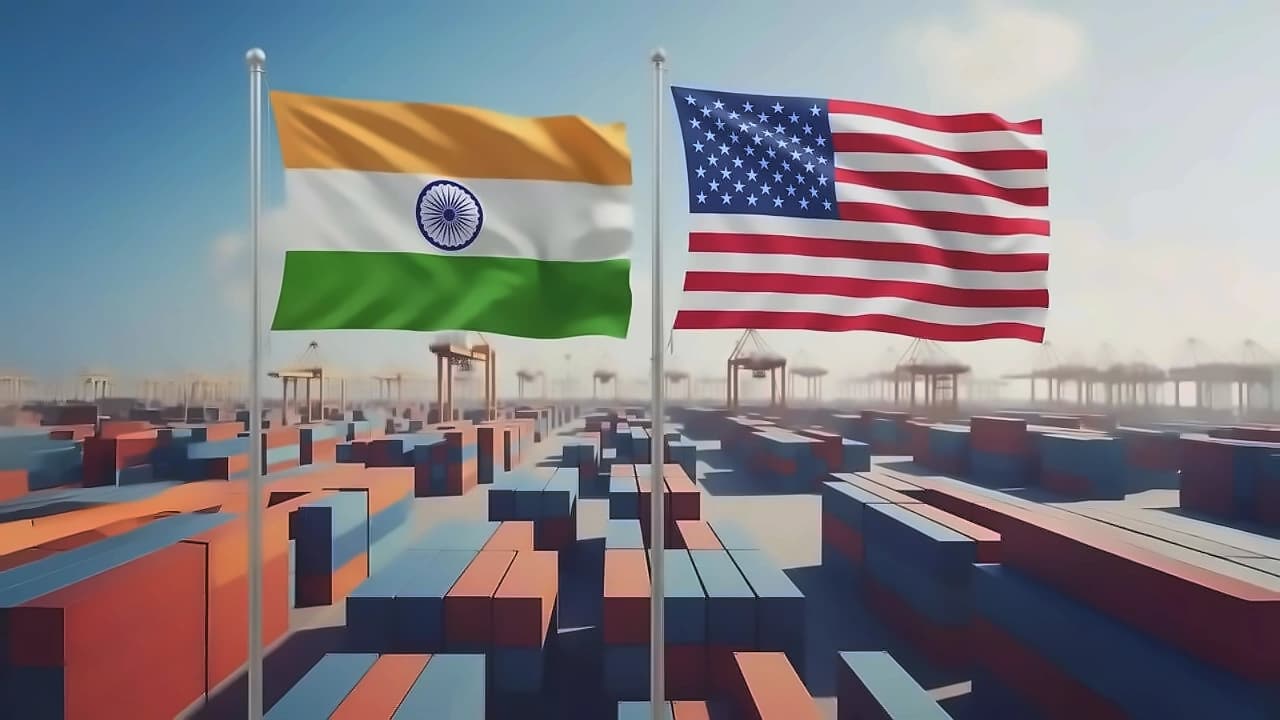
Economic Advisory Council to the Prime Minister (EAC-PM) Member Sanjeev Sanyal has emphasized that India should not rush into a trade agreement with the United States, stating that the pact must protect the country's long-term interests. According to his exclusive interview with ANI, while substantial progress has been made in ongoing trade negotiations, India should carefully examine the terms before signing, as "once we lock it in, it will be there for a fairly longish period." Sanyal highlighted that agriculture and dairy require particular attention, noting that "when it comes to dairy, when it comes to agriculture, you can have again a street movement, whether it's Punjab or anywhere else." He stressed the importance of political consensus for major agreements, drawing parallels with the India-US civil nuclear deal. The remarks come amid continuing India-US discussions on a bilateral trade agreement, with tariffs, agriculture, dairy and market access among the key issues involved. Sanyal also addressed US tariff policy uncertainty, noting that "almost every other country in the world has faced some kind of a disruption in their trade relations with the US over tariffs," emphasizing that repeated tariff-related disruptions can cause "stop-go in the flow of goods and services and also in the relationship."