India is actively pursuing free trade agreement negotiations with 8-9 additional groups of countries and individual nations, according to Commerce and Industry Minister Piyush Goyal. As reported by PTI, Goyal announced these ongoing negotiations during an official visit to Tokyo, speaking to a business gathering of over 200 Indian and Japanese corporate representatives. These negotiations represent another $15 trillion in GDP that could be brought under India's trade framework, with the minister emphasizing India's commitment to expanding its free trade agreement portfolio. The minister highlighted that India has significantly widened its trade engagement with global markets over the past four years, positioning the country to emerge as a trusted manufacturing and sourcing partner in international supply chains.
India has already signed nine free trade agreements over the past four years, covering 38 developed countries with a combined GDP of $60 trillion, according to the minister's statements. According to PTI report, these existing agreements include previous trade arrangements with countries such as Japan and Korea, as well as the ASEAN region, which have brought an additional $10 trillion of GDP within India's trade arrangements scope. As Goyal noted, these recent pacts build on India's earlier trade agreements with key Asian economies, establishing a comprehensive network of preferential trade relationships. The minister pointed out that India's earlier trade agreements with key partners, including Japan, South Korea and the ASEAN region, have already opened access to economies representing another $10 trillion in GDP.
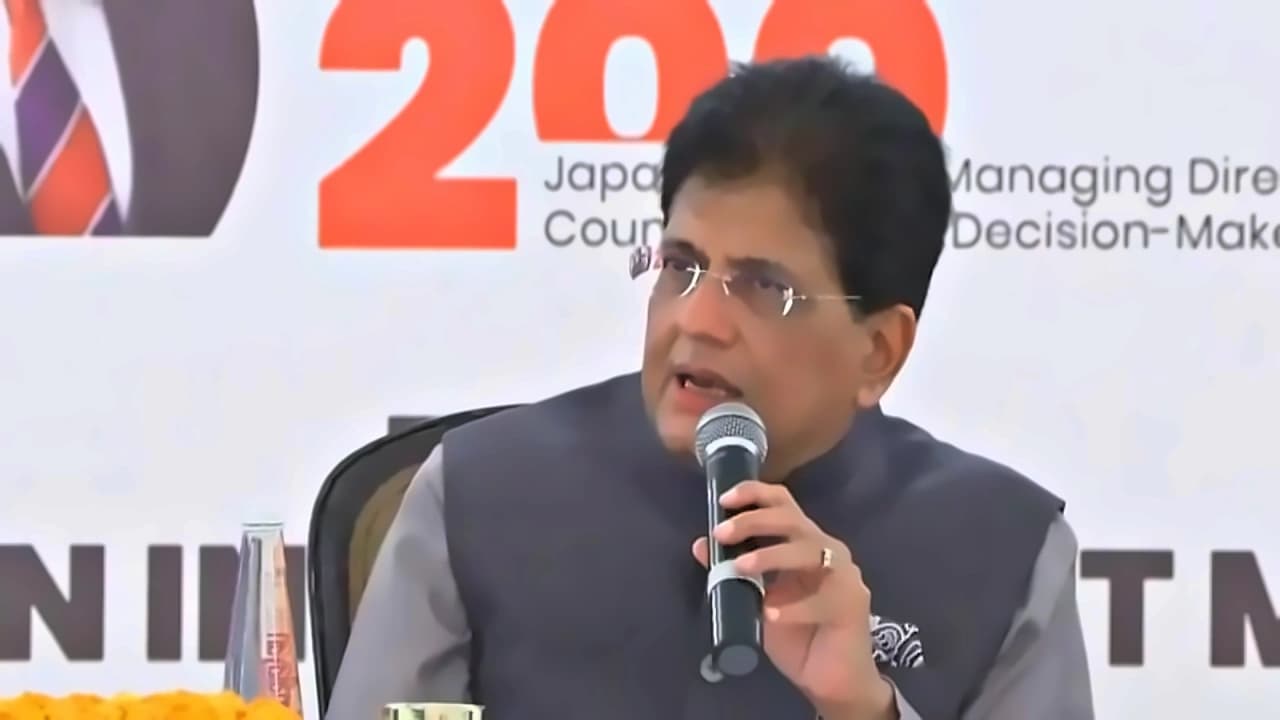
Minister Goyal highlighted that India's free trade agreements would ultimately cover around 75% of global trade, positioning the country as a trusted partner in global value chains. Speaking to the business gathering in Tokyo, Goyal emphasized that 75% of global trade will be covered through our free trade agreements, opening India to become a part of the global value chain as a trusted partner. This comprehensive approach to trade negotiations reflects India's strategy to establish itself as an integral part of international supply chains while maintaining its domestic market advantages. The minister's comments come as India seeks to balance the advantages of a large domestic consumer market with greater international economic integration, moving beyond its traditional reliance on domestic demand as a major growth engine.
The minister emphasized that India's approach combines its sizeable domestic market with strategic opening to the global economy through these trade agreements. According to PTI report, Goyal stated that "So today India opens up the doors to preferential market access to $70 trillion of economy." This dual strategy allows India to maintain its competitive advantages while expanding its economic reach to cover $70 trillion of economy through preferential market access arrangements. The minister also pointed to vast domestic opportunities for Japanese investors across emerging sectors, including data centres, advanced manufacturing, and artificial intelligence. Beyond traditional manufacturing, Goyal highlighted that India's large consumer base, expanding technology ecosystem and growing industrial capabilities could make it an increasingly attractive destination for such investments. The minister added that large opportunities for investments in India are there in areas like data centers, manufacturing and artificial intelligence, with the increasing economic ties leading towards balanced trade between India and Japan.