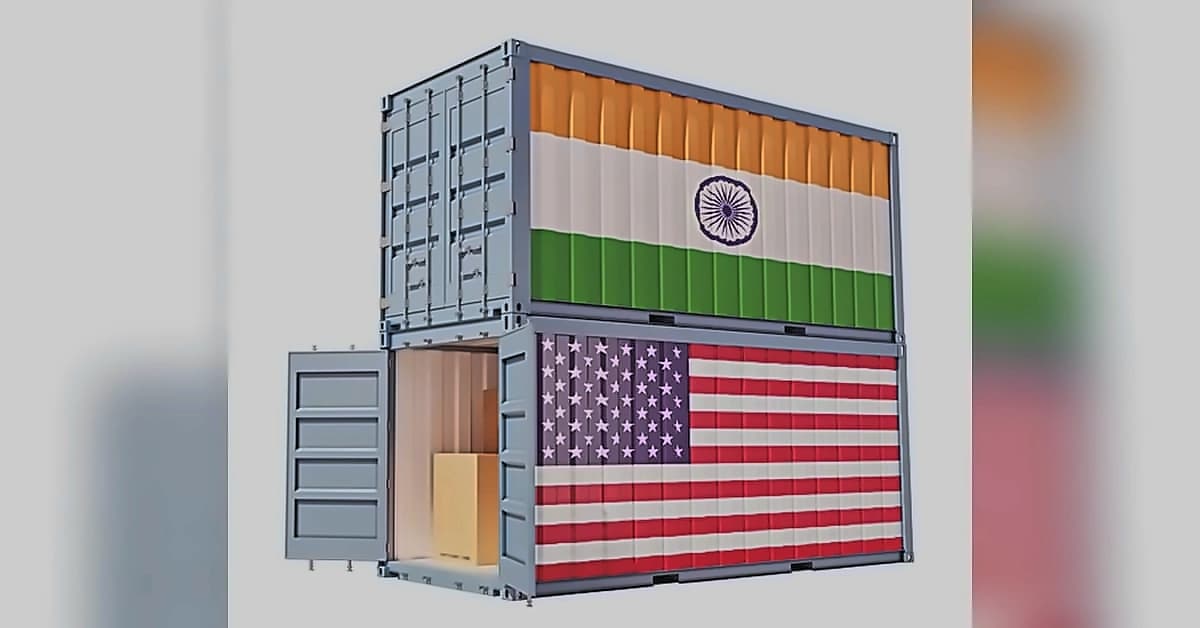
India has mounted a comprehensive defense against US trade allegations, with the Ministry of Commerce filing representations on behalf of affected sectors to reject both excess capacity claims and forced labour assertions in India's cotton textile value chain. As reported by Reuters, Additional Trade Secretary Amitabh Kumar categorically stated that India does not maintain surplus manufacturing capacity in either textiles or steel sectors, directly countering claims being examined under the US Trade Representative's (USTR) Section 301 probe. The response comes amid a broader review examining whether certain countries use industrial policies such as subsidies, wage suppression or other measures to create structural advantages that distort global trade. Kumar emphasized that 'overcapacity is a country's perspective. We don't think we have overcapacity in anything,' as reported by The Times of India.
Kumar highlighted that on a per-capita basis, both production and consumption remain significantly lower than in many developed economies, as reported by Reuters. The Trade Secretary noted that though new measures are being considered for the steel sector, India's current production levels are justified by its demographic and economic context. This per-capita analysis appears to be a key element of India's defense against the US allegations of forced labour practices in these manufacturing sectors. Kumar specifically rejected US concerns over steel production, stating 'India's per capita steel consumption is among the lowest,' adding that output in the world's second-largest producer remains low relative to its population and growth needs. For textiles, he questioned the logic of overcapacity claims, stating 'This country has a hot climate, tropical climate. We wear cotton. How do we have overcapacity?'
According to Reuters, TEXPROCIL has submitted a detailed response to the USTR challenging US allegations in the cotton textile sector, with the Cotton Textiles Export Promotion Council (TEXPROCIL) arguing that the country's cotton textile industry is primarily dependent on domestic demand, with more than 80% of total production consumed within India. The industry body said the high share of domestic consumption leaves little room for the kind of export-driven overcapacity highlighted in the US investigation. TEXPROCIL further argued that production trends across cotton, yarn and fabric segments do not indicate any rapid expansion of manufacturing capacity, with output growth in several segments remaining stable or moderated in recent years. The textile sector's response emphasizes that India's manufacturing landscape is shaped by internal consumption patterns and developmental imperatives rather than export-led overcapacity. A senior DGTR official added that India is not self-sufficient in MMF production and continues to import raw materials, with the country importing 47 lakh bales of cotton last year following a decline in domestic production.
Kumar provided specific consumption figures to support India's position, stating that India's per capita steel consumption is around 100 kg, well below the global average of over 200 kg, as reported by Business Standard. Similarly, India's annual per capita consumption of textiles is 5.5 kg, compared with the global average of around 15 kg. Kumar emphasized that these low consumption levels reflect India's growth needs rather than excess capacity, stating 'Compared to our population, our economic and growth imperative, per capita consumption of steel is one of the lowest.' The Commerce Ministry has rejected the US claims and has already submitted its stance to the USTR, with Kumar noting that 'overcapacity is not covered under trade remedial laws of the World Trade Organization' and describing the allegations as a new narrative targeting specific countries with collateral objectives.
The latest scrutiny follows the launch of a Section 301 investigation by the USTR into whether foreign governments support industries in ways that create unfair competitive advantages in global markets. In its notice, the USTR cited India's trade surplus with the US and identified sectors including textiles, steel, petrochemicals, health products and automotive goods for examination. The notice also flagged India's solar manufacturing sector, arguing that installed production capacity exceeds domestic demand. India has maintained that its manufacturing expansion reflects the requirements of a large and growing economy rather than an effort to create export-led excess capacity, and has sought to counter the allegations through formal submissions to US authorities. The investigation examines whether certain countries use industrial policies such as subsidies, wage suppression or other measures to create structural advantages that distort global trade.
According to sources familiar with the matter reported by NDTV Profit, India and the United States are expected to finalise their long-awaited trade agreement only after the conclusion of the ongoing Section 301 investigation. The timing is particularly significant as the US' temporary 10% tariff regime is set to expire on July 24. Following its lapse, basic Most Favoured Nation (MFN) tariff rates are expected to come into effect, creating additional pressure for a swift resolution of the trade dispute. Trade Minister Piyush Goyal said both sides were moving swiftly toward finalising the first tranche of a trade agreement, possibly by mid-July, as reported by The Times of India.