The textile industry is experiencing a significant boost with crucial free trade agreements (FTAs) now operationalised, creating substantial export opportunities. The UK deal, which kicked in on Wednesday, eliminates tariffs of up to 12% and brings parity with key competitors like Bangladesh and Vietnam. According to Prabhu Dhamodharan, convener of the Indian Texpreneurs Federation, the FTA is already generating demand pull, with Indian exporters having long-standing relationships with UK buyers including brands and supermarkets such as Primark, Next, Tesco, M&S and small brands. The industry anticipates exports to double to 12% in the next four to five years as companies immediately tap opportunities, with increasing concern about supply concentration and political stability creating a favourable environment.
India's textile exports faced headwinds in FY25, declining from ₹14.40 billion to ₹13.71 billion amid softer global demand and cautious sourcing sentiment. However, woven fabric exports demonstrated resilience, growing around 7% year-on-year from ₹4.60 billion to nearly ₹4.93 billion. According to industry analysis, this growth is being driven by innovation in fabric development, with mills moving beyond conventional cotton fabrics and investing in lightweight constructions, fibre blends, performance finishes and sustainable materials. The shift reflects the industry's adaptation to volatile raw material prices, shorter fashion cycles and demand for more value-added products, with buyers prioritising versatility and fabrics traditionally associated with women's wear now finding applications across both men's and women's apparel categories.
Indian textile exporters are bracing for fresh uncertainty as cotton prices surge again, with benchmark 29 mm cotton spot price rising ₹400 to ₹65,000 per candy on July 14 according to the Cotton Association of India (CAI). By mid-May, benchmark 29 mm Gujarat cotton prices had surged about 10% to ₹65,800 per candy, driven by concerns over domestic output and weakening currency amid West Asia conflict. Globally, cotton futures on the Intercontinental Exchange (ICE) climbed more than 6% during the week ended July 10, reflecting renewed concerns over global supply. The impact varies across segments, with apparel manufacturers relying more heavily on polyester (70% of raw material requirement) while textile segment depends on cotton (70% of requirements), as noted by Crisil Ratings.
Faced with steep yarn prices and market challenges, Indian textile manufacturers are embracing innovation to maintain competitiveness. According to Dhaval Desai, MD, Desai Textiles, steep yarn prices have accelerated the industry's shift towards lighter constructions and more efficient fabric engineering. "With yarn prices at elevated levels, high-GSM fabrics have become commercially challenging in the current environment. The market is clearly moving towards lighter constructions that deliver value without compromising on performance. Blends incorporating Lyocell (Excel/Tencel) are gaining acceptance, as they strike the right balance between cost, comfort, and premium appeal," Desai explained. Industry players are seeing increased adoption of linen-cotton, linen-viscose, filament blends, and branded fibers such as Liva, Lenzing, and Bemberg, often combined with cotton or viscose bases. Fabrics in the sub-₹150 per metre range are seeing strong demand, up from ₹70-100 just a couple of years ago, indicating a steady premiumisation of the market.
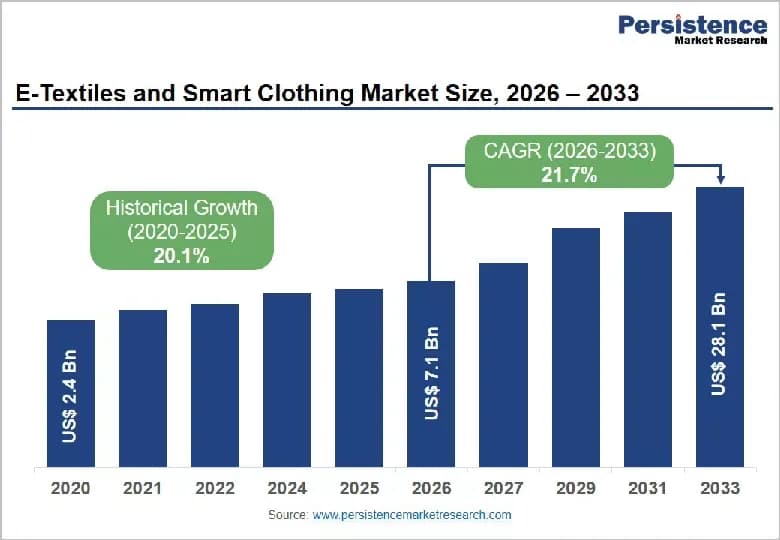
Despite near-term uncertainties, exporters remain optimistic about the medium-term outlook, with the India-UK free trade agreement and recently concluded India-EU trade deal significantly improving sentiment. Meenakshi India's Goenka expects enquiries from UK and European customers to pick up after trade agreements, with conversations moving towards order discussions, anticipating benefits to reflect in business from Q4 FY27. However, challenges persist with labour availability remaining a concern across manufacturing hubs and the renewed US-Iran conflict potentially disrupting supply chains. The sector's substantial workforce of more than 45 million people continues to provide a foundation for sustainable development, while policy support through programs like National Programme for Organic Production (NPOP) and PM Mega Integrated Textile Region and Apparel (MITRA) Parks positions India for long-term growth in the expanding smart clothing market. According to Dhamodharan, medium and small scale companies are evaluating incremental automation technologies and could begin investments in capacity addition, modernisation and integration once there is clear visibility on orders and payback time.