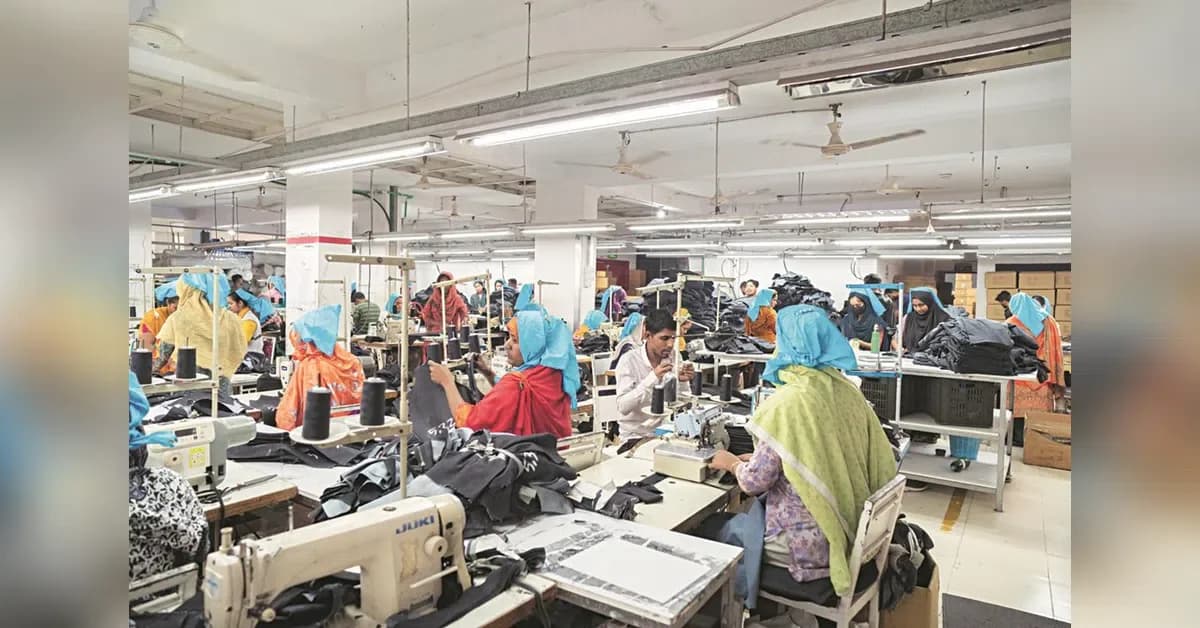
Bangladesh's garment industry is experiencing a severe crisis as factory owners desperately seek to lease or sell their operations amid declining global demand. According to The Business Standard, many factory owners want to rent or sell their facilities, but there are no buyers because manufacturers and exporters are struggling for survival. The number of active factories in the woven and knitwear sector has dwindled to approximately 2,000, down from 4,500 in previous years. Dird Group has shut down three factories, with the most recent closure occurring just a few days before Eid-ul-Azha, resulting in over 8,000 workers losing their jobs. Industry players confirm this has become a common query they receive every day, with even factories in export processing zones reducing production lines and laying off workers.
According to UN Comtrade data compiled by Elara Securities, both India and Pakistan are competing for the same customers in global textile markets, particularly in bedsheets and towels. India's share of US cotton-bedsheet imports rose from 47% in 2019 to 55% in 2025, while Pakistan's share increased from 18% to 24% during the same period. In terry towels, India's share rose from 38% to 44%, with Pakistan's remaining around 24%. However, the competition dynamics differ significantly across regions, with China's share in US cotton-bedsheet imports falling dramatically from 23% to just 8% as both nations benefited from China's retreat from the US market.
In European markets, Pakistan's share in EU terry towels rose from 30% in 2019 to 41% in 2025, while India's fell from 21% to 18%. Similarly, Pakistan's share in EU bedsheets increased from 53% to 64%, while India's declined from around 9% to 7%. The EU's Generalised System of Preferences (GSP+) regime provides preferential access to Pakistan, cutting import duties to zero on two-thirds of tariff lines for vulnerable developing countries, while Indian exporters face tariffs of roughly 10-12% on these textile products. This tariff disadvantage has been a primary factor behind Pakistan's gains and India's losses in the European region.
The US had similar programmes that included both India and Pakistan, but in 2019, it removed India from the list of beneficiary countries, and GSP expired in 2020 and hasn't been renewed. Most textile products were not part of GSP in the US markets, meaning neither Pakistan nor India benefited from these incentives. India has negotiated a free trade agreement with the EU, under which 90.7% of India's exports by trade value would become duty-free, though the agreement hasn't been implemented yet. The UK agreement is in force from 15 July 2026 onwards, providing India with significant competitive advantages in these markets.
According to the Pakistan Business Council (PBC), around 86% of Pakistan's EU exports use GSP+ incentives with a 95% utilisation rate. The current GSP+ scheme expires in December 2027, with the EU scrapping automatic extension requirements. Pakistan must submit an action plan to qualify for the next scheme, creating uncertainty that could result in all textile exports to the EU carrying tariffs of around 9-12% if the scheme fails to renew. The PBC warns this creates a cliff-edge scenario for Pakistan's textile industry, as it has inadvertently over-relied on these incentives since 2014.
While Pakistan benefits from strong Europe-Pakistan quality standards and supplier relationships, India's large-scale, integrated production and skilled workforce allow it to make higher-value products that quality-conscious Western buyers are willing to pay for. The trade deals could provide much-needed oxygen to India's textile industry, which has been hit by multiple shocks including Covid and growing competition from Bangladesh and Vietnam. These agreements could incentivise more investment, formalisation and moving further up the value chain, giving India a longer-term advantage over Pakistan, which has not signed any such deals. The deals could do more than open markets, potentially transforming India's textile sector through increased formalisation and higher-value product development.