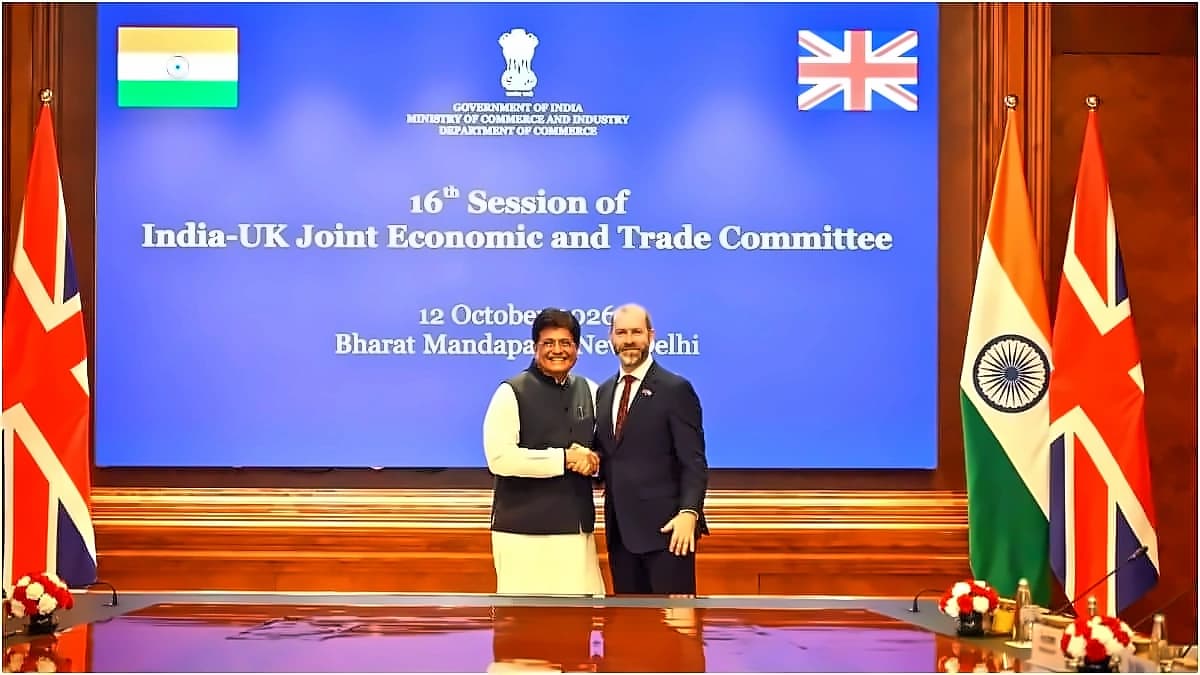
India's Directorate General Of Foreign Trade (DGFT) has opened applications for Tariff-Rate Quota (TRQ) benefits as provided by the free trade agreement signed between India and the UK. According to the latest DGFT notification, applications are open from July 21 to August 4, 2026 for the first round of 2026 import quotas. The TRQ applications are open until August 4, with automakers expected to benefit from the reduction of import duties under the comprehensive economic agreement. With the India-UK Comprehensive Economic and Trade Agreement (CETA) coming into effect, India has invited the first round of applications for the allocation of 2026 import quotas for fully-built passenger cars and goods vehicles under the duty concession provisions of the India-UK free trade agreement.
The Comprehensive Economic and Trade Agreement (CETA) was officially put into practice on July 15, 2026, with India reducing duties on automotive imports to 10% from 110% with quotas for both countries. Under this agreement, India is allowing import of 3.78 lakh units of conventional-engine passenger cars, including those in the mass segment, from the UK at concessional customs duty during the first 15 years of implementation. The quota allocation for the first phase is 9,316 units, as reported by the DGFT. Further, the tariffs on automotive imports will fall from about 110% to 10%, with quotas on both sides ensuring fair trade balance.
According to the DGFT notification, Only Original Equipment Manufacturers (OEMs), dealers/channel partners duly authorised by the OEMs of vehicles originating in the UK shall be eligible to apply for the TRQ. Each applicant must submit a pre-purchase agreement issued by an OEM of the vehicles in the UK, which needs to set out the quantity of vehicles to be supplied to the applicant during the TRQ year. The year in respect of these imports will be the period from January 1 to December 31 in India. In order to be eligible for the concession, each applicant has to submit a pre-purchase agreement issued by an OEM of the vehicles originating in the UK setting out the quantity of vehicles agreed to be supplied to the applicant during the TRQ year for importation into India under each TRQ.
The DGFT has established specific quota allocations based on engine capacity for different vehicle categories. Cars with engine capacity up to 1,500 cc have been allocated 2,329 units with duties reduced to 50% from 66%. For vehicles with engine capacity exceeding 1,500 cc but below 3,000 cc for petrol or 2,500 cc for diesel, 2,329 units have been allocated with duties reduced to 50% from 66%. The highest quota of 4,658 units is reserved for cars with engine capacity exceeding 3,000 cc for petrol and 2,500 cc for diesel, with duties reduced to 30% from 110%.

For completely-built motor vehicles for goods transport, a quota of 1,164 units has been fixed in the first round, with an overall quota of 2,500 units for the first year. The UK Government's decision to grant India a tariff-free quota of 125,000 tonnes for metallic-coated steel has raised significant concerns for Wales's steel industry. This allocation is almost three times India's previous exports of around 43,000 tonnes to Britain last year, particularly threatening Tata Steel UK's Llanwern works near Newport, which produces around 600,000 tonnes of galvanised steel annually and supplies almost half of total UK demand for the material.