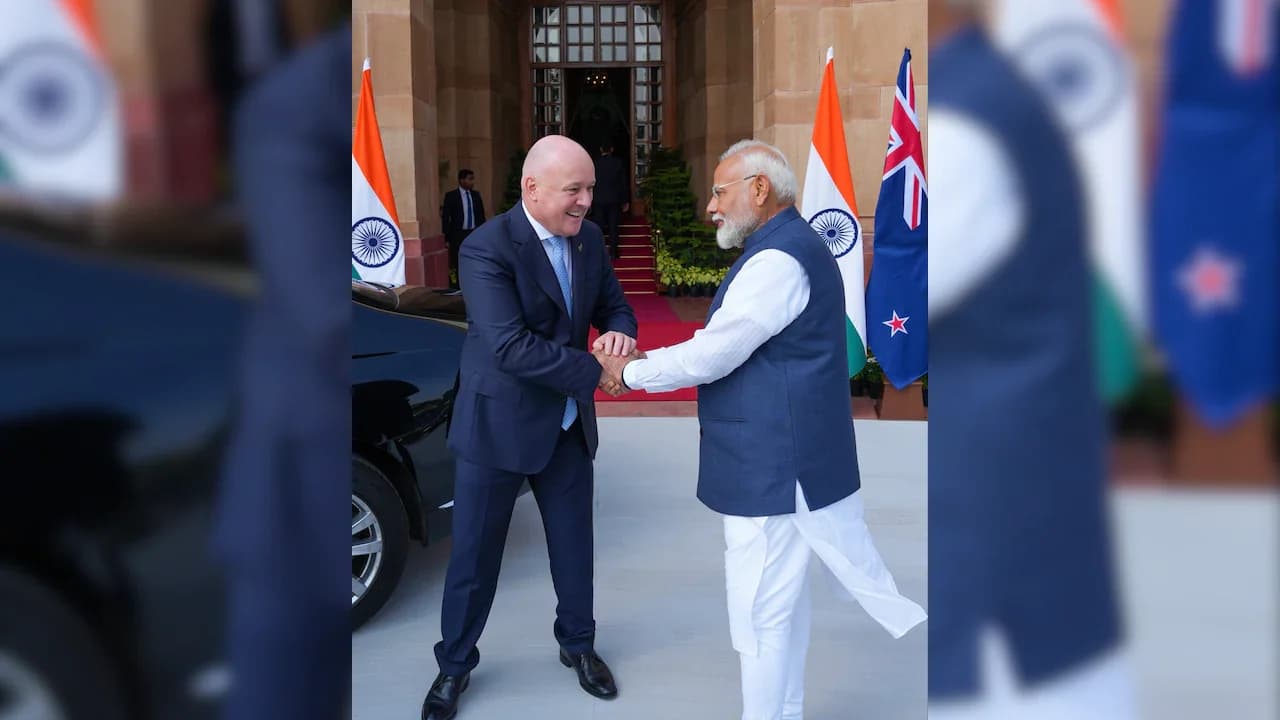
India and New Zealand have upgraded their bilateral relationship to a Strategic Partnership during Prime Minister Narendra Modi's historic visit to Wellington, marking the first visit by an Indian prime minister in 40 years. According to the latest joint statement, this partnership encompasses tighter defence cooperation, including naval exercises, as well as stronger ties in trade, diplomacy, culture, sport and science. During delegation-level talks in Auckland on Saturday, PM Modi and his New Zealand counterpart Christopher Luxon endorsed the 'India-New Zealand Strategic Partnership: Roadmap to 2030', which lays out plans to strengthen cooperation across trade, agriculture, security, innovation, tourism and people-to-people ties. Calling it a "turning point" in bilateral relations, PM Modi said the upgrade was "not merely a diplomatic milestone" but a new commitment to the two countries' shared future. The partnership provides framework and breadth for enhanced cooperation, with both nations sharing a common interest in a free, open, peaceful and prosperous Indo-Pacific.
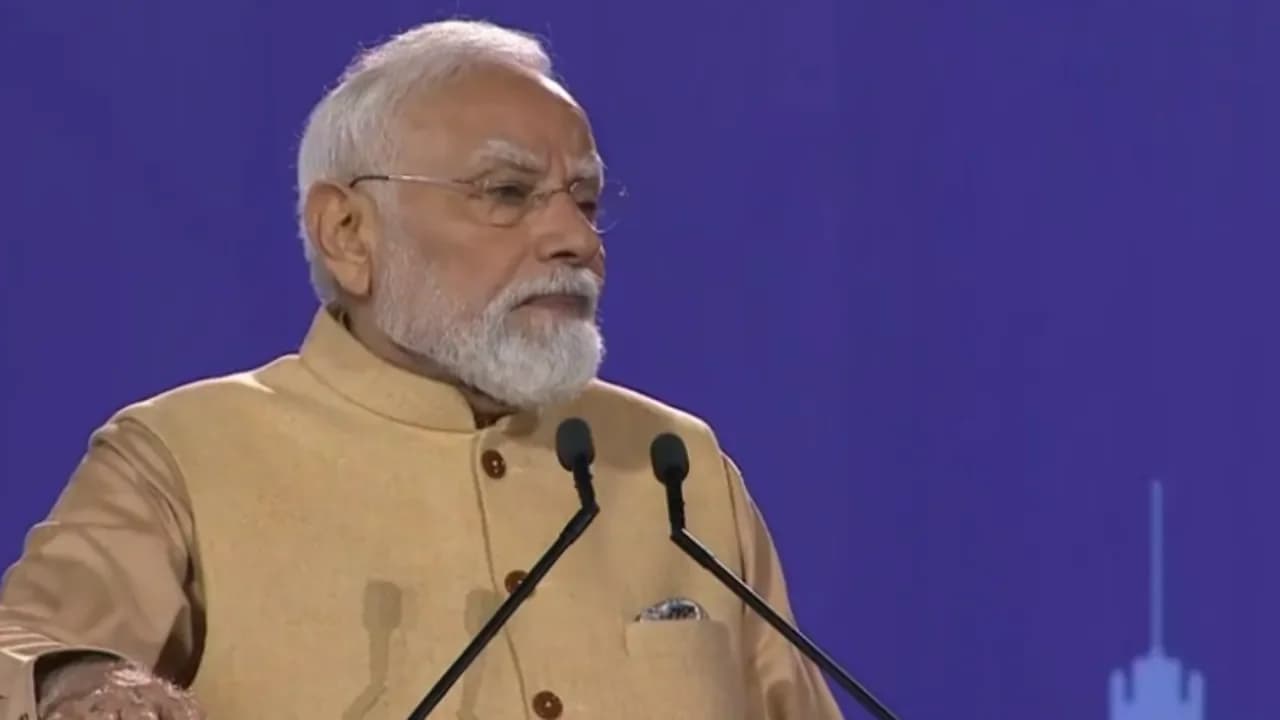
The two leaders have set an ambitious five-year target to double bilateral trade to ₹35,000 crore by 2030, representing a significant escalation from the previous goal of doubling trade by 2030. According to the latest joint statement, this ₹35,000 crore target reflects the shared commitment of both nations to strengthen economic cooperation. The current bilateral trade volume stands at US$2.25 billion, with the partnership targeting to double current goods and services by 2030. The trade deal signed earlier this year brings immediate benefits, with 57 percent of everything New Zealand exports to India being tariff-free from day one, representing a massive win for Kiwi businesses looking to get a foothold in the subcontinent. However, the trade agreement has faced pushback from some quarters in New Zealand, particularly over provisions for easier immigration and visa access to Indian students and workers.
Ten agreements were signed spanning defence and security cooperation, marking a significant milestone in bilateral relations. The most notable agreement is a Memorandum of Arrangement on maritime cooperation between India's Ministry of Defence and the New Zealand Defence Force, along with a mutual logistics support pact between the Indian Navy and its New Zealand counterpart. The two sides also agreed to establish a Maritime Security Dialogue and a Joint Working Group on Counter-Terrorism, while New Zealand has nominated maritime security as a priority pillar under India's Indo-Pacific Oceans Initiative, focusing on tackling illegal and unregulated fishing. These agreements provide the framework for enhanced cooperation in defence and maritime security, addressing shared challenges in the Indo-Pacific region.
As part of agricultural cooperation, a Kiwifruit Action Plan was launched alongside two new Centres of Excellence for kiwifruit in Nagaland and Uttarakhand, aimed at boosting productivity through skills development and innovation. This initiative represents a significant expansion of agricultural cooperation beyond the traditional dairy sector. The current bilateral trade volume stands at US$2.25 billion, with the partnership targeting to double current goods and services by 2030. The agricultural cooperation encompasses horticulture, forestry and animal husbandry, while the kiwifruit initiative specifically focuses on skills development and innovation to enhance productivity in this sector.
The meat industry has welcomed the agreement's impact, with the immediate elimination of a 30% tariff on New Zealand sheep meat exports to India opening a previously closed door to a promising long-term market. The Meat Industry Association noted that the tariff made it "commercially impossible" to compete in India. The deal also immediately removes tariffs on New Zealand wool exports to India and includes a dedicated fast-track mechanism to facilitate the supply of New Zealand products duty-free to India for further manufacturing and export. In 2025, the total value of New Zealand meat exports to India was modest at less than $15 million out of $476.5 million in total merchandise exports. However, the red meat sector anticipates significant market growth, with the FTA expected to be ratified later this year.
The two Prime Ministers have endorsed the 'India-New Zealand Strategic Partnership: Roadmap to 2030' as a framework to guide joint action over the next four years. This comprehensive roadmap encompasses six key pillars covering defence and security cooperation, bilateral trade and primary industries, people, culture and sport, education, research and technology, and regional and multilateral cooperation. Under the Bilateral Trade, Primary Industries and Tourism pillar, India and New Zealand aim to double two-way trade to NZ$7 billion (₹35,000 crore) by 2030, advance the Free Trade Agreement and simplify customs through the AEO Mutual Recognition Arrangement. The partnership will strengthen cooperation in horticulture, forestry and animal husbandry, while boosting tourism through closer industry partnerships and direct non-stop flights under the updated Air Services Agreement. The roadmap also includes strengthening educational partnerships, expanding collaboration in research, innovation and emerging technologies, and deepening cooperation on climate action through the International Solar Alliance and the Global Biofuels Alliance.