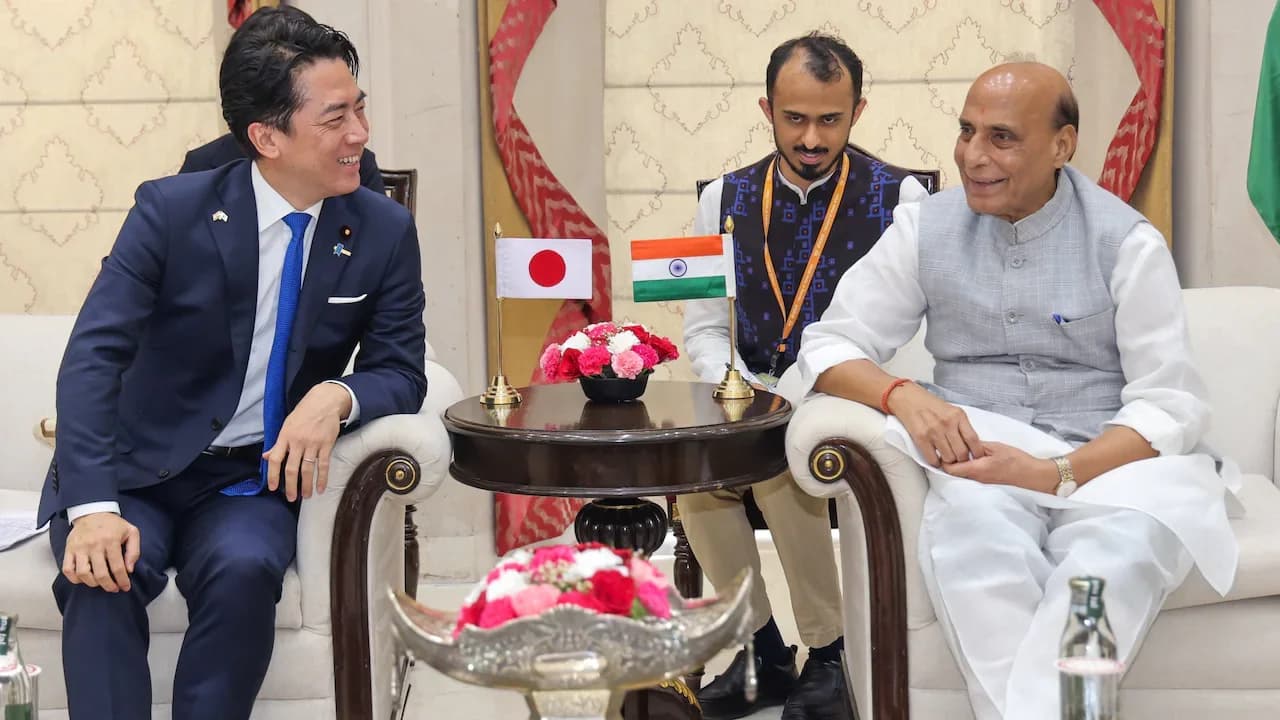
India-Japan relations have reached unprecedented strategic heights, with the latest 'India-Japan joint declaration' issued during Japanese Prime Minister Sanae Takaichi's visit in July 2026 using new formulations to define their partnership. According to reports from Business Standard, the declaration enhanced the 'strategic salience' of their partnership in an 'increasingly volatile and uncertain geopolitical environment'. Takaichi had previously emphasized in an article for Times of India that she wished to 'deepen cooperation in the field of security and strengthen their capacity to navigate the uncertain international landscape'. The joint declaration also adopted language previously used for Indo-US relations, describing India and Japan as 'natural and indispensable partners' in realizing their respective national interests.
The partnership's transformation is significantly driven by shared concerns over China's activities in the Indo-Pacific region. As reported by Business Standard, the 15th summit was the first to identify China as the 'main security challenge' for both countries, though not by name, and express opposition to its 'unilateral actions that endangered the safety and freedom of navigation and overflights' and attempts to change the status quo by force or coercion. The latest joint declaration repeated these references to the 'militarization of disputed features' and common threat from China. Japan's concerns about US-China accommodation and doubts over US commitment to Asian allies have contributed to this strategic convergence, with India less impacted due to not being a US ally. The transformation follows Takaichi's November 2025 statement in Japan's Parliament that a naval blockade of Taiwan would create an 'existential crisis' for Japan, leading to Chinese retaliation including restrictions on rare earths and metals supply.
The transformation is most visible in defence and security ties, with the latest 2025 declaration reflecting much more extensive bilateral cooperation compared to the 2008 document. According to Business Standard, the relationship has moved from consultation to collaboration, with India's Defence Research and Development Organisation (DRDO) and Japan's Acquisition, Technology and Logistics Agency (ATLA) engaged in co-development and co-production of defence platforms. The first joint project is the Unified Complex Radio Antenna (UNICORN) - a stealth communication system for ships manufactured by Bharat Electronics, with discussions ongoing for Japan's advanced US-2 amphibian aircraft. Japan is the only foreign country allowed to undertake projects in India's Northeast and Andaman and Nicobar islands, developing cross-border infrastructure and transforming offshore islands into smart islands. The documents released during the visit referred to ongoing cooperation between them as partners in the Quadrilateral Security Dialogue (Quad), including critical supply chains, strategic minerals, artificial intelligence, and quantum computing.
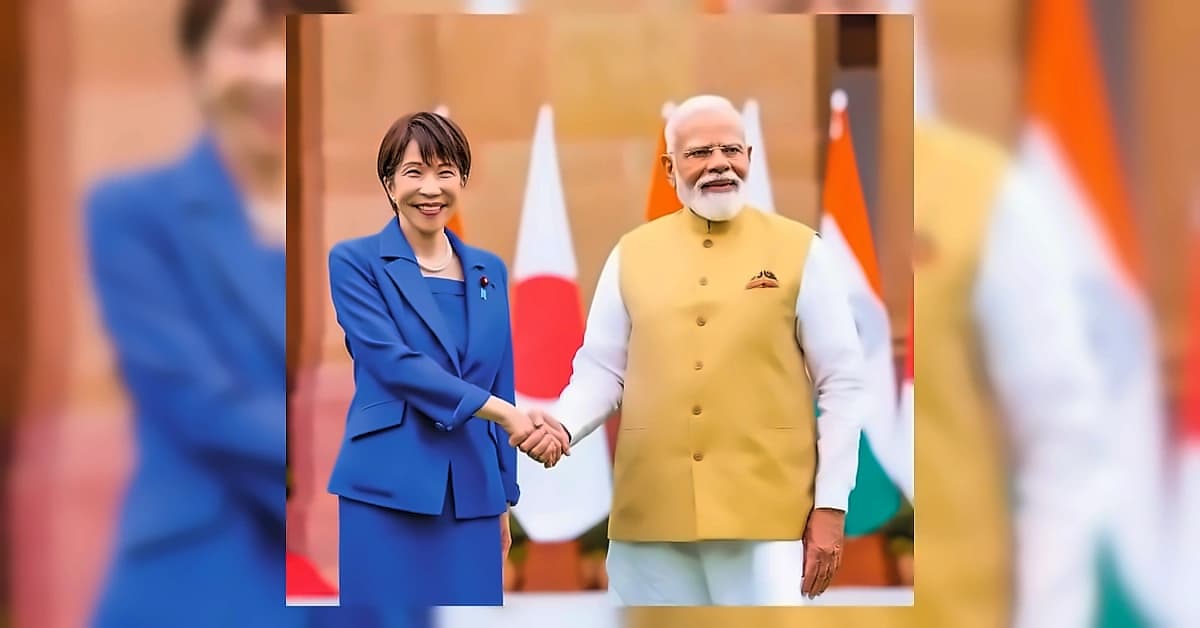
Despite high-level political commitment, bilateral trade remains modest at $27 billion with cumulative Japanese investment in India at $48 billion. As reported by Business Standard, Takaichi's visit resulted in 16 landmark outcomes, including 129 memorandums of understanding signed between Indian and Japanese companies, and a commitment for Japanese investment of $62 billion in India over the next 10 years. The visit also adopted declarations on economic security, artificial intelligence cooperation, and energy security including strategic petroleum reserves maintenance. However, doubts exist over India's capacity to deliver on its commitments, with defence and security cooperation driven by shared China concerns potentially yielding the most tangible results. Despite the Comprehensive Economic Partnership Agreement (CEPA) already existing between the two countries, the level of economic and commercial engagement remains modest, with India emerging as a partner in Japan's search for economic security against Chinese power and US unreliability.
The partnership extends to Quadrilateral Security Dialogue (Quad) cooperation, with documents referencing ongoing cooperation between the US, Australia, Japan, and India. According to Business Standard, Japan is a participating member of the Information Fusion Centre for the Indian Ocean Region in Gurugram, providing round-the-clock maritime domain awareness. Modi's subsequent visits to Indonesia, Australia, and New Zealand demonstrate a clear trend of Indo-Pacific countries strengthening security and economic cooperation in response to Chinese assertiveness and US unreliability. This regional coalition building positions India as a key player in the emerging security framework, with the common threat from China now clearly driving the partnership and leaders no longer inhibited in acknowledging this shared concern. The transformation reflects Japan's shift away from its traditional 'have-your-cake-and-eat-it-too' approach with China, where economic reliance on China has become an acute vulnerability.